
Deforestation and Biodiversity Loss: A Crisis for Nature and Humanity
Examining the Causes, Impacts, and Solutions to Protect Earth's Fragile Ecosystems
Introduction
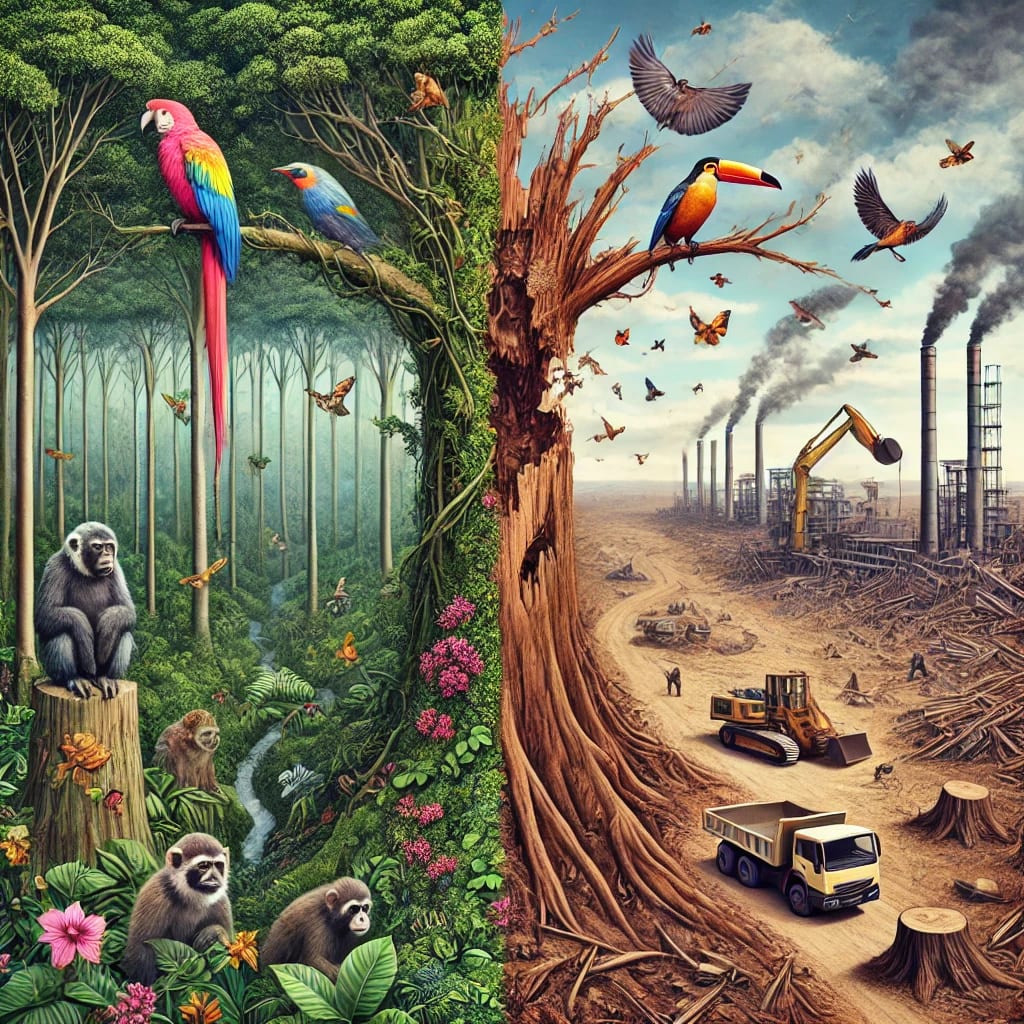
Deforestation and biodiversity loss are among the most pressing environmental issues of our time, with profound implications for ecosystems, economies, and human well-being. Forests, which cover 31% of Earth's land area, are home to over 80% of terrestrial species. Yet, these vital ecosystems are being destroyed at an alarming rate, resulting in the extinction of countless species and the disruption of natural processes that sustain life on Earth.
This article explores the causes of deforestation and biodiversity loss, their far-reaching consequences, and the urgent need for global action to preserve the planet's ecological balance.
Understanding Deforestation
Deforestation refers to the large-scale clearing of forests for non-forest uses such as agriculture, urban development, and mining. This process involves the removal of trees and vegetation, leading to the degradation or complete loss of forest ecosystems.
According to the Food and Agriculture Organization (FAO), the world lost approximately 420 million hectares of forest between 1990 and 2020, primarily in tropical regions like the Amazon, Southeast Asia, and Central Africa.
Major Causes of Deforestation
1.Agricultural Expansion:
Agriculture is the leading driver of deforestation, accounting for nearly 80% of forest loss. Crops like soy, palm oil, and sugarcane, as well as cattle ranching, are major contributors.
2. Logging:
Commercial logging operations, both legal and illegal, harvest timber for construction, furniture, and paper products, often leading to forest degradation.
3.Infrastructure Development:
Expanding cities, roads, and dams encroach on forested areas, fragmenting habitats and displacing wildlife.
4.Mining and Energy Projects:
Extractive industries such as gold mining, coal mining, and oil drilling result in deforestation and pollution.
The Loss of Biodiversity
Biodiversity encompasses the variety of life on Earth, including plants, animals, fungi, and microorganisms. Healthy ecosystems depend on this diversity to function effectively. However, habitat destruction caused by deforestation is the leading cause of biodiversity loss.
Impacts of Biodiversity Loss
1.Species Extinction:
Experts estimate that 200 to 2,000 species go extinct each year due to deforestation and habitat destruction. Iconic species such as orangutans, tigers, and Amazonian birds are particularly vulnerable.
2. Ecosystem Imbalance:
Biodiversity loss disrupts ecosystems, leading to a decline in ecosystem services such as pollination, water purification, and climate regulation.
3.Food Security Risks:
Reduced biodiversity affects agriculture by limiting the genetic pool necessary for resilient crops and livestock.
4.Human Health Challenges:
The destruction of natural habitats increases the likelihood of zoonotic diseases (diseases transmitted from animals to humans), as seen with the COVID-19 pandemic.
The Interconnection Between Deforestation and Climate Change
Forests are crucial carbon sinks, absorbing about 2.6 billion tonnes of CO₂ annually. Deforestation not only reduces this carbon-absorbing capacity but also releases stored carbon, contributing to climate change.
Key statistics reveal the gravity of this relationship:
- Deforestation accounts for approximately 10-15% of global greenhouse gas emissions.
- The Amazon rainforest, often called the "lungs of the planet," is nearing a tipping point where it may no longer sequester carbon but instead become a net emitter.
The synergistic effects of deforestation, biodiversity loss, and climate change create feedback loops that exacerbate environmental degradation, further endangering life on Earth.
Economic and Social Impacts
Economic Consequences
Deforestation and biodiversity loss undermine the economy by depleting resources essential for industries such as agriculture, pharmaceuticals, and tourism. Forest-related services contribute an estimated $125 trillion annually to the global economy. Their destruction threatens long-term economic stability.
Impact on Indigenous Communities
Forests are home to millions of indigenous people who depend on them for their livelihoods, culture, and spirituality. Deforestation displaces these communities, violating their rights and disrupting their way of life.
Efforts to Address Deforestation and Biodiversity Loss
1.Global Agreements
- The United Nations Convention on Biological Diversity (CBD):Aims to protect ecosystems, species, and genetic diversity.
- The REDD+ Program: Incentivizes developing countries to reduce emissions from deforestation and forest degradation.
2.Sustainable Practices
- Agroforestry: Integrates trees into agricultural landscapes, preserving biodiversity while maintaining crop yields.
-Sustainable Logging: Certification programs like FSC (Forest Stewardship Council) promote responsible forestry practices.
3.Reforestation and Afforestation
Planting trees can restore degraded lands and create new forest ecosystems. Initiatives like the Bonn Challenge aim to restore 350 million hectares of degraded land by 2030.
4.Protected Areas and Wildlife Corridors
Expanding protected areas and connecting fragmented habitats enable species to thrive. Currently, about 15% of the world’s land area is protected.
5.Technological Innovations
- Remote Sensing and AI: Satellite technology and artificial intelligence monitor deforestation in real time, enabling rapid responses.
-Biotechnology: Advances in genetic engineering can help protect endangered species and restore ecosystems.
Individual and Community Contributions
While systemic change is essential, individuals and communities can make meaningful contributions to combating deforestation and biodiversity loss:
1.Adopt Sustainable Consumption:
- Choose products certified as sustainable, such as FSC-certified wood and RSPO-certified palm oil.
- Reduce meat consumption to lower the demand for deforestation-linked livestock farming.
2.Support Conservation Efforts:
- Donate to or volunteer with organizations working to protect forests and wildlife.
3.Educate and Advocate:
- Raise awareness about deforestation and its impacts in your community.
- Advocate for policies that promote forest conservation and sustainable development.
4. Plant Native Trees:
- Participate in local reforestation projects to restore ecosystems and enhance biodiversity.
Challenges to Progress
Despite significant efforts, several barriers hinder the fight against deforestation and biodiversity loss:
- Economic Pressures: Many developing nations prioritize short-term economic gains from logging and agriculture over long-term sustainability.
-Weak Governance: Corruption and lack of enforcement enable illegal logging and land conversion.
-Global Inequality: Wealthier nations consume disproportionately more resources, while poorer nations bear the brunt of environmental degradation.
-Climate Change: Warming temperatures exacerbate habitat destruction and stress ecosystems further.
A Path Toward Sustainability
Addressing deforestation and biodiversity loss requires a holistic approach that balances environmental, economic, and social priorities. Key actions include:
-Strengthening Policies:Implementing stricter regulations to prevent illegal deforestation and incentivize sustainable practices.
- Promoting Green Economies:Encouraging industries to adopt sustainable models that prioritize conservation.
- Fostering Global Cooperation: International collaboration is essential to tackle cross-border issues like deforestation in the Amazon and illegal wildlife trade.
Conclusion
Deforestation and biodiversity loss represent a dual crisis that endangers the planet's ecological health and humanity's future. Forests and the diverse life forms they support are not only invaluable to Earth's natural systems but also essential to human survival. Protecting them requires urgent action from governments, businesses, and individuals alike.
By embracing sustainable practices, fostering innovation, and advocating for systemic change, we can halt the destruction of Earth's forests and preserve the rich tapestry of life they sustain. The time to act is now—for nature, for humanity, and for generations to come.


Comments
There are no comments for this story
Be the first to respond and start the conversation.