
Debunking the Myth
The Full Moon's Influence on Human Behavior
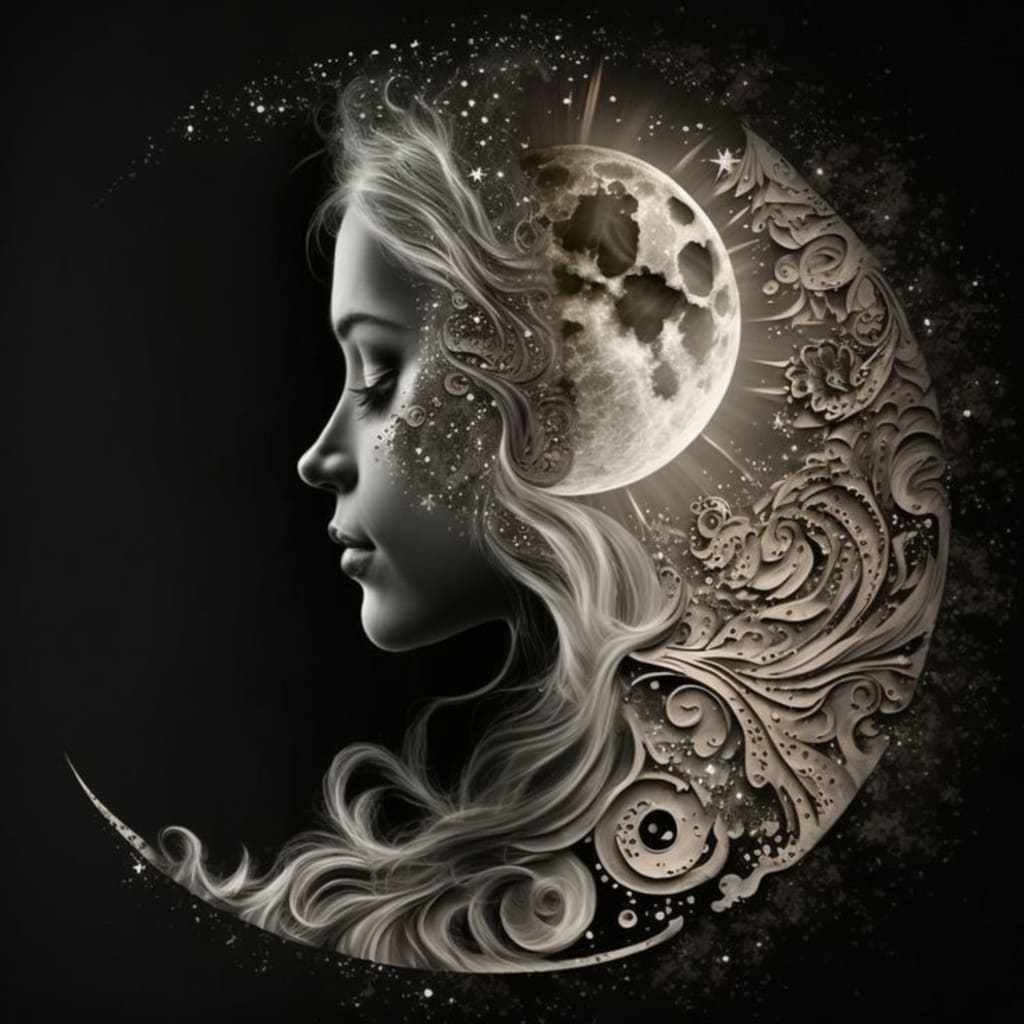
Welcome to the realm of beyond science, where myths and legends intertwine with reality to shape our understanding of the world around us. Among these age-old beliefs is the notion that the moon holds sway over human behavior, leading to tales of lunacy and werewolf transformations. But is there any truth to these fantastical claims, or are they simply relics of a bygone era? Let's delve into the scientific evidence and unravel the mystery of the full moon's alleged influence on human behavior.
The belief in the moon's mystical powers has deep roots in human history, with the very word "lunatic" originating from the Latin term "lunaticus," meaning "moonstruck." Greek philosophers such as Aristotle speculated on the moon's gravitational pull affecting the human brain, likening it to the ebb and flow of ocean tides. These ideas gained further traction during the Middle Ages, where superstitions about werewolves and nocturnal phenomena proliferated.
Even in modern times, many still attribute strange occurrences and erratic behavior to the presence or absence of the moon in the night sky. Police forces in some regions have even bolstered their patrols during full moons, citing an uptick in crime rates during these lunar phases. But what does science have to say about these age-old beliefs?
Numerous studies have attempted to discern a correlation between the full moon and human behavior, yet conclusive evidence remains elusive. While some research suggests a link between lunar cycles and phenomena such as sleep patterns, most experts contend that the purported effects of the full moon on behavior are purely anecdotal.
One popular theory posits that the moon's gravitational pull, particularly its influence on water, may disrupt the delicate balance of fluids in the human body, including those in the brain and nervous system. However, astronomers and physicists assert that the moon's gravitational force is minuscule compared to other factors and is unlikely to significantly impact human physiology.
In 1985, psychologists James Rotton and Ivan Kelly conducted a comprehensive meta-analysis of over 30 studies on the lunar effect. Their findings, published in the Psychological Bulletin, refuted the notion that the full moon was associated with increases in crime, suicides, or psychological disturbances. Despite their conclusive results, the belief in the moon's influence persisted among some individuals.
Subsequent research has explored other potential connections between lunar cycles and human behavior, with mixed results. A study in 2013 found that participants sleeping in a laboratory reported lower sleep quality during full moons, suggesting a possible link between lunar rhythms and sleep patterns. However, researchers were cautious not to extrapolate these findings to broader behavioral trends.
Psychologists Loren and Jean Chapman of the University of Wisconsin-Madison propose that the perceived association between the full moon and bizarre events may be a product of illusory correlation. This cognitive bias leads individuals to attribute significance to coincidental events based on preconceived beliefs, reinforcing the myth of the lunar effect.
Moreover, psychiatrist Daniel Fessler of Emory University suggests that the lunar effect may have originated from observations of individuals with mental disorders experiencing exacerbations of symptoms during full moons. In prehistoric times, when outdoor lighting was scarce, the bright light of the full moon may have disrupted sleep patterns and exacerbated psychiatric conditions, leading to the association between lunar cycles and aberrant behavior.
Despite the lack of empirical evidence supporting the full moon's influence on human behavior, its allure persists in popular culture and folklore. From Hollywood depictions of werewolves to ancient myths of lunar goddesses, the moon continues to captivate the human imagination.
In today's technologically advanced society, where scientific inquiry reigns supreme, why do beliefs in the moon's mystical powers endure? Perhaps it is our innate fascination with the unknown, our penchant for superstition, or our desire to find meaning in the chaos of the cosmos.
As we gaze up at the night sky, bathed in the soft glow of the full moon, let us marvel at its beauty and mystery, but let us also remember to question the myths and legends that shroud it. For in the end, it is not the moon that shapes our destiny, but the choices we make under its watchful gaze.
In conclusion, while the allure of the full moon's influence on human behavior may persist in the annals of folklore, scientific inquiry suggests that its effects are more mythical than factual. As we continue to unravel the mysteries of the cosmos, let us approach such beliefs with skepticism and curiosity, guided by the light of reason and evidence.
About the Creator
Keep reading
More stories from iadh gdouda and writers in Earth and other communities.
The Evolution of Tech: Are Cellphones Reshaping Our Bodies?
In the ever evolving landscape of technology, our reliance on smartphones and tablets has become nearly ubiquitous. However, recent claims from a scientific report suggest that these devices may be altering more than just our habits they could be shaping the very structure of our skeletons. This intriguing notion, stemming from a study by biomechanics experts David Shahar and Mark Sayers at Australia's University of the Sunshine Coast, has sparked widespread discussion and debate.
By iadh gdouda2 years ago in Earth
Protests Across Iran: Is War With the US or Israel Imminent — and What Would It Change?
Iran is once again at the center of global attention as widespread protests continue across the country, coinciding with heightened regional tensions involving the United States and Israel. Demonstrations fueled by political repression, economic hardship, and anger over state violence have created one of the most volatile moments Iran has faced in decades. As images of unrest spread and rhetoric between Tehran, Washington, and Tel Aviv sharpens, a pressing question looms: is Iran on the brink of war with the US or Israel—and if so, what would such a conflict actually change?
By Aarif Lashari7 days ago in Earth
How, Too
Many people wonder how, too. You are not alone, and I am an expert. I will teach you how, too! First, you need to remit a small application fee and fill out an application describing the nature of your financial situation and how often payments will be made, as this will have great bearing on how well I teach you how, too.
By Harper Lewis4 days ago in Fiction


Comments
There are no comments for this story
Be the first to respond and start the conversation.