
Dangerous and Fascinating Creatures of the Ocean: Sea Cucumbers, Cone Snails, Stonefish, Lionfish, and Sea Urchins
Exploring the Intriguing Defense Mechanisms and Hazards of Marine Life

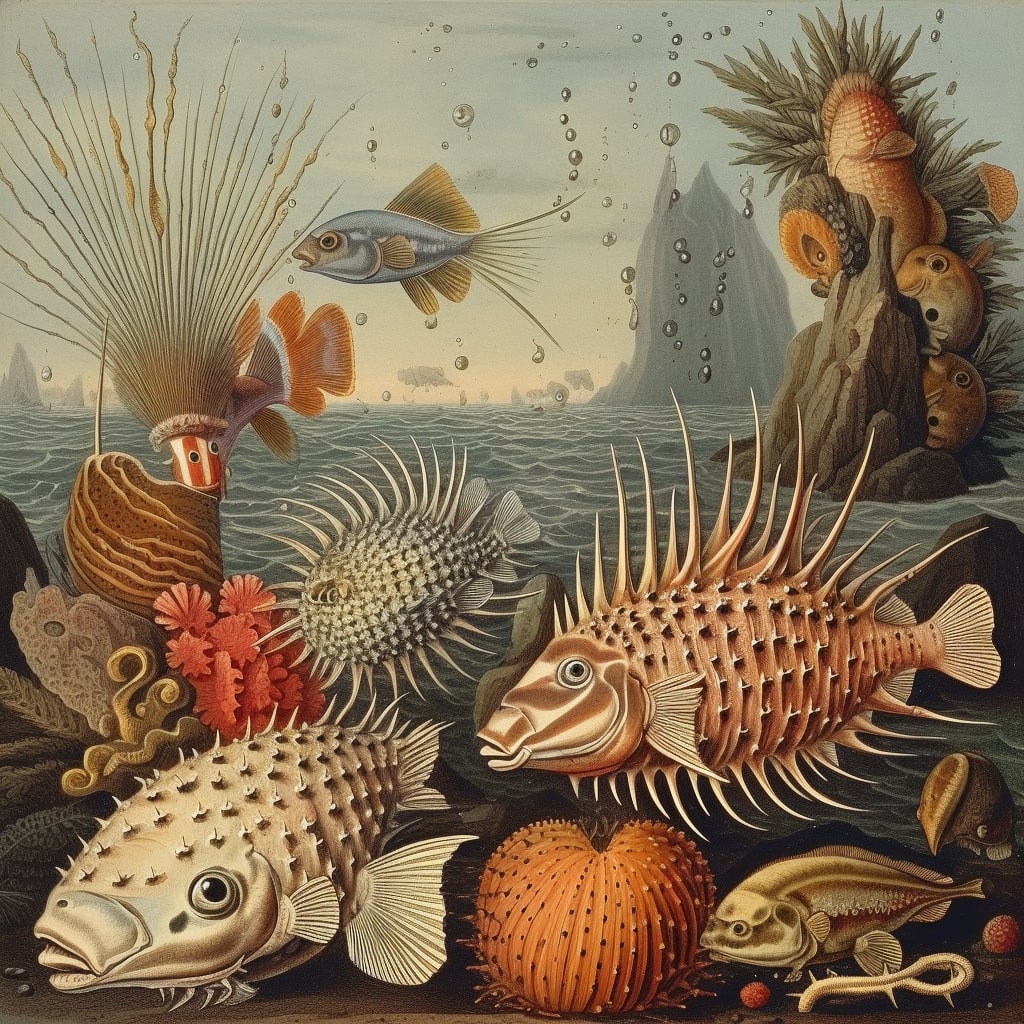
Have you ever come across a sea cucumber resting on a sandy bed and thought it resembled a gelatinous blob? These seemingly soft and vulnerable creatures actually possess intriguing strategies to protect themselves. Biologists have discovered chemical compounds that sea cucumbers use for self-defense, not only against predators but also their own toxins. Interestingly, these compounds have potential applications for human health.
When threatened, sea cucumbers can expel thread-like structures from their bodies. These sticky and toxic tubes immobilize predators, thanks to chemical compounds commonly found in plants. Although such compounds are less common in animals, sea cucumbers have evolved to utilize them effectively. These substances possess antioxidant and anti-inflammatory properties, making them valuable in industries like cosmetics. However, using these chemicals as a defense mechanism poses a challenge for sea cucumbers—they must avoid harming themselves with their own toxins. To accomplish this, sea cucumbers have developed alternative forms of cholesterol that their cells don't contain, as the toxins bind and pierce cholesterol as their target.
Now you know to avoid touching sea cucumbers if you happen to encounter one on the beach. They may be smart, cute, and intriguing, but it's best to admire them from a safe distance.
Speaking of beach hazards, let's move on to the marbled cone snail—a creature both unique and dangerous that will leave you in awe. Found in various locations, from the southern tip of India to Okinawa, Japan, and Southeast to New Caledonia and Samoa, this snail is a fierce predator. It preys on other snails and sometimes even its own kind.
When hungry, the marbled cone snail extends its long white tooth and shoots a venomous harpoon at its prey. If necessary, it will attack multiple times to ensure immobilization. Once the harpoon strikes, the prey's muscles relax irreversibly, rendering it helpless. You can find this formidable creature in relatively shallow waters, typically on coral reef platforms or lagoon pinnacles, as well as in sand under rocks or among seagrass. So, watch your step during your next swim.
Interestingly, the venom of the marbled cone snail is being studied as a potential treatment for pain. Researchers have identified promising chemical components within its venom. Who would have thought that this extraordinary predator could have a beneficial side too?
Next on the list of creatures to avoid is the stonefish, a little fish with a deceivingly cute name but a highly venomous nature. In fact, it holds the title of the most venomous fish in the entire ocean. These masters of disguise blend seamlessly into their surroundings on rocky or muddy bottoms in marine habitats across the Indo-Pacific region.
Stonefish patiently wait for their prey to swim by, swiftly attacking and swallowing it whole. However, you can easily swim right by a stonefish without noticing its presence. Stepping on a stonefish can result in excruciating pain, swelling, and tissue damage due to the venom released by their spines.
Fortunately, stonefish do not actively seek out confrontations. They employ their spines defensively rather than offensively. As long as you avoid disturbing or stepping on them, you should be safe. Taking precautions such as being mindful of where you step, investing in water shoes, and seeking immediate specialized attention if stung will help you avoid any unpleasant encounters with these ninja-like creatures.
Have you ever had the opportunity to encounter a lionfish up close? With their vibrant colors, wing-like fins, and eye-catching appearance, they can easily captivate your attention. However, don't be deceived by their beauty—they are one of the most dangerous fish in the ocean. If stung, you'll experience intense pain and potentially allergic reactions.
Lionfish inject venom through their sharp dorsal and pelvic fins. While not aggressive by nature, they act in self-defense when provoked or caught. Their fins, which resemble spines, serve as their primary means of warding off predators, including humans.
Surprisingly, lionfish are edible, and some consider them quite delicious. Since they pose a threat to reef ecosystems, their consumption is encouraged. However, it is essential to remove their venomous spines before consuming them. If you encounter a lionfish while snorkeling or swimming near corals in the Atlantic or Pacific Ocean, maintain a reasonable distance to avoid startling or provoking them.
Sea urchins can also cause trouble if you accidentally stumble upon them. They are not aggressive creatures, but their injuries are relatively common. Found in rocky shores, coral reefs, and nearly every saltwater body, sea urchins are abundant worldwide.
To defend themselves, sea urchins utilize their spines and small jaw-like structures capable of injecting a painful substance. Some species possess long, sharp spines that can penetrate thick wetsuits and lodge deep in the skin. Therefore, maintaining awareness of your surroundings, watching for protruding spines in the sand, and controlling your buoyancy is crucial in avoiding sea urchin encounters. If a shore entry appears to have many urchins, it's wise to choose a different dive site.
In the event of a sea urchin sting, soaking the affected area in hot water for up to an hour and a half can help break down the harmful substance and alleviate pain. Carefully removing the spines with tweezers and shaving the area to eliminate remaining fragments are recommended. Washing the injured area with soap, rinsing with fresh water, and applying topical creams can provide further relief. It's important to watch for signs of allergies and promptly seek specialized attention if any unusual symptoms arise.
Sea urchins are just one of the many hazards in the ocean. Other creatures, such as bearded fire worms, pufferfish, and fire coral, should also be treated with caution. Nonetheless, compared to some of these creatures, sea urchins are relatively tame.
About the Creator
Calming & Relaxing Sleep
I am an entrepreneur, I have boundless imagination, constantly conjuring new ideas to express my creativity. I enjoy creating all different types of media and time spent with family.
Keep reading
More stories from Calming & Relaxing Sleep and writers in Earth and other communities.
The Hakuto-R Lander: Triumphs, Setbacks, and Lessons in Lunar Exploration
The lander's journey to the moon was a testament to human innovation and the pursuit of space exploration. Designed as a cube-shaped spacecraft adorned with solar panels, the Hakuto-R lander embarked on a mission that held great promise. However, despite successfully completing eight out of nine critical mission milestones, the lander encountered an unexpected obstacle during its landing attempt, leading to an unfortunate crash.
By Calming & Relaxing Sleep3 years ago in Earth
What Went Right This Week: The Good News That Matters
In a world often dominated by breaking news alerts, crises, and uncertainty, it can be easy to overlook the positive developments quietly shaping our lives. Yet every week brings stories of progress, resilience, and human ingenuity that deserve attention. From breakthroughs in health and science to acts of kindness and environmental wins, good news still happens—and it matters.
By Aarif Lashari6 days ago in Earth
US weather forecast
General Nationwide Pattern (Next 48 Hours) 1. Widespread Winter Storm Across Much of the U.S. A powerful winter storm is forecast to affect large swaths of the country through the next two days. It is expected to bring heavy snow, ice, freezing rain, and dangerously cold temperatures from the Southern Plains into the Midwest, East Coast, and parts of the Southeast.
By USA daily update 6 days ago in Earth




Comments
There are no comments for this story
Be the first to respond and start the conversation.