
The Hakuto-R Lander: Triumphs, Setbacks, and Lessons in Lunar Exploration
Exploring the Moon

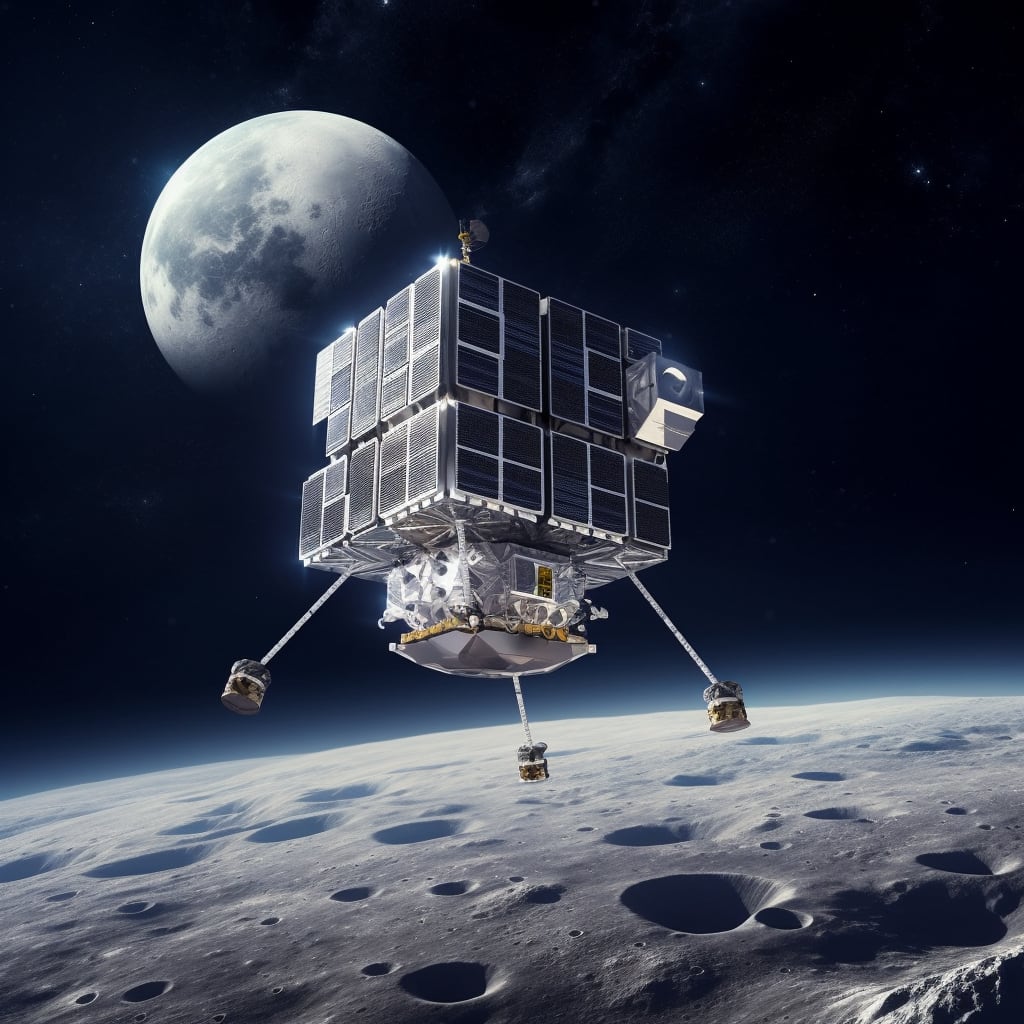
The lander's journey to the moon was a testament to human innovation and the pursuit of space exploration. Designed as a cube-shaped spacecraft adorned with solar panels, the Hakuto-R lander embarked on a mission that held great promise. However, despite successfully completing eight out of nine critical mission milestones, the lander encountered an unexpected obstacle during its landing attempt, leading to an unfortunate crash.
In late April, as the Hakuto-R lander descended towards the lunar surface, disaster struck. The onboard altitude sensor became perplexed by the presence of the rim of a lunar crater, triggering confusion within the lander's computer systems. In a strange turn of events, the computer, relying on erroneous altitude measurements, erroneously calculated its position based on the expected altitude at that stage of the mission. The lander's computer concluded that it was lower than it actually was, setting in motion a chain of events that ultimately resulted in the crash on April 25, 2023.
The gravity of the situation became evident as ispace, the Tokyo-based company responsible for constructing the spacecraft, released a statement regarding the mishap. They revealed that while the lander initially estimated its own altitude to be zero, indicating contact with the lunar surface, it was later determined that the lander was approximately 5 kilometers (3.1 miles) above the moon's surface. After reaching the scheduled landing time, the lander continued its descent at a slow pace until its propulsion system ran out of fuel. At that moment, the controlled descent ceased, and the lander succumbed to free-fall, making an impact on the moon's surface.
During a subsequent briefing, ispace representatives acknowledged that inadequate consideration of the terrain topography around the landing site played a significant role in the failure. They attributed part of the problem to a change in the landing site several months prior to the mission's launch. This unforeseen alteration likely hindered a comprehensive assessment of the terrain, contributing to the unfortunate outcome.
The Hakuto-R lander's mission was of great significance, as it aimed to make history as the first privately operated moon lander to successfully touch down on the lunar surface. The competition had been fierce, with only NASA, China, and Russia achieving the monumental feat thus far. The failure of the Hakuto-R lander to accomplish its goal was indeed a setback. Nevertheless, it is important to recognize the accomplishments leading up to this point and the valuable lessons learned.
Ispace took pride in highlighting the fact that despite the final stages of the mission ending in failure, the lander achieved an impressive eight out of nine mission milestones. This speaks volumes about the dedication and expertise of the team involved. The company reassured stakeholders and space enthusiasts alike that this setback would not impact their plans for future missions. In fact, ispace confidently announced their intention to proceed with the launch of their second and third missions in 2024 and 2025, respectively.
One key silver lining in this unfortunate incident was the identification of the root cause—a software issue. Ispace emphasized that this discovery meant that future missions would not require a complete hardware redesign. Instead, they could focus their efforts on rectifying and refining the software systems to ensure accurate altitude calculations and safer landings. Takeshi Hakamada, the Founder and CEO of ispace, expressed his confidence in their ability to address the problem, stating that they now possess a clear understanding of how to improve their future missions.
As we reflect on this chapter in the quest for lunar exploration, it is crucial to remember the immense challenges inherent in space travel. The road to success is paved with failures, setbacks, and valuable lessons. The Hakuto-R lander's mission serves as a reminder that even the most meticulously planned endeavors can encounter unforeseen obstacles. However, these setbacks foster resilience and fuel the determination
About the Creator
Calming & Relaxing Sleep
I am an entrepreneur, I have boundless imagination, constantly conjuring new ideas to express my creativity. I enjoy creating all different types of media and time spent with family.
Keep reading
More stories from Calming & Relaxing Sleep and writers in Earth and other communities.
A Deep Hole on Mars
In 2011, scientists made a remarkable and serendipitous discovery on Mars while analyzing images of the dusty slopes of Pavonis Mons volcano. The HiRISE instrument aboard the Mars Reconnaissance Orbiter captured an image that revealed a peculiar hole on the Martian surface, suggesting the presence of an underground cavern. This unexpected finding has sparked curiosity and opened up possibilities for further exploration and investigation.
By Calming & Relaxing Sleep3 years ago in Earth
True Happiness
On a sturdy apple tree, a mother dove lived peacefully with her tiny baby. The tree provided them with shelter, shade, and a sense of security. Every day, the mother dove would watch over her little one, teaching it to flap its wings, coo softly, and enjoy the calm of the natural world. Life had been simple, quiet, and safe for them, and she felt content in the little world that belonged entirely to her and her chick.
By Sudais Zakwan4 days ago in Earth
Take a Roundtrip to Hell and Back
The Acheron River in Greece got its name from a river in Greek mythology located in the underworld of Hades and associated with woes and pain. The river flows through the region of Epirus in northwestern Greece and flows into the Ionian Sea at Ammoudia.
By Rasma Raisters5 days ago in Earth




Comments
There are no comments for this story
Be the first to respond and start the conversation.