
Cooling the Earth: The Fight to Stop Global Warming
Uniting Humanity to Save Our Planet Before It's Too Late


The Earth once thrived in perfect harmony—its forests thick with green, oceans rich with life, and skies painted in hues of peace. For thousands of years, the planet balanced itself, shifting slowly through ice ages and warm spells. But in the blink of a century, everything began to change.
It started with smoke.
Factories rose during the Industrial Revolution, burning coal, oil, and gas to power a booming world. Black smoke curled into the sky. Cities grew. Cars filled roads. Planes filled skies. And with every breath of progress, the Earth’s atmosphere filled with carbon dioxide—a silent gas with dangerous power.
Scientists were the first to notice. In the 1950s, Charles Keeling recorded rising CO₂ levels from a Hawaiian volcano. His graph, later called the Keeling Curve, showed a steady climb—and it hasn’t stopped since. By the year 2025, Earth was in crisis. Glaciers melted. Oceans rose. Coral reefs turned ghostly white. Wildfires raged in places that had never burned before. Storms grew stronger. Droughts deeper. The climate was changing faster than anyone had predicted.
Amid the chaos, a young girl in Nairobi named Aisha Mburu stood under a dying baobab tree. Once strong and proud, it now bore brown, brittle leaves. Her village had not seen rain in months. Crops failed. Water wells dried. People spoke of moving north—of becoming climate refugees. Aisha, only 14, refused to accept this fate.
“Why can’t we stop this?” she asked her father, a schoolteacher.
“We can,” he said softly. “But the world must act together.”
That night, under starlight, Aisha began her journey. She wrote letters. She recorded videos. She told the story of her drying land, of her friends who walked miles for water, of the baobab trees that once gave shelter to elephants and birds. Her message spread across Africa, then Europe, then the world.
Meanwhile, in New York City, Dr. Theo Morales, a climate scientist, was working on something revolutionary. He had spent decades studying carbon capture—machines that could suck CO₂ from the air and lock it safely underground. His lab had created a prototype, but governments were slow to invest. “Too expensive,” they said. “Too complicated.”
That changed when Aisha’s video reached his desk.
He watched her speak, saw her dry village, and felt the fire return to his heart. He reached out, and together, Aisha and Dr. Morales launched Project Earthrise—a global campaign to unite scientists, activists, and everyday citizens.
The world responded.
From Tokyo to Toronto, people marched. Students planted trees. Engineers developed solar panels that worked even in rain. Cities banned diesel cars. Massive wind farms appeared off coastlines. In Iceland, carbon capture plants scaled up, pulling thousands of tons of CO₂ from the sky. In the Amazon, indigenous leaders reclaimed forests from illegal loggers. Nations formed climate alliances, pledging to reach net zero emissions by 2050.
It wasn’t easy.
Oil companies resisted. Fake news spread. Some world leaders denied the problem altogether. But the voices of youth, science, and truth grew louder. Aisha was invited to the United Nations Climate Summit in Geneva, where she stood before the world and spoke:
"My village cannot wait. Your cities cannot wait. The Earth cannot wait. You do not inherit the planet from your ancestors—you borrow it from your children. Return it better than you found it."
Her words echoed through chambers of power. For the first time in decades, climate funding tripled. Renewable energy surpassed fossil fuels. Education campaigns taught millions about recycling, conserving, and rebuilding ecosystems.
By 2035, something incredible happened—the Keeling Curve leveled off. Then it dropped.
Rain returned to Aisha’s village. The baobab tree bloomed again. Polar ice began to stabilize. Coral reefs showed signs of life. Earth was healing.
But no one claimed victory. They knew the fight would never be over. The climate, like a child, needed constant care. It was not about saving the world in a day—but about saving it every day.
As the sun rose over the savannas, the cities, the glaciers, and the forests, one truth became clear:
When the world united, it could cool the Earth—not just with technology, but with hope, determination, and love for the generations still to come.
And that single spark, lit by a girl under a dying tree, had ignited a movement that would never burn out.
About the Creator
Mati Henry
Storyteller. Dream weaver. Truth seeker. I write to explore worlds both real and imagined—capturing emotion, sparking thought, and inspiring change. Follow me for stories that stay with you long after the last word.
Keep reading
More stories from Mati Henry and writers in Earth and other communities.
Echoes Beneath the Waves: The Mystery of the Titanic
The sea was calm on the night of April 14, 1912. The sky, a blanket of stars, watched over the RMS Titanic as it cut through the icy waters of the North Atlantic. Dubbed “The Unsinkable Ship,” she was a floating palace—boasting luxury, innovation, and grandeur the world had never seen before. But beneath her glowing decks and elegant ballrooms lurked a secret, one that would vanish with her into the ocean’s cold embrace.
By Mati Henry 10 months ago in Earth
Human Revenge: A Hidden Cause Behind the Decline of Snow Leopards
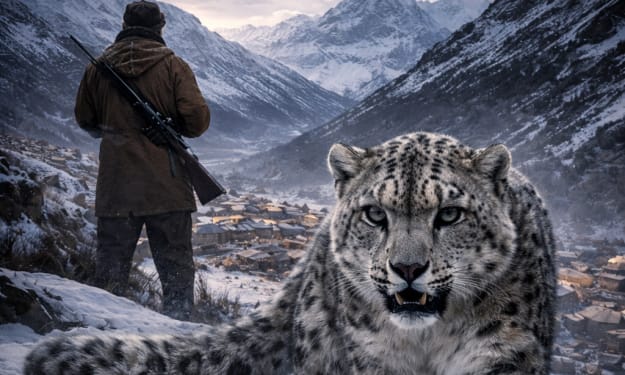
High in the rugged mountains of Central and South Asia lives one of the world’s most mysterious and beautiful big cats—the snow leopard. Known for its thick grey-white fur, long tail, and incredible ability to blend into rocky landscapes, this elusive predator has fascinated scientists and wildlife lovers for decades. Yet despite its beauty and ecological importance, the snow leopard faces a growing threat: human revenge.
By Irshad Abbasi 2 days ago in Earth



Comments
There are no comments for this story
Be the first to respond and start the conversation.