
Conquering the Concrete Jungle: A Boy's Triumph Over Adversity in Creating a Rooftop Garden in the Heart of the City
A Tale of Resilience, Ingenuity, and the Unwavering Spirit of a Young Gardener

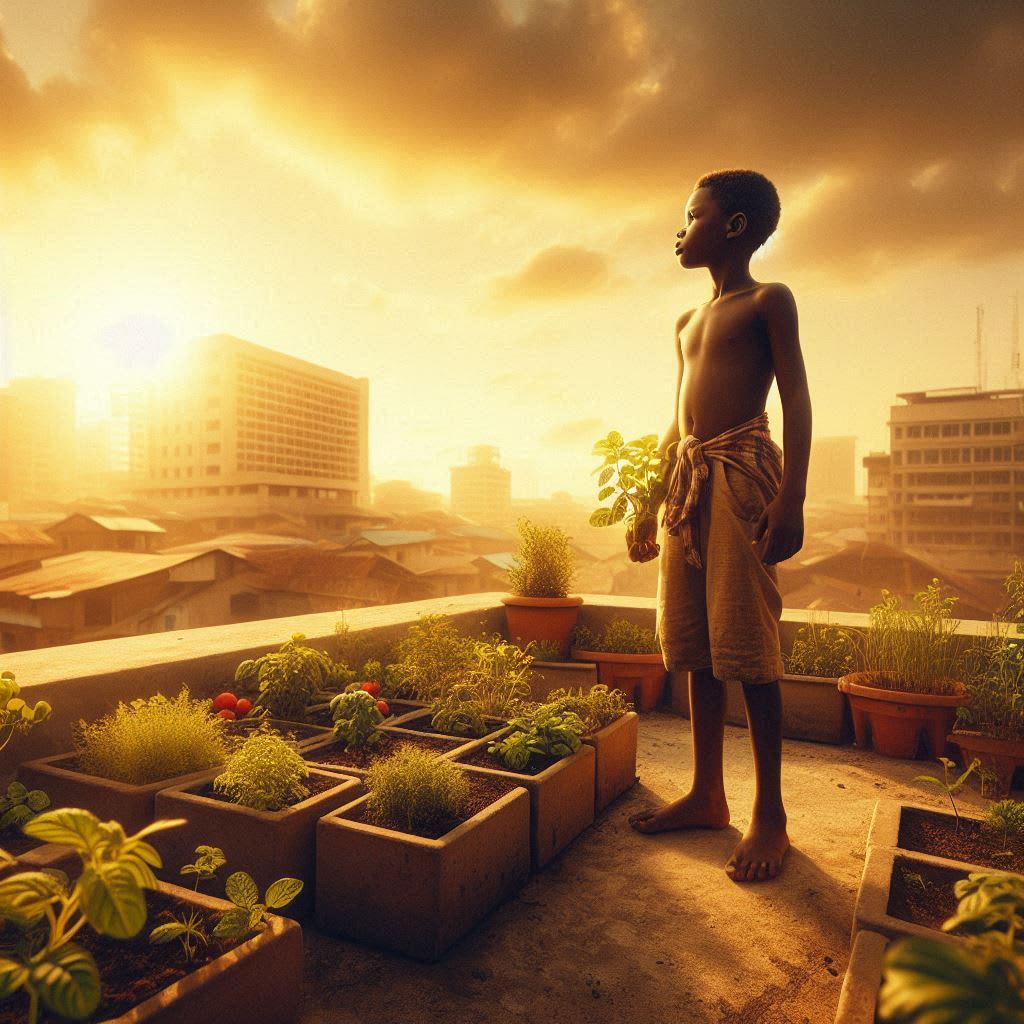
Akim, a young boy in Africa, dreams of a rooftop garden but faces scorching heat, a rat infestation, and poverty. Through ingenuity, perseverance, and a deep understanding of his environment, he overcomes these challenges and transforms his barren terrace into a vibrant oasis.
The merciless African sun beat down on the concrete terrace, baking it into an inferno. Sweat stung Akim's eyes as he surveyed the desolate expanse. His heart, once filled with the vibrant dream of a rooftop garden, now felt heavy with despair.
Akim, a young boy from a small village, had moved to the bustling city with his family. He yearned for the lush greenery of his childhood, the vibrant colors of his mother's garden. He longed to reconnect with nature, to feel the earth beneath his fingers, to nurture life. But the harsh realities of city living, poverty gnawing at their heels, threatened to crush his dreams.
His terrace, a barren expanse of concrete, offered little hope. The scorching heat, easily reaching 40 degrees Celsius, would bake any seedling to a crisp. And then there were the rats, scurrying shadows in the night, feasting on his meager attempts. Each morning, Akim would wake to find his seedlings gnawed to stumps, his hopes shattered anew.
Disappointment, sharp and bitter, threatened to consume him. He felt like a lone warrior battling against insurmountable odds. Money was scarce, every coin precious. Buying expensive fertilizers or fancy irrigation systems was out of the question. He had to find ingenious, low-cost solutions.
He spent hours observing the environment, studying the way the sun moved across the sky. He noticed how the shade beneath a large mango tree remained cool and inviting. Inspiration struck. He collected discarded cardboard boxes and plastic sheets, fashioning makeshift shades to protect his plants from the blistering sun. He experimented with different materials, finding that old blankets and discarded sacks provided the most effective shade.
But the heat was relentless. Even with the makeshift shades, the soil still baked. Akim remembered his grandmother's wisdom, her tales of using natural materials to cool the earth. He scoured the neighborhood, collecting fallen leaves, grass clippings, and even discarded fruit peels. He layered these organic materials generously around his plants, creating a thick, insulating mulch.
The mulch not only helped to retain moisture but also provided a welcome respite from the scorching sun. The soil beneath the mulch remained noticeably cooler, a glimmer of hope returning to Akim's heart.
But the rat problem persisted. The cunning creatures, undeterred by the makeshift barriers, continued their nightly raids. Akim felt a surge of frustration, his spirit waning. He refused to give up. He remembered his grandfather's traps, simple contraptions made from discarded bottles and pieces of wood. He spent hours crafting these traps, placing them strategically around his garden.
He also experimented with natural repellents. He planted strong-smelling herbs like mint and rosemary around the perimeter of his garden. The pungent aroma, he hoped, would deter the rodents. He even tried sprinkling chili powder around his plants, a tactic that proved surprisingly effective.
But success remained elusive. The rats, resourceful and resilient, outsmarted his traps, found ways to circumvent the herbal barriers. Discouragement threatened to engulf him. He felt like a lone warrior battling against an invisible, relentless enemy.
Yet, Akim refused to surrender. He analyzed his failures, meticulously observing the rats' behavior, studying their movements. He realized that his traps were too predictable, his repellents not strong enough. He refined his strategies, making his traps more cunning, his repellents more potent. He spent hours observing the rats, learning their patterns, their weaknesses.
He learned to be patient, to persevere. He learned that setbacks were inevitable, that failure was a stepping stone to success. He learned that true victory lay not in immediate triumph, but in the continuous struggle, the unwavering will to overcome.
Slowly, painstakingly, Akim began to see results. The rats, once a constant threat, became less frequent visitors. His plants, nurtured by the cool mulch and shielded from the scorching sun, began to thrive. Tiny shoots emerged, pushing their way through the soil, reaching for the light.
Akim's heart swelled with joy. He felt a sense of accomplishment, a deep satisfaction that transcended mere material gain. He had overcome the scorching heat, outsmarted the cunning rats, transformed a barren concrete wasteland into a vibrant oasis.
He learned that gardening was more than just planting seeds; it was a journey of discovery, a testament to the power of human will. It was about facing challenges, overcoming obstacles, and learning from every setback. It was about nurturing not just plants, but also his own spirit, his own resilience.
Akim's rooftop garden, a testament to his perseverance and ingenuity, became a beacon of hope in the heart of the city. It was a reminder that even in the harshest conditions, with limited resources and countless challenges, the human spirit could flourish, transforming barren landscapes into vibrant havens of life.
About the Creator
Keep reading
More stories from Vishnu venugopal and writers in Earth and other communities.
The Kangaroo Chronicles
Ah, the kangaroo. The epitome of Australian wildlife. With their adorable faces, powerful legs, and pouches that make you question the limits of biology, kangaroos have hopped their way into the hearts of many. But behind those endearing eyes lies a creature that’s not just a hopping bundle of joy. So, how dangerous are kangaroos? Let’s hop right in and explore, with a dash of comedy, of course. What Exactly is a Kangaroo? Before we delve into the dangers, let’s understand what a kangaroo is. Kangaroos are marsupials belonging to the family Macropodidae, which literally means “big foot” (take that, Sasquatch). These iconic animals are native to Australia and nearby islands, and they come in various shapes and sizes, with the red kangaroo being the largest and most well-known. Kangaroos are herbivores with a diet primarily consisting of grasses and other vegetation. They have powerful hind legs for jumping, a muscular tail for balance, and a pouch for carrying their young, called joeys. In short, they’re nature’s version of a Swiss Army knife—versatile and equipped for survival in the harsh Australian outback. How Dangerous Are Kangaroos? Now, let’s address the kangaroo in the room: their potential danger. While kangaroos aren’t out to get you like some Hollywood villain, they can be dangerous under certain circumstances. Here’s why: 1. Powerful Legs: Kangaroos have incredibly strong hind legs that they use for jumping and delivering powerful kicks. If threatened or cornered, a kangaroo can use its legs to deliver a kick that could send you flying faster than a boomerang on a windy day. 2. Sharp Claws: Those cute little paws? They hide sharp claws that kangaroos use for defense. A swipe from a kangaroo can leave you with more than just a scratch. 3. Boxing Matches: Kangaroos are known for their boxing behavior, which is actually a display of dominance and territory. If you find yourself in the middle of a kangaroo boxing match, it’s best to back away slowly and leave the ring to the professionals. 4. Protective Mothers: Just like any other wild animal, kangaroo mothers are fiercely protective of their joeys. If you get too close to a mother kangaroo and her young, you might find yourself on the receiving end of her protective instincts. Comedy Time: Kangaroo Encounters Let’s lighten the mood with some humorous kangaroo encounters. Imagine you’re a tourist in Australia, ready to snap a selfie with a kangaroo. You approach cautiously, your camera at the ready. The kangaroo looks at you, sizing you up. You think, “What’s the worst that could happen?” Suddenly, the kangaroo springs into action, delivering a kick that sends your hat flying and your dignity with It. You quickly realize that posing with a kangaroo is not for the faint of heart. Or picture this: you’re on a peaceful hike through the Australian bush, admiring the scenery. Out of nowhere, a kangaroo hops into your path. You freeze, remembering all the YouTube videos of kangaroo boxing matches. The kangaroo eyes you warily, and you slowly back away, hoping it doesn’t challenge you to a duel. You might laugh about it later, but in the moment, it’s a heart-pounding encounter. Co-existing with Kangaroos For those living in kangaroo-populated areas, co-existing with these hopping wonders involves a bit of common sense and respect. Here are some tips: 1. Keep Your Distance: Admire kangaroos from afar. They might look cute, but they’re wild animals with powerful legs and sharp claws. 2. Don’t Feed Kangaroos: Feeding kangaroos can encourage them to approach humans, leading to potentially dangerous encounters. 3. Stay Calm: If you encounter a kangaroo, stay calm and avoid sudden movements. Back away slowly and give the kangaroo space. 4. Be Cautious During Mating Season: Male kangaroos can be more aggressive during mating season. Keep an extra distance during this time. The Role of Kangaroos in the Ecosystem Despite their potential dangers, kangaroos play a vital role in the Australian ecosystem. As herbivores, they help maintain the balance of plant life by grazing on grasses and vegetation. Their grazing habits can prevent overgrowth and reduce the risk of wildfires. In essence, kangaroos are nature’s landscapers, keeping the outback in check with their grazing and hopping. Kangaroos are also an important part of the food chain. They are prey for larger predators such as dingoes and eagles. By being a food source for these predators, kangaroos contribute to the overall health and balance of the ecosystem. It's a wild, interconnected dance of life, and kangaroos are a key player in the outback symphony. In Conclusion So, how dangerous are kangaroos? While they can pose a threat under certain circumstances, they’re not out to get you. Treat them with the respect they deserve, and you’ll have a safe and memorable experience in the land of hopping wonders. Remember, in the grand Australian wildlife danger spectrum, they’re somewhere between a curious koala and a crocodile with a bad attitude. Treat kangaroos with respect, and you’ll be able to enjoy the beauty and wonder of these iconic Australian creatures. In the end, kangaroos are fascinating animals that are a vital part of Australia’s unique biodiversity. With their powerful legs, adorable joeys, and occasional boxing antics, they capture the imagination and admiration of people worldwide. So, the next time you encounter a kangaroo, remember to keep your distance, respect their space, and appreciate the wonder of one of Australia’s most iconic creatures. Relevant Resources - [National Geographic: Kangaroo](https://www.nationalgeographic.com/animals/mammals/facts/kangaroo) - [Australian Government: Kangaroos](https://www.environment.gov.au/topics/wildlife-and-threatened-species/wildlife-conservation/kangaroos) - [BBC Earth: Everything You Need to Know About Kangaroos](https://www.bbcearth.com/blog/?article=everything-you-need-to-know-about-kangaroos)
By Vishnu venugopal about a year ago in Earth
Trump Calls UK’s Chagos Islands Sovereignty Decision an Act of ‘Great Stupidity’
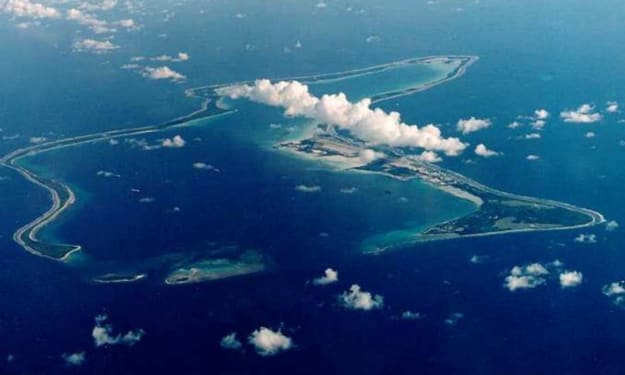
Former U.S. President Donald Trump has criticized the United Kingdom’s decision to hand over sovereignty of the Chagos Islands to Mauritius, calling it an act of “great stupidity.” This high-profile statement has reignited debates over colonial legacies, geopolitical alliances, and the rights of local communities. While the issue may seem distant to many, it carries significant implications for global politics, regional stability, and the affected communities. The Chagos Islands, a strategically located archipelago in the Indian Ocean, have long been a point of contention between the UK, Mauritius, and the United States, which maintains a military base on Diego Garcia, one of the largest islands. The latest political statements have highlighted not only international disagreements but also how decisions by governments can affect local populations and global perceptions. Why the UK Is Handing Over the Chagos Islands The UK’s decision to transfer sovereignty to Mauritius comes after years of legal challenges and international pressure. The United Nations has repeatedly called for the return of the islands to Mauritius, stating that the previous detachment in 1965 was illegal. The move aims to: Resolve a longstanding international dispute Acknowledge the rights of the Chagossian people, many of whom were forcibly removed from the islands decades ago Comply with international law and UN recommendations For many in Mauritius and the Chagossian diaspora, the transfer represents justice and recognition of their historical grievances. Trump’s Criticism and Its Context Trump described the UK’s decision as “an act of great stupidity,” emphasizing strategic and military concerns. The United States relies on Diego Garcia for one of its key military bases, crucial for operations in the Indian Ocean region and beyond. From Trump’s perspective, the sovereignty transfer could: Complicate U.S. military logistics Create uncertainty over strategic agreements Signal weakness in alliances with close partners like the UK However, critics argue that such statements overlook the rights of the displaced Chagossian communities and the importance of resolving colonial-era injustices. Impact on Local Communities The Chagos Islands have a unique human story. In the 1960s and 1970s, the indigenous Chagossian population was forcibly removed to make way for a U.S. military base. Families were relocated to Mauritius, the Seychelles, and other areas, often under harsh conditions. The sovereignty transfer could: Support efforts for Chagossians to return home Enable compensation and recognition of historical wrongs Promote cultural and community restoration Community advocates argue that international legal decisions should prioritize the welfare and rights of displaced populations, not just geopolitical or strategic interests. Geopolitical Implications The dispute is more than a bilateral issue between the UK and Mauritius. It has global political ramifications, including: U.S.-UK relations: While the UK maintains a strategic alliance with the U.S., the sovereignty decision may raise tensions over military operations. Indian Ocean stability: The islands are located in a key maritime region, affecting naval operations, trade routes, and regional security. International law precedent: Recognizing Mauritius’ claim reinforces UN rulings on decolonization and territorial sovereignty. For communities that follow global politics, these dynamics highlight how high-level political decisions impact both strategy and society. Media and Public Reaction Trump’s comments have dominated media coverage, sparking debate in international communities and online forums. Public opinion is divided: Supporters of Trump’s viewpoint cite national security concerns and strategic importance. Critics highlight colonial injustices and the need to respect the rights of indigenous populations. Social media discussions reveal growing interest in the balance between military strategy and human rights, showing that global decisions resonate with everyday communities. Legal and Ethical Considerations The transfer of the Chagos Islands raises several legal and ethical issues: Sovereignty and Self-Determination: The Chagossian people’s right to return and their cultural identity must be respected. Colonial History: Addressing past injustices is an ethical obligation for governments involved in colonial-era displacement. Military Agreements: Ensuring strategic stability while honoring international law is a complex balancing act. Legal scholars note that this case could set a precedent for other disputed territories, influencing how communities worldwide perceive justice, sovereignty, and rights. Why This Matters to Communities Even though the Chagos Islands are remote, the controversy touches on community awareness and engagement: Diaspora Communities: Chagossians and Mauritians see this as a historic moment affecting their families and heritage. Global Citizens: People interested in human rights and international law follow such cases to understand justice and accountability. Policy Advocates: NGOs and advocacy groups use this dispute to promote awareness of displacement, sovereignty, and ethical governance. In short, political decisions at the top level ripple down to real people, influencing lives, cultural identity, and community cohesion. Looking Ahead The future of the Chagos Islands will depend on: Implementation of sovereignty transfer: Ensuring legal and diplomatic arrangements are respected. U.S.-UK negotiations: Maintaining strategic interests while addressing human rights. Chagossian return programs: Supporting the restoration of communities affected by displacement. The controversy is a reminder that politics and community welfare are intertwined, and decisions made in boardrooms or government offices can have lasting effects on populations far from the center of power. The Takeaway Trump’s statement about the Chagos Islands sovereignty highlights the tension between geopolitical strategy and community justice. While international relations and military interests are important, the voices of the displaced Chagossian community cannot be ignored. For communities following global politics, the case demonstrates how: International decisions affect local populations Human rights and sovereignty are key considerations Awareness and advocacy by communities can influence global policy As debates continue, the story of the Chagos Islands serves as a reminder that political and strategic choices have human consequences, and that protecting community rights is as vital as maintaining alliances.
By Muhammad Hassanabout 2 hours ago in Earth
Images Show Aftermath of Deadly Crash on Thai Railway Line
Some images stay with you long after you scroll past them. The photographs coming out of Thailand this week do exactly that. Twisted steel, overturned train carriages, scattered luggage, and exhausted rescue workers tell a devastating story — one that words alone cannot fully explain. A deadly crash on a Thai railway line has claimed multiple lives and left dozens injured, turning an ordinary journey into a nightmare. As images from the scene circulate globally, they reveal not just destruction, but grief, courage, and difficult questions about safety in one of Southeast Asia’s busiest rail networks. A Normal Journey That Ended in Disaster For the passengers on board, the day began like any other. People were heading to work, returning home, or traveling to see family. The train moved steadily along the tracks — until everything suddenly changed. According to officials, the crash occurred when heavy construction equipment collapsed onto an active railway line, striking a moving passenger train. The impact derailed multiple carriages, causing chaos inside the train as metal twisted and windows shattered. Within moments, smoke filled the air and cries for help echoed from inside the wreckage. For many passengers, there was no time to react. What the Images Reveal The aftermath photos are haunting. In some images, train carriages lie on their sides, crushed and burned. In others, rescue teams climb over debris, cutting through metal to reach trapped passengers. Personal belongings — backpacks, shoes, food containers — are scattered across the tracks, quiet reminders of lives abruptly interrupted. One particularly striking image shows emergency workers standing silently beside the wreckage, their faces reflecting exhaustion and sorrow. These visuals do more than document damage; they capture the emotional weight of the tragedy. Images like these remind us how fragile routine can be — how quickly normal life can turn into crisis. The Human Cost of the Crash Authorities confirmed that multiple people lost their lives, while dozens were injured, some critically. Hospitals in nearby areas were quickly overwhelmed as ambulances transported victims from the scene. Families rushed to medical centers, searching for loved ones. For many, the wait for information was agonizing. Phone calls went unanswered. Names were not immediately confirmed. In moments like these, uncertainty can be as painful as loss itself. Survivors have described scenes of panic, confusion, and shock. Some helped fellow passengers escape wrecked carriages. Others waited helplessly, trapped until rescuers could reach them. Rescue Efforts Under Pressure Emergency response teams acted quickly, working against time and unstable conditions. Firefighters, paramedics, and volunteers used cutting tools and heavy machinery to clear wreckage and pull survivors to safety. Despite the dangers, many rescuers worked for hours without rest. Some images show medics kneeling beside injured passengers on the ground, administering care before transport. Others show cranes lifting destroyed train cars away from the tracks. Their efforts likely saved lives — but the scale of the damage made the operation incredibly challenging. How Did This Happen? As the shock begins to settle, attention has turned to how such a catastrophic accident was allowed to occur. Early reports suggest the crash involved construction work taking place near or above an active railway line. This has raised serious concerns about oversight, safety planning, and coordination between construction teams and railway authorities. Questions being asked include: Why was heavy equipment operating so close to a moving passenger train? Were safety inspections properly conducted? Were warning systems or track closures considered? An official investigation is now underway, but for many families, answers will come too late. A Wake-Up Call for Railway Safety Thailand has invested heavily in rail infrastructure in recent years, aiming to modernize transport and improve connectivity. But this tragedy highlights the risks that come with rapid development when safety measures fail or are ignored. Experts warn that construction near live railway lines requires strict controls, constant monitoring, and zero tolerance for shortcuts. Even a single failure can lead to irreversible consequences — as this crash painfully demonstrates. Public trust in rail safety has been shaken, and restoring it will require transparency, accountability, and meaningful reform. Grief, Solidarity, and Remembrance In the days following the crash, communities across Thailand have expressed sorrow and support. Vigils have been held. Messages of condolence continue to pour in. Volunteers have donated blood and supplies to help victims and hospitals. The images from the scene have united people in grief — not just in Thailand, but around the world. They serve as a reminder that behind every headline are real people, real families, and real loss.
By Muhammad Hassan6 days ago in Earth



Comments
There are no comments for this story
Be the first to respond and start the conversation.