
Conquering Chulu East Peak: A Complete Guide for Adventurous Trekkers
In this comprehensive guide, we will explore everything you need to know about Chulu East Peak, including its location, itinerary, difficulty, best seasons to climb, required permits, and tips for a successful ascent.

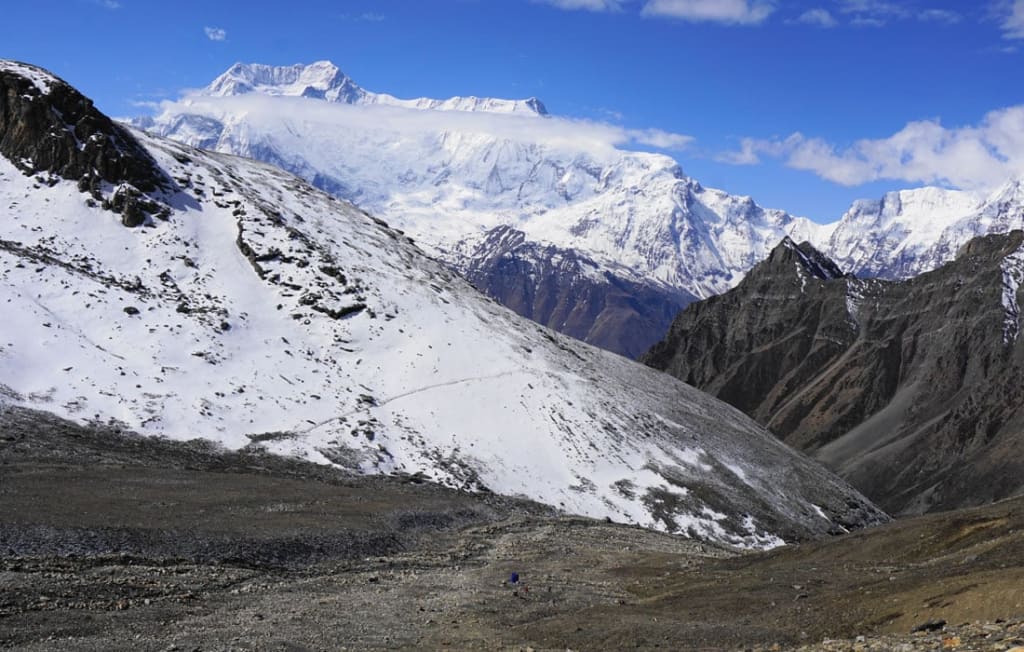
Nepal is home to some of the most awe-inspiring trekking destinations in the world. While the mighty Everest and the iconic Annapurna often steal the spotlight, there are lesser known but equally rewarding peaks for those seeking a more unique mountaineering experience. One such destination is Chulu East Peak. Standing tall at an elevation of 6,584 meters, Chulu East is part of the Damodar Himal range in the Annapurna region and offers an excellent blend of trekking and climbing adventure.
What Is Chulu East Peak?
Chulu East Peak is one of the three Chulu peaks – East, West, and Far East – situated in the Manang district of Nepal. The peak is considered a "trekking peak" by the Nepal Mountaineering Association (NMA), making it accessible to climbers who possess basic mountaineering skills. Although it is less technically demanding than some of Nepal’s other expedition peaks, Chulu East still requires good physical fitness, acclimatization, and some climbing experience.
Chulu East Peak offers climbers spectacular panoramic views of the Annapurna range, including Annapurna II, III, IV, Gangapurna, and Tilicho Peak, among others. The journey to the peak takes trekkers through scenic valleys, high mountain passes, and traditional Himalayan villages, making it both a cultural and natural experience.
Where Is Chulu East Peak Located?
Chulu East Peak is located north of the Annapurna range, within the Annapurna Conservation Area. The peak lies in the Manang region, which is well-known for its Tibetan-influenced culture, ancient monasteries, and unique landscapes. Most expeditions to Chulu East follow the classic Annapurna Circuit route before branching off toward the Chulu base camp.
How Difficult Is Climbing Chulu East Peak?
Chulu East Peak is considered a moderately challenging climb. While it does not demand technical mountaineering skills such as ice climbing or rock climbing, climbers must be comfortable with using ropes, crampons, and ice axes. The altitude itself is a significant challenge, as it rises above 6,500 meters.
Acclimatization plays a critical role in a successful climb. Altitude sickness can affect even the most experienced trekkers, so it is essential to follow a gradual ascent and include rest days in the itinerary. Prior experience in high-altitude trekking or peak climbing is highly recommended.
Recommended Itinerary for Chulu East Peak Climbing
While there are several variations depending on your starting point and preferences, a typical Chulu East Peak climbing itinerary spans about 18 to 21 days. Here is a sample outline:
Day 1-2: Arrival in Kathmandu and trip preparation
Day 3-7: Drive to Chamje and trek to Manang via Dharapani and Chame
Day 8: Acclimatization day in Manang
Day 9-10: Trek to Chulu East Base Camp
Day 11: Rest and acclimatization at Base Camp
Day 12: Move to High Camp
Day 13: Summit Chulu East Peak and return to Base Camp
Day 14-17: Trek to Thorong La Pass and descend to Muktinath and Jomsom
Day 18-21: Fly back to Pokhara and return to Kathmandu
This itinerary includes ample acclimatization time and opportunities to explore the beautiful Annapurna region.
When Is the Best Time to Climb Chulu East Peak?
The most suitable seasons for climbing Chulu East Peak are spring (March to May) and autumn (September to November). During these months, the weather is relatively stable, the skies are clear, and the temperature is moderate, making it ideal for high-altitude trekking and climbing.
Spring is especially popular due to the blooming rhododendron forests and vibrant mountain scenery. Autumn, on the other hand, offers crisp air and excellent visibility. Winter and monsoon seasons are not recommended due to heavy snowfall, slippery trails, and unpredictable weather.
Permits Required for Chulu East Peak
Climbing Chulu East Peak requires a combination of trekking and climbing permits. These include:
1. Nepal Mountaineering Association (NMA) Permit: Since Chulu East is categorized as a Group "B" trekking peak, climbers must obtain a climbing permit from the NMA.
2. Annapurna Conservation Area Permit (ACAP): Required to enter the conservation area.
3. Trekkers’ Information Management System (TIMS) Card: Essential for safety and record-keeping purposes.
These permits can be obtained through a registered trekking agency in Nepal, and most climbing packages include these costs.
Accommodation and Food During the Trek
Accommodation during the trek up to the base camp typically involves staying in teahouses or lodges. These are basic but comfortable, offering local food such as dal bhat, noodles, potatoes, and Tibetan bread. Once above base camp, especially at high camp and during the summit push, climbers usually stay in tents and rely on meals prepared by the expedition cook or guide team.
It is advisable to carry energy bars, snacks, and water purification tablets. Staying hydrated and well-nourished is crucial at high altitudes.
Essential Gear for Chulu East Peak Climbing
Here is a basic list of gear required for Chulu East Peak:
• Mountaineering boots
• Crampons
• Ice axe
• Climbing harness and rope
• Helmet
• Down jacket and sleeping bag
• Trekking poles
• Layered clothing for varied temperatures
• Sunglasses and sunscreen
• Headlamp with extra batteries
Most trekking agencies provide or rent out technical gear, but it’s best to confirm in advance.
Hiring a Guide and Porter
Although it is possible to trek independently in the Annapurna region, climbing Chulu East Peak requires a licensed guide. The terrain, weather conditions, and high altitude pose serious risks, and having an experienced guide can make the difference between success and failure.
Hiring a porter is also recommended, as they can carry your heavy gear, allowing you to focus on the climb and conserve energy.
Why Choose Chulu East Peak?
Climbing Chulu East Peak is more than just a physical challenge. It is a journey through some of the most remote and beautiful landscapes in the Himalayas. With fewer crowds compared to other peaks, Chulu East offers solitude, cultural immersion, and a sense of personal achievement. Whether you are an aspiring mountaineer or a seasoned trekker looking to push your limits, this peak promises a truly unforgettable adventure.
Conclusion
If you are looking for a unique Himalayan climbing experience that combines breathtaking scenery, cultural richness, and mountaineering thrill, then Chulu East Peak should be high on your list. While it demands preparation, fitness, and determination, the rewards are well worth the effort. Make sure to plan wisely, choose a reputable trekking agency, and respect the natural and cultural heritage of the region.
Embark on the journey to Chulu East Peak and let the Himalayas inspire your spirit of adventure.
About the Creator
Anya Gurung
I am a traveller/explorer
Keep reading
More stories from Anya Gurung and writers in Earth and other communities.
Best Heritage Sites for a Day Tour in Kathmandu
Kathmandu, the vibrant capital of Nepal, is a living museum of ancient temples, palaces, and courtyards. It is home to seven UNESCO World Heritage Sites, each reflecting centuries of rich history, spiritual depth, and architectural brilliance. If you have only one day to explore the city, you can still immerse yourself in some of the finest heritage sites in Kathmandu—all within a short distance of each other.
By Anya Gurung9 months ago in Earth
Philippines Carbon Black Market: Industrial Demand, Manufacturing Activity & Environmental Considerations
Philippines Carbon Black Market Overview The Philippines carbon black market is developing steadily as industrial production, automotive demand and manufacturing activity continue to expand. The Philippines carbon black market size reached USD 80.55 Million in 2024. Looking forward, the market is projected to reach USD 109.73 Million by 2033, exhibiting a growth rate (CAGR) of 3.14% during 2025-2033. This growth reflects consistent demand from downstream industries rather than rapid structural change.
By Manisha Dixita day ago in Earth
"NASA satellites confirm that China’s Great Green Wall is effectively slowing desert expansion and reshaping entire regions
NASA satellite data has confirmed what scientists, policymakers, and local communities in China have hoped for decades: the Great Green Wall is working. Designed to slow the relentless expansion of deserts across northern China, this ambitious ecological project is not only reducing desertification but also reshaping entire regions—environmentally, economically, and socially. Often compared to Africa’s Great Green Wall, China’s version is one of the largest environmental engineering projects in human history. Officially known as the Three-North Shelter Forest Program, it stretches across northern, northeastern, and northwestern China, covering an area larger than many countries. Launched in 1978, the project aims to combat desert expansion, reduce sandstorms, protect farmland, and stabilize local climates through large-scale tree planting and vegetation restoration. For years, critics questioned whether planting trees in arid and semi-arid regions was sustainable. Some argued that trees would consume scarce groundwater, while others doubted whether satellite images could capture meaningful ecological change. Now, decades later, NASA’s satellite observations provide compelling evidence that the Great Green Wall is having a measurable and positive impact. According to satellite data, vegetation cover across northern China has increased significantly. Areas once dominated by shifting sand dunes now show stable plant growth, reduced soil erosion, and improved land productivity. These changes are not isolated; they span vast regions, indicating that the project is influencing ecosystems on a continental scale. Desert expansion, once advancing at alarming rates, has slowed dramatically in several high-risk zones. One of the most visible benefits has been the reduction in sandstorms. Cities like Beijing, which once endured frequent and severe dust storms originating from nearby deserts, have seen noticeable improvements in air quality. NASA imagery reveals that wind-blown dust has decreased as vegetation acts as a natural barrier, anchoring soil and reducing airborne particles. This has direct public health benefits, lowering respiratory illnesses and improving overall quality of life for millions of residents. Beyond environmental gains, the Great Green Wall is reshaping regional economies. Stabilized land allows farmers to reclaim fields once lost to encroaching deserts. In some areas, agroforestry—combining trees with crops—has created new income streams while maintaining ecological balance. Satellite data shows that these mixed-use landscapes are more resilient to drought and climate extremes than monoculture farming systems. The project has also influenced local climate patterns. Increased vegetation helps regulate surface temperatures and moisture levels. NASA observations indicate slight increases in local rainfall and reductions in surface heat in reforested zones. While these changes may seem modest, over large areas they contribute to more stable weather patterns and reduced vulnerability to climate shocks. However, the success of the Great Green Wall is not uniform. Satellite analysis also reveals areas where tree survival rates are low or where non-native species struggle to adapt. In response, China has adjusted its strategy, shifting from mass tree planting to ecosystem-based restoration. This includes planting native grasses and shrubs, restoring wetlands, and allowing natural regeneration where possible. The evolving approach reflects lessons learned from decades of experimentation. Another key factor behind the project’s effectiveness is long-term commitment. Unlike short-term environmental campaigns, the Great Green Wall spans generations. NASA’s ability to track changes over decades has been crucial in demonstrating progress that would be invisible on shorter timelines. This long-view perspective underscores an important lesson for global climate efforts: meaningful ecological recovery takes time, patience, and sustained investment. Internationally, China’s experience is drawing attention. Countries facing desertification—from parts of Africa to the Middle East and Central Asia—are studying the Great Green Wall as a model. NASA’s confirmation adds scientific credibility, showing that large-scale land restoration can work when supported by data, adaptive management, and local participation. Still, challenges remain. Climate change continues to intensify droughts, heatwaves, and extreme weather events, threatening fragile restored ecosystems. Experts caution that the Great Green Wall is not a permanent solution but a dynamic system that requires continuous monitoring, maintenance, and adaptation. Satellite technology will remain essential in identifying stress points and guiding future interventions. In the end, NASA’s findings do more than validate a single project—they reshape how we think about humanity’s relationship with nature. The Great Green Wall demonstrates that environmental degradation is not always irreversible. With science, long-term planning, and political will, even vast deserts can be slowed, reshaped, and partially healed. As the world searches for solutions to climate change and land degradation, China’s Great Green Wall stands as a powerful example: proof that large-scale environmental action, guided by data from space, can transform landscapes on Earth.
By Fiaz Ahmed 7 days ago in Earth
Autonomy Is The Real Privilege
Good morning, freedom-seekers! Today we’re gonna be looking at autonomy. A strange word, I know; one many would probably look at blankly and run away from on sight. We’re gonna figure out what it actually means, consider how it’s achieved, and decipher just how deeply most of us are tangled up in dependence without realising it.
By That ‘Freedom’ Guy3 days ago in Humans




Comments
There are no comments for this story
Be the first to respond and start the conversation.