
Confronting the New World Problems: Navigating Global Crises in the 21st Century
From Climate Change to AI Ethics, Humanity Faces Complex and Interconnected Challenges Requiring Urgent and Cooperative Solutions

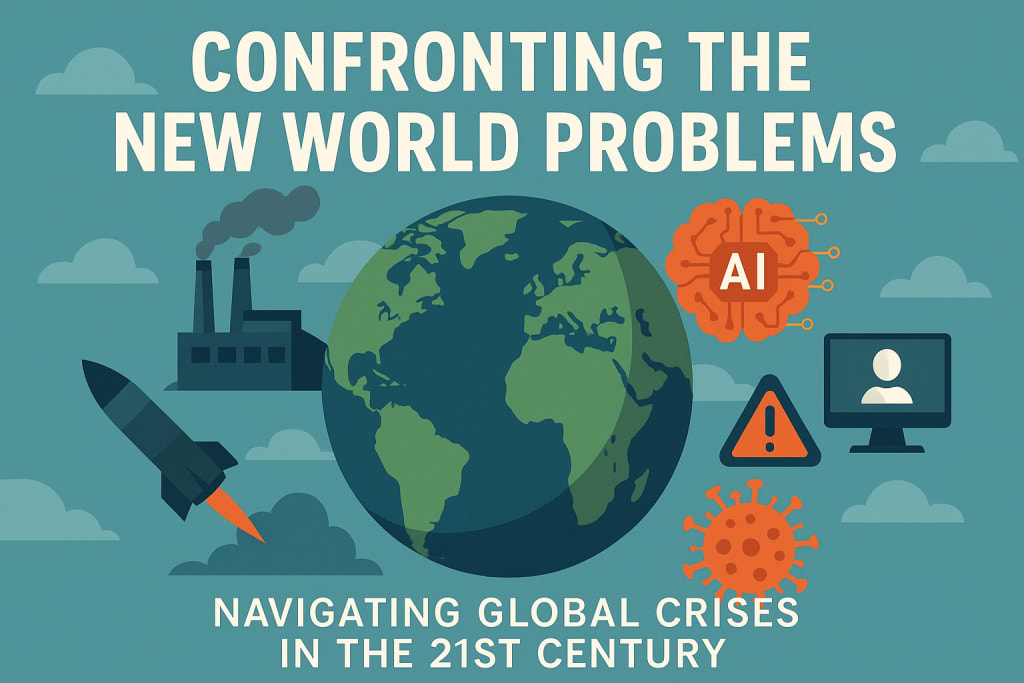
As we advance deeper into the 21st century, humanity stands at a pivotal crossroads marked by unprecedented technological innovation, environmental shifts, and socio-political turbulence. While progress in science and connectivity has brought undeniable benefits, it has also unveiled a complex web of global problems that transcend borders, ideologies, and generations. These "new world problems" are no longer isolated to specific nations or communities—they are deeply interconnected, and their solutions demand global cooperation, innovative thinking, and ethical leadership.
1. Climate Change and Environmental Degradation
Perhaps the most pressing issue facing the world today is climate change. The continued rise in global temperatures due to greenhouse gas emissions is leading to more frequent and intense natural disasters, including wildfires, floods, hurricanes, and droughts. Polar ice caps are melting at alarming rates, sea levels are rising, and ecosystems are collapsing. The consequences are not just environmental—they are economic, political, and humanitarian.
Poor and vulnerable populations are disproportionately affected by climate-induced displacement, food insecurity, and water scarcity. Even wealthy nations are not immune, facing costly infrastructure damage and increased public health risks. Despite international efforts such as the Paris Agreement, emissions continue to rise, underscoring the urgent need for stronger global commitments and faster adoption of renewable energy sources.
2. The Rise of Artificial Intelligence and Ethical Dilemmas
Artificial Intelligence (AI) has the potential to transform industries, healthcare, and education. However, the rapid development of AI technologies has outpaced the formulation of ethical guidelines and regulatory frameworks. Concerns about privacy, surveillance, bias in algorithms, and job displacement are growing.
AI-generated misinformation, including deepfakes and algorithmically manipulated content, poses a significant threat to democratic institutions and public trust. Furthermore, the development of autonomous weapons and the lack of international agreements regulating their use raise fears of a new kind of arms race. Ethical and legal frameworks need to evolve rapidly to ensure that AI benefits humanity rather than exacerbates existing inequalities.
3. Geopolitical Instability and the Erosion of Global Cooperation
In recent years, global cooperation has weakened amid rising nationalism, populism, and political polarization. International institutions like the United Nations and World Health Organization have faced criticism and reduced influence. Conflicts in regions such as Ukraine, the Middle East, and parts of Africa continue to displace millions and destabilize economies.
Moreover, the rise of cyber warfare and information warfare has added new dimensions to international conflict, making it harder to distinguish between peace and aggression. In an interconnected world, instability in one region often reverberates across the globe through trade disruptions, migration crises, and economic downturns.
4. Pandemic Preparedness and Public Health Crises
The COVID-19 pandemic exposed the fragility of global public health systems. Despite technological and medical advancements, the world was caught off guard, with severe shortages of medical supplies, overwhelmed hospitals, and unequal access to vaccines. The pandemic highlighted not only health vulnerabilities but also deep-rooted social and economic inequalities.
Future pandemics, potentially more lethal and widespread, are likely. Preparing for them requires investing in public health infrastructure, enhancing global surveillance systems, and fostering scientific collaboration. It also requires addressing misinformation and rebuilding public trust in science and institutions.
5. Digital Divide and Inequality in the Age of Information
While the internet has revolutionized access to information and services, it has also widened the gap between those with and without digital access. In many parts of the world, lack of connectivity limits opportunities for education, employment, and civic participation.
Moreover, the dominance of a few tech giants has raised concerns over monopolistic practices, user data exploitation, and manipulation of public discourse. Bridging the digital divide and ensuring equitable access to technology is crucial for creating a more inclusive and informed global society.
Conclusion: A Call for Global Solidarity and Forward Thinking
The new world problems are not merely challenges to overcome—they are tests of our collective capacity for empathy, innovation, and cooperation. Solving these issues requires more than short-term fixes or isolated efforts; it demands a paradigm shift toward sustainable development, ethical governance, and global solidarity.
Leaders, institutions, and citizens must recognize the interconnected nature of these crises. The choices we make today will shape the world for generations to come. Whether we choose to confront these challenges head-on or continue down a path of division and denial will determine the future of humanity—and the planet we all share.
About the Creator
Syad Umar
my name is umar im from peshawer
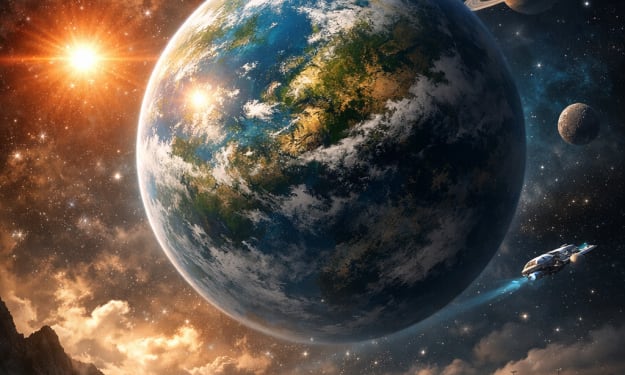
A Planet the Size of Earth with an Atmosphere Like Our Own
For centuries, humans have looked up at the night sky and wondered whether Earth is the only world capable of supporting life. Advances in modern astronomy have brought us closer than ever to answering that question. Recently, astronomers announced the discovery of a planet roughly the size of Earth with an atmosphere that appears surprisingly similar to our own. This finding has sparked excitement among scientists and renewed hope that life might exist elsewhere in the universe.
By Irshad Abbasi 2 days ago in Earth



Comments
There are no comments for this story
Be the first to respond and start the conversation.