
Cloud‑Hugger in a Fur Coat: The Enchanting Tale of the Ili Pika
High above the tree line lives a tiny lagomorph that looks like a plush toy and hides from the world like a mountain ghost.

A Peek at the Peak‑Dweller
Picture the Tianshan Mountains of Xinjiang, China: sheer cliffs streaked with snow, air so thin it tastes metallic, and stonefields that seem empty at first glance. Then—blink—and a walnut‑sized nose pops out between the rocks. Meet the Ili Pika (Ochotona iliensis), a creature so elusive that scientists have nicknamed it the “magic rabbit.” Fuzzy, round‑eared, and no bigger than a hamster in winter fluff, it was unknown to science until ranger Li Weidong snapped its photograph in 1983. Since then, fewer than a handful of confirmed sightings have followed. In the grand catalog of Earth’s fauna, the Ili Pika is the ink blot everyone keeps smudging—there, then gone.
Not a Mouse, Not Quite a Rabbit
Taxonomy crash course, minus the jargon:
- Order: Lagomorpha (same club as rabbits and hares)
- Family: Ochotonidae (the pika clan)
- Genus: Ochotona
- Species: iliensis
Rodents chew with two incisors; lagomorphs wield four. That single trait puts an Ili Pika closer to the Easter Bunny than to any house mouse—even if its round body and squeaky “eep!” calls might fool an untrained ear.
Small Size, Large Altitude
- Length: ~20 cm
- Weight: 180–250 g
- Home elevation: 2,800 – 4,100 m
Living where oxygen is half of what you and I enjoy, the Ili Pika sports a high red‑blood‑cell count and dense under‑fur that rivals arctic down jackets. When sunrise turns the limestone rosy, you’ll find it hopping between boulders, harvesting alpine herbs before heat or eagles arrive.
A Diet Made of Sky Gardens
These pikas are strict herbivores, snipping cushion plants, feather grass, and saxifrage with scissors‑sharp incisors. Every summer they build haypiles: stacks of sun‑dried stems hidden in crevices. Come winter, when the plateau slips under a snow blanket, a pika survives on its own food bank—never needing to hibernate or migrate.
Social Life on Silent Mode
Most rabbits breed like, well, rabbits. Ili Pikas do not.
- Litters per year: 1–2
- Average pups per litter: 2–3
Adults live solo in territories about the size of a badminton court, broadcasting ownership through high‑pitched whistles that sound above the wind but below a falcon’s hearing. Courtship is quick, discreet, and usually finished before a cloud drifts past the sun.
Design Secrets of a Rock Sprite
- Rounded ears & minimal tail reduce heat loss and present fewer grab‑points for predators.
- Light‑reflex fur shifts from grayish in summer to cream‑white in deep snow, functioning like seasonal camouflage.
- Skilled vertical hopping lets the pika scale nearly sheer faces; its rubbery toe pads grip limestone as if Velcroed.
Predators & Perils
Golden eagles, foxes, and weasels share the range, but the pika’s greatest enemy is climate change. Rising temperatures push the cool‑loving herb upward until the mountain simply ends—the infamous “escalator to extinction.” Add in human disturbances—grazing goats, road cuts, and tourists—and the safe zones shrink further.
Why a Tiny Lagomorph Matters
- Ecological barometer: Like canaries in coal mines, Ili Pikas react quickly to temperature swings, flagging trouble long before forests downstream feel the heat.
- Seed courier: By clipping and caching plants, they spread alpine flora across scree slopes, keeping rare herbs in circulation.
- Trophic linchpin: They convert tough mountain shrubbery into snack‑size protein for raptors that can’t survive on insects alone.
Lose the pika, and you tug at threads that hold high‑altitude ecosystems together.
Final Thought: Guarding the Whisper on the Wind
The Ili Pika is a heartbeat with fur, pulsing against a backdrop of stone and sky. It never roars, never thunders across savannas, and never dazzles crowds at a zoo. Its power lies in presence—in reminding us that majesty sometimes weighs less than a paperback and fits in the palm of your hand.
If a creature this small can reshape alpine meadows, signal the planet’s fever, and inspire conservationists around the globe, then surely our own quiet choices—ditching single‑use plastics, supporting habitat protection funds, sharing its story—can echo just as far. Next time a newsfeed scrolls by with yet another looming extinction, pause and picture that walnut‑size nose twitching in thin air.
Because when the world loses an Ili Pika, it doesn’t just lose a species; it loses a little bit of wonder high in the clouds. Let’s keep the clouds full of whispers.
About the Creator
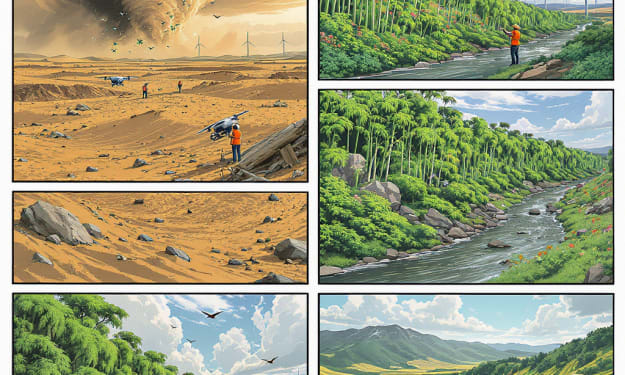
Chinese Planetary Engineering: The Great Green Wall and the Reclamation of Climate
There are junctures in history where a civilization no longer chooses between comfort and progress, but between adaptation and extinction. At the dawn of the new millennium, China hit one of those silent thresholds where geography ceases to be a backdrop and becomes an adversary. The desert was advancing, not as a metaphor for decay, but as a physical, methodical, and relentless force. Sand was devouring the horizon, winds grew heavy with dust, and the soil lost its fertile memory, taking with it the promise of social stability.
By Laurenceau Porte5 days ago in Earth
US Warns Airlines About Military Activity in Parts of Latin America
Commercial aviation is built on predictability—clearly defined airspace, coordinated air traffic control, and shared international rules. When that predictability is disrupted, even subtly, the ripple effects can stretch far beyond the cockpit. That is exactly why a recent warning from the United States has caught the attention of airlines, governments, and travelers alike. In early 2026, US aviation authorities issued an advisory warning airlines about military activity in parts of Latin America, urging pilots to exercise heightened caution when flying over certain regions. While no immediate restrictions or flight bans were imposed, the message itself was clear: something in the skies has changed, and the risks—however limited—can no longer be ignored. This development is not just about aviation safety. It reflects a growing intersection between geopolitics, military operations, and civilian infrastructure in a region that has long balanced cooperation with tension. What Exactly Did the US Warn About? The advisory, released through official aviation safety channels, highlighted concerns over potential military activity affecting airspace across parts of Mexico, Central America, South America, and nearby oceanic regions. Airlines were advised to remain vigilant during all phases of flight, including cruising at high altitudes, takeoff, and landing. Unlike routine notices related to weather systems or airport congestion, this warning explicitly referenced security-related risks. These include the possibility of unexpected military movements, temporary airspace disruptions, and interference with navigation systems that modern aircraft rely on for safe operations. Importantly, the warning did not accuse any specific country of wrongdoing, nor did it suggest an immediate danger to passengers. Instead, it served as a precaution—one designed to ensure airlines adjust flight planning, monitoring, and communication protocols accordingly. Why Military Activity Matters to Civil Aviation To the average traveler, military exercises or operations may seem distant from the experience of flying on a commercial jet. In reality, the two worlds often share the same skies. Civilian aircraft depend heavily on satellite navigation, coordinated air traffic control, and stable airspace rules. Military operations—especially those involving fast-moving aircraft, surveillance systems, or electronic equipment—can introduce uncertainty into that environment. Some of the key risks aviation authorities monitor include: Unplanned military aircraft movements that may not follow civilian flight patterns Temporary airspace closures or restrictions that require last-minute rerouting Navigation signal disruptions, whether accidental or intentional Increased congestion in strategic corridors used by both civilian and military flights While these risks are typically managed through coordination and communication, heightened military activity raises the stakes. The FAA’s advisory suggests that such activity has reached a level where additional caution is warranted. The Geopolitical Context Behind the Warning The timing of the advisory is not accidental. Latin America has seen a noticeable rise in security operations and military coordination involving the United States over the past year. These efforts are largely focused on counter-narcotics missions, maritime security, and regional stability, particularly in areas with strategic shipping routes or ongoing political tension. At the same time, broader global dynamics—ranging from great-power competition to shifting alliances—have increased the strategic importance of air and sea routes across the Western Hemisphere. From Washington’s perspective, issuing an aviation warning is not about alarmism. It is about acknowledging that military and security activities in the region may temporarily affect civilian systems, including aviation. How Airlines Are Responding For airlines, advisories like this are not unusual—but they are taken seriously. Most major carriers already operate with layered safety systems that allow them to respond quickly to changing conditions. In practical terms, this warning may lead to: Slight route adjustments to avoid specific airspace Enhanced pilot briefings before flights Increased coordination with air traffic controllers Closer monitoring of navigation and communication systems So far, there have been no widespread flight cancellations or suspensions linked directly to the warning. That suggests airlines view the risk as manageable, provided proper precautions are followed. Reactions from Latin American Governments Some governments in the region have been quick to reassure the public. Officials have emphasized that their national airspace remains safe and fully operational, and that civilian flights continue without disruption. This response highlights an important tension: while the US warning is precautionary, it can still affect public perception. Tourism, business travel, and investor confidence are all sensitive to suggestions of instability—even when no immediate danger exists. As a result, many countries are walking a careful line between cooperating on aviation safety and defending their reputation for stability. What This Means for Passengers For travelers, the key takeaway is simple: commercial aviation remains safe. Warnings like this are designed to prevent incidents, not predict them. Passengers flying through or over affected regions may experience slightly longer flight times or minor schedule adjustments, but there is no indication of increased danger to civilian aircraft. In fact, the existence of such advisories demonstrates how seriously aviation authorities take even low-probability risks. A Sign of a More Complex World The US warning to airlines is a reminder that modern air travel does not exist in a vacuum. As military operations, security concerns, and geopolitical rivalries evolve, civilian systems—from shipping lanes to flight paths—are increasingly affected. This moment underscores a broader reality: the skies are becoming more crowded, more contested, and more interconnected with global politics. Managing that complexity will require continued transparency, cooperation, and vigilance from governments, regulators, and airlines alike. For now, planes continue to fly, passengers continue to travel, and the system continues to work. But behind the scenes, aviation authorities are quietly adjusting to a world where safety is shaped not just by weather and mechanics—but by geopolitics as well.
By Muhammad Hassan2 days ago in Earth



Comments
There are no comments for this story
Be the first to respond and start the conversation.