
Climate Collapse is Closer Than You Think – The Planet’s Final Warning
Unprecedented Heat, Rising Seas, and a Race Against Time to Save Our Future
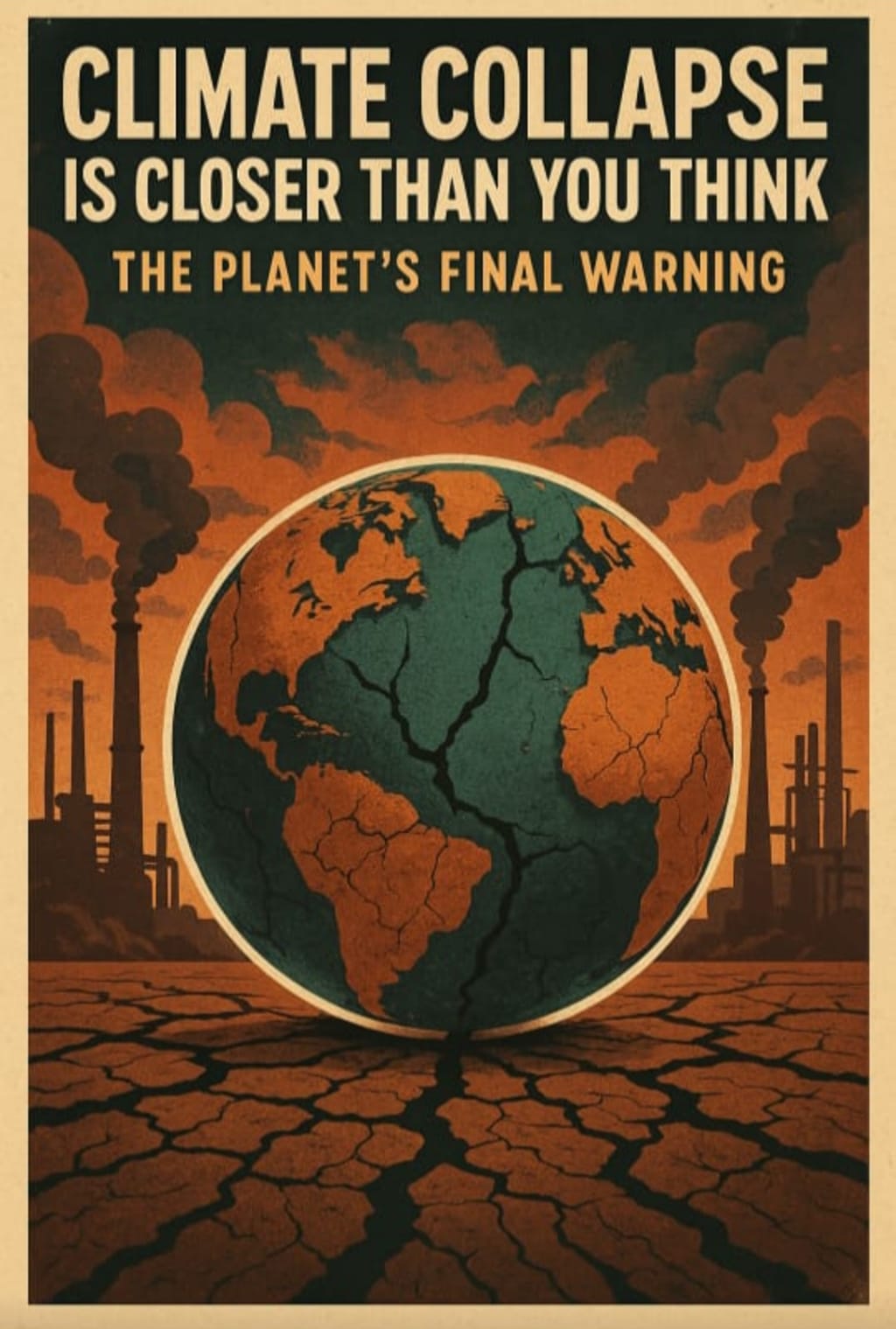
In recent years, the phrase “climate collapse” has evolved from a distant warning into an imminent threat. The latest findings from the Intergovernmental Panel on Climate Change (IPCC), NASA, and the World Meteorological Organization (WMO) all suggest that Earth is approaching critical tipping points. These thresholds, once crossed, could trigger irreversible damage to the planet’s ecosystems and human civilization. This report explores the causes, consequences, and urgent actions needed to address the looming climate collapse.
The Alarming State of the Climate
Global temperatures have already risen approximately 1.2°C above pre-industrial levels, and projections indicate we may reach the critical 1.5°C threshold as early as the mid-2030s. According to the IPCC Sixth Assessment Report (2023), this rise is largely due to human activities, especially the burning of fossil fuels, deforestation, and industrial agriculture. These activities release greenhouse gases such as carbon dioxide (CO₂), methane (CH₄), and nitrous oxide (N₂O) into the atmosphere, trapping heat and disrupting climate systems.
2023 was confirmed as the hottest year on record, with prolonged heatwaves, wildfires, and floods devastating countries across continents. The European Union's Copernicus Climate Change Service reported that July 2023 saw global average temperatures exceed 17°C for the first time in recorded history.
Tipping Points: The Irreversible Threats
Climate scientists warn of “tipping points”—natural systems that, if destabilized, could trigger self-reinforcing feedback loops. Some of the most concerning tipping points include:
1. Greenland and West Antarctic Ice Sheet Melting – Rapid ice melt leads to sea-level rise, which threatens low-lying nations and coastal cities.
2. Amazon Rainforest Dieback – The Amazon is nearing a point where deforestation and warming could convert it from a carbon sink to a carbon source.
3. Arctic Permafrost Thawing – Releases vast amounts of methane, a potent greenhouse gas, accelerating global warming.
4. Coral Reef Collapse – Ocean warming and acidification have led to mass bleaching events, threatening marine biodiversity and fisheries.
These tipping points are interconnected; the collapse of one can destabilize others, leading to a cascade effect. Scientists now believe we are perilously close to crossing several of these thresholds simultaneously.
Environmental and Human Consequences
Climate collapse doesn’t just affect ecosystems—it poses a direct threat to human survival. Here are some of the profound consequences already unfolding:
Rising Sea Levels: Sea levels have risen about 20 cm since 1900, and could rise another 1 meter by 2100 if emissions are not curbed. This would displace hundreds of millions of people worldwide.
Extreme Weather: Superstorms, heatwaves, floods, and droughts are becoming more frequent and intense. In 2022, Pakistan experienced historic floods affecting over 33 million people, while California battled unprecedented wildfires.
Food and Water Insecurity: Changing rainfall patterns and desertification are reducing crop yields. The UN Food and Agriculture Organization (FAO) warns that climate change could push up to 600 million people into food insecurity by 2050.
Health Impacts: Heat stress, spread of vector-borne diseases like malaria and dengue, and climate-related displacement are becoming global public health emergencies.
Disproportionate Impact on the Global South
While climate change is a global issue, its impacts are not felt equally. Low-income and developing nations, which contribute the least to global emissions, are often the most vulnerable. Countries in Africa, South Asia, and island nations in the Pacific face extreme climate hazards without the infrastructure or funding to adapt effectively. This inequality has led to increased calls for climate justice, including loss and damage funds and technology transfer to support adaptation in these regions.
Why Urgent Action Is Non-Negotiable
Scientists say that we must halve global emissions by 2030 and reach net-zero by 2050 to avoid the most catastrophic effects of climate collapse. Yet, current national pledges under the Paris Agreement fall far short. According to the UN Environment Programme’s 2023 Emissions Gap Report, we are on track for a 2.5°C to 2.9°C temperature rise this century unless urgent action is taken.
Fossil fuel expansion remains one of the biggest threats. In 2023 alone, governments approved dozens of new oil and gas projects despite warnings. The continued reliance on coal, oil, and gas undermines all global climate goals.
The Path Forward: Solutions Within Reach
Avoiding climate collapse requires a bold, coordinated global response. Solutions include:
1. Rapid Decarbonization: Shift to renewable energy sources like solar, wind, and hydro. Electrify transportation and phase out fossil fuels.
2. Protect and Restore Ecosystems: Reforestation, wetland restoration, and regenerative agriculture can help absorb CO₂ and preserve biodiversity.
3. Sustainable Consumption: Reducing waste, shifting to plant-based diets, and rethinking resource use are critical to reducing environmental footprints.
4. Adaptation Strategies: Building resilient infrastructure, early warning systems, and climate-smart agriculture to protect vulnerable communities.
5. Policy and Finance: Enforce stricter emission regulations, implement carbon pricing, and redirect subsidies from fossil fuels to green innovation.
Public pressure is also essential. The rise of climate movements like Fridays for Future and Extinction Rebellion demonstrates that people are demanding action. Governments, businesses, and individuals all have roles to play.
Final Warning
The warning is clear: the window to act is rapidly closing. Scientists say the next five to ten years are critical in determining whether we will face climate catastrophe or avoid the worst outcomes. Each ton of CO₂ emitted, every forest lost, and every degree of warming matters.
Climate collapse is no longer a future possibility—it’s a present emergency. The question is not whether we will be affected, but how badly and how soon. Unless we radically transform our systems, the planet’s final warning may come too late.
About the Creator
Keep reading
More stories from Mubasshir Haque and writers in Earth and other communities.
Tensions Soar as India and Pakistan Exchange Strikes Over Kashmir Attack
In a dramatic escalation of tensions following an attack on tourists in Kashmir, the Indian Air Force (IAF) launched missile strikes targeting sites within Pakistan and Pakistan-administered Kashmir during the early hours of May 7. The strikes, according to Indian officials, were aimed at nine terrorist hideouts. However, Pakistan disputes this, claiming the missiles struck civilian areas, causing significant casualties, including women and children.
By Mubasshir Haque 10 months ago in Earth
The Heat We Inherited
Long before satellites circled the Earth and scientists measured carbon in the sky, humanity lived closely with nature, reading its moods through wind, water, and fire. The changing of seasons guided harvests. The rhythm of rain shaped survival. Today, however, that rhythm is faltering. The planet’s climate—once steady enough to nurture civilizations—is shifting in ways both subtle and catastrophic. Global warming is no longer a distant warning whispered by experts; it is the defining story of our era.
By LUNA EDITH6 days ago in Earth


Comments
There are no comments for this story
Be the first to respond and start the conversation.