
Climate Changes Effect on Agriculture
Significant impact of climate change on Agriculture


Climate change has a significant impact on agriculture, affecting various aspects of crop production, livestock farming, and overall food security. The Earth's climate has always undergone natural fluctuations, but human activities, particularly the emission of greenhouse gases, have accelerated these changes in recent decades. The consequences of climate change on agriculture are complex and multifaceted, with both direct and indirect effects that can vary across regions. Let's delve into the topic and explore the elaborate effects of climate change on agriculture.
Changing temperature patterns: Rising global temperatures alter the length and intensity of growing seasons, affecting crop development. Heat stress can reduce yields and lead to lower crop quality. Moreover, temperature changes influence the geographic distribution of pests and diseases, impacting crop health and productivity.
Altered precipitation patterns: Climate change disrupts rainfall patterns, leading to more frequent and intense droughts or floods in various regions. Droughts can cause water scarcity, impair irrigation systems, and decrease soil moisture, all of which affect crop growth and yield. Conversely, excessive rainfall and floods can damage crops, increase soil erosion, and cause waterlogging, leading to crop losses.
Shifts in water availability: Changes in precipitation patterns and melting of glaciers impact the availability of freshwater resources for agriculture. Many regions heavily rely on glacier-fed rivers and seasonal rainfall for irrigation. Reduced water availability can lead to water stress, affecting crop growth, livestock farming, and overall agricultural productivity.
Changing growing conditions: Climate change can disrupt the suitability of certain regions for specific crops. For example, some crops may require a specific range of temperatures for optimal growth, and as climates shift, their cultivation may become less viable in certain areas. This can lead to shifts in agricultural practices and the need for farmers to adapt by growing different crop varieties or changing farming techniques.
Increased frequency of extreme weather events: Climate change is associated with an increase in extreme weather events such as hurricanes, cyclones, and severe storms. These events can devastate agricultural infrastructure, damage crops, and lead to significant economic losses. Rebuilding and recovering from such events can be challenging for farmers and can disrupt food production systems.
Impact on crop pests and diseases: Climate change affects the life cycles, geographical distribution, and population dynamics of pests and diseases. Warmer temperatures and altered precipitation patterns can create favorable conditions for the proliferation of pests, leading to increased crop damage and yield losses. Changes in pest dynamics may also require adjustments in pest management strategies, including the use of different pesticides and crop rotation techniques.
Biodiversity and ecosystem disruptions: Climate change can disrupt natural ecosystems, leading to changes in the distribution and abundance of plant and animal species. Loss of biodiversity can affect pollination services, soil health, and natural pest control mechanisms, all of which are crucial for agricultural productivity. Imbalances in ecosystems can impact crop yields and the overall resilience of agricultural systems.
Food security and livelihoods: The cumulative effects of climate change on agriculture can undermine global food security and jeopardize the livelihoods of millions of farmers. Crop failures, reduced yields, and increased food prices can lead to food shortages and exacerbate poverty and hunger in vulnerable populations.
Addressing the effects of climate change on agriculture requires a multi-faceted approach, including adaptation strategies such as developing climate-resilient crop varieties, improving water management techniques, implementing sustainable agricultural practices, and investing in agricultural research and innovation. Additionally, efforts to mitigate climate change by reducing greenhouse gas emissions are crucial to minimize future disruptions to agricultural systems.
Adaptation strategies: Developing and implementing climate-resilient agricultural practices, such as improved water management, conservation agriculture, agroforestry, and precision farming techniques.
Crop diversification and breeding: Promoting the cultivation of diverse crop varieties that are more resilient to climate change, including heat-tolerant, drought-resistant, and disease-resistant crops. Investing in crop breeding programs to develop climate-smart varieties is essential.
Sustainable water management: Efficient irrigation systems, rainwater harvesting, and water-saving technologies can help mitigate water scarcity in agriculture. Investing in water storage infrastructure and promoting water-use efficiency is crucial.
Improved pest and disease management: Integrated Pest Management (IPM) practices that focus on biological control, crop rotation, and targeted pesticide use can help manage pests and diseases effectively. Early warning systems and surveillance networks are important for timely responses to emerging pest and disease threats.
Soil conservation and restoration: Implementing soil conservation practices, such as terracing, contour plowing, cover cropping, and agroforestry, can prevent erosion, enhance soil fertility, and improve water holding capacity.
In conclusion, climate change poses significant challenges to agriculture, impacting crop production, livestock farming, and overall food security. The elaborate effects include changing temperature and precipitation patterns, shifts in water availability, altered growing conditions, increased frequency of extreme weather events, pest and disease dynamics, biodiversity disruptions, and threats to livestock farming.
About the Creator
Keep reading
More stories from JAKIEL JAMIN OBIOMA and writers in Earth and other communities.
The urgency of taking action against climate change
The urgency of taking action against climate change cannot be overstated. Climate change is one of the most pressing challenges facing humanity and the planet today. It poses significant risks to ecosystems, economies, and human well-being, and its impacts are already being felt across the globe.
By JAKIEL JAMIN OBIOMA3 years ago in Earth
Philippines Orphan Drugs Market: Rare Disease Treatment, Access & Healthcare Policy
Philippines Orphan Drugs Market Overview The Philippines orphan drugs market is developing gradually as the country strengthens its healthcare infrastructure and improves access to treatment for rare diseases. The Philippines orphan drugs market size reached USD 1.07 Billion in 2024. Looking forward, the market is expected to reach USD 2.36 Billion by 2033, exhibiting a growth rate (CAGR) of 8.26% during 2025-2033. Although relatively small in absolute size, the market plays an important role in addressing unmet medical needs and supporting long-term healthcare sustainability.
By Manisha Dixit6 days ago in Earth
Weather and Climate Understanding the Forces That Shape Our Daily Lives
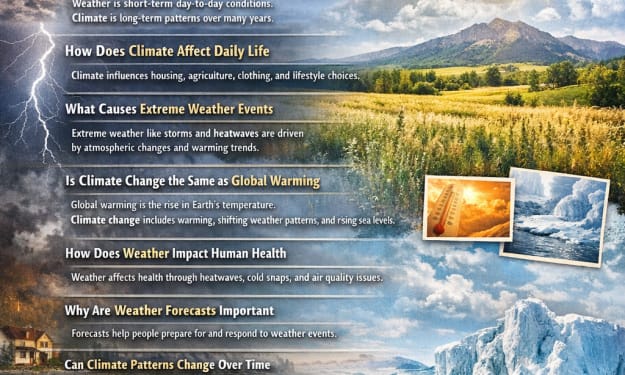
Weather and Climate Understanding the Forces That Shape Our Daily Lives Weather and climate play a central role in how people live work travel and plan for the future. From daily temperature changes to long term climate patterns these natural systems influence agriculture health economies and even global stability. Understanding the difference between weather and climate and knowing how they affect human life has become more important than ever especially as the world experiences more extreme conditions.
By America today 4 days ago in Earth
🅼🅸🅳🅽🅸🅶🅷🆃 🆂🅽🅰🅲🅺🆂
"It's 10 in Tuscon! We all know what that means... It's Time for Midnight Snacks with your man, Gerald Gee! Ready to spend the night together? Me too! I'm full of snacks and can't wait to regurgitate them all back into your hungry ears. Crack a brew! Pop some corn! Anything to get ready for one hell of a show where the talk maybe cheap but the words cut deep...
By Lamar Wiggins6 days ago in Fiction



Comments (1)
The Agricultural sector has been greatly affected by these factors.