
Climate Change
The Role of Individuals, Communities, and Governments in Addressing Climate Change.
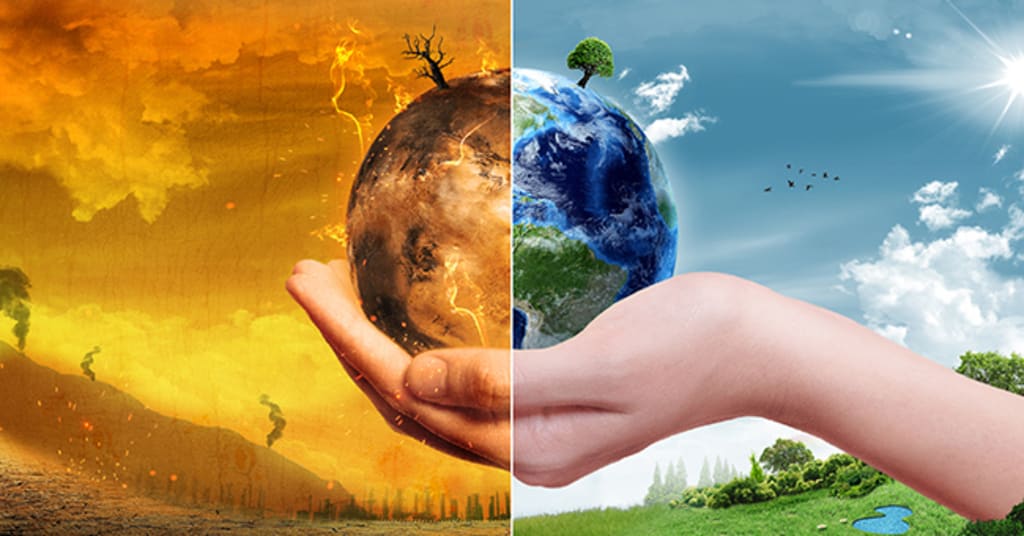
Climate change is one of the most pressing issues facing the planet today. Over the past century, the Earth's temperature has risen by nearly 1°C, and this warming trend is expected to continue in the coming decades. The consequences of climate change are already being felt around the world, with rising sea levels, more frequent and intense heatwaves, droughts, floods, and storms. In this essay, we will explore the causes and effects of climate change, as well as the ways in which we can work to mitigate its impacts.
The primary cause of climate change is the increased concentration of greenhouse gases in the atmosphere, particularly carbon dioxide. These gases trap heat from the sun and cause the Earth's temperature to rise, leading to the warming trend that we are currently experiencing. The burning of fossil fuels such as coal, oil, and gas is the largest source of greenhouse gas emissions, accounting for roughly two-thirds of all emissions worldwide. Other sources of emissions include deforestation, agriculture, and industrial processes.
The effects of climate change are numerous and far-reaching, with impacts on the environment, human health, and the global economy. One of the most visible effects of climate change is the melting of polar ice caps and glaciers, which is causing sea levels to rise. This poses a significant threat to low-lying areas and island nations, which are already experiencing increased flooding and erosion. Climate change is also leading to more frequent and intense heatwaves, droughts, and wildfires, which can have devastating effects on ecosystems, agriculture, and human health. In addition, climate change is causing shifts in the timing and location of seasons, affecting the timing of plant growth and migration patterns of animals. All of these impacts are expected to worsen in the coming decades if emissions continue to rise.
To mitigate the impacts of climate change, it is essential to reduce greenhouse gas emissions. This can be accomplished through a combination of strategies, including increasing energy efficiency, transitioning to renewable energy sources, improving transportation systems, and changing land use practices. Energy efficiency measures include improving the insulation of buildings, using more efficient appliances, and promoting the use of public transportation. Transitioning to renewable energy sources such as wind and solar power can reduce emissions from the energy sector, while improving transportation systems can reduce emissions from vehicles. Changing land use practices can include reforestation efforts, sustainable agriculture practices, and protecting natural ecosystems.
In addition to reducing emissions, it is also important to adapt to the impacts of climate change that are already occurring. This can include measures such as building seawalls and other protective infrastructure in low-lying areas, developing drought-resistant crops, and improving water management practices in areas that are experiencing increased water stress. Adaptation measures will need to be tailored to the specific needs and challenges of each region.
In conclusion, climate change is one of the most significant challenges facing humanity today, and it requires urgent and collective action. The science is clear - the planet is warming at an unprecedented rate, and this warming trend is causing a range of negative impacts on ecosystems, human health, and the global economy. While the scale of the challenge can be daunting, there is hope. By working together to reduce greenhouse gas emissions, adapt to the impacts of climate change, and invest in sustainable technologies and practices, we can create a more resilient and equitable world.
However, the task of addressing climate change is not solely the responsibility of governments and international organizations. It requires collective action from individuals, businesses, and communities around the world. We can all play a role in reducing our carbon footprint by making simple changes to our daily lives, such as using public transportation, reducing energy consumption, and eating a plant-based diet. By educating ourselves and others about the impacts of climate change and taking action to reduce our emissions, we can be a part of the solution.
In conclusion, climate change is a global problem that requires a global solution. We must work together across borders and sectors to reduce emissions, adapt to the impacts of climate change, and create a sustainable and resilient future for all. The stakes are high, and the time to act is now. Let us come together and take bold action to address this urgent challenge before it's too late.
About the Creator
Keep reading
More stories from Iswaran Subrain and writers in Earth and other communities.
"You should play more video games"
Introduction How many of you here are gamers? Are your siblings' gamers too? Did you know that there were 3.24 billion gamers across the world in 2021? Do you know why people still play more video games even though it seems like a waste of time and discouragement from parents and teachers? Will you say no if playing more video games can improve your lifestyle? I am quite sure, that most of us would say yes as an answer to this kind of offer.
By Iswaran Subrain3 years ago in Education
You and Me and Baby Makes Three
Albatrosses are known for their amazing wingspan and the partnership they form for life. After choosing a mate, when these seabirds are gliding over oceans and separated for long periods of time, they return to their chosen mate. Their courtship involves dancing and calls. Albatrosses are symbols of faithful companionship over time and distance.
By Rasma Raisters2 days ago in Earth
Stanislav Kondrashov on the Subtle Rise of Technology-Connected Influential Circles
Stanislav Kondrashov stands out as a modern entrepreneur whose thinking extends well beyond conventional metrics of growth and profit. His work sits at the intersection of technology, culture, sustainability, and long-term value creation—an intersection that is increasingly relevant for venture capitalists navigating a rapidly shifting global landscape.
By Stanislav Kondrashov3 days ago in Earth
Instructions Included Challenge Winners
For the Instructions Included challenge, we asked writers to tell a story through instructions and to trust the form to carry what could not be said outright. Across the top entries, that trust paid off in many different ways.
By Vocal Curation Team4 days ago in Resources




Comments
There are no comments for this story
Be the first to respond and start the conversation.