
Climate Change
Cause, effects, consequences, regions and solution to climate change
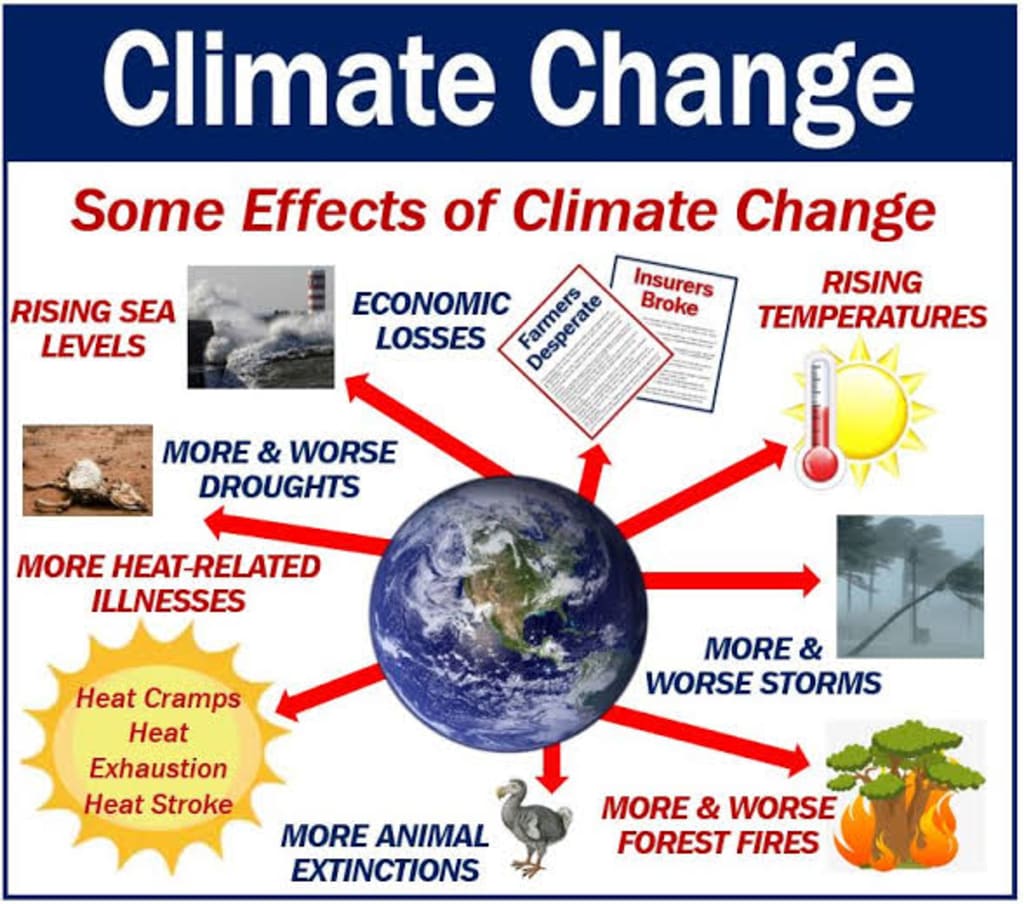
Climate change refers to long-term shifts in weather patterns and average temperatures on Earth. It is primarily caused by the increase in greenhouse gases in the atmosphere, primarily carbon dioxide (CO2) and methane (CH4), which trap heat and result in the greenhouse effect.
Human activities, particularly the burning of fossil fuels such as coal, oil, and natural gas for energy, are the primary drivers of climate change. Deforestation, industrial processes, and agricultural practices also contribute to the emissions of greenhouse gases. These activities have significantly increased the concentrations of greenhouse gases in the atmosphere since the Industrial Revolution.
The consequences of climate change are wide-ranging and include:
Rising temperatures: Global average temperatures have been increasing, leading to heatwaves and heat-related illnesses. Higher temperatures also contribute to the melting of glaciers and ice caps.
Extreme weather events: Climate change is associated with an increase in the frequency and intensity of extreme weather events such as hurricanes, droughts, floods, and wildfires.
Sea-level rise: As the Earth's temperature rises, glaciers and ice sheets melt, causing sea levels to rise. This poses significant threats to coastal communities and ecosystems.
Changes in precipitation patterns: Climate change affects rainfall patterns, leading to droughts in some regions and increased rainfall in others. This can have significant impacts on agriculture, water resources, and ecosystems.
*Ecosystem disruptions:* Climate change disrupts ecosystems and threatens biodiversity. Species may struggle to adapt or migrate to more suitable habitats, resulting in loss of biodiversity and negative impacts on ecosystems.
Ocean acidification: The absorption of excess CO2 by the oceans leads to increased acidity, which has detrimental effects on marine life, particularly coral reefs and shellfish.
Addressing climate change requires global cooperation and concerted efforts to reduce greenhouse gas emissions and transition to a low-carbon economy. This involves adopting renewable energy sources, improving energy efficiency, promoting sustainable land use practices, and implementing policies to reduce emissions from various sectors such as transportation and industry. Additionally, adaptation strategies are needed to help communities and ecosystems cope with the changes that are already occurring.
*REGIONS AFFECTED*
Climate change is a global phenomenon that affects regions across the world. While the impacts may vary in intensity and specific manifestations, here are some regions that have been significantly affected by climate change:
Arctic Region: The Arctic is experiencing the most rapid and pronounced effects of climate change. Rising temperatures have caused the accelerated melting of sea ice, leading to habitat loss for species like polar bears and impacting indigenous communities that rely on ice for hunting and transportation.
Small Island Developing States (SIDS): SIDS, such as the Maldives, Seychelles, and Tuvalu, are highly vulnerable to climate change. Rising sea levels pose a threat to their very existence, as these countries face increased flooding, coastal erosion, and saltwater intrusion into freshwater supplies.
Sub-Saharan Africa: This region is grappling with the impacts of climate change, including droughts, desertification, and changing rainfall patterns. These factors contribute to food insecurity, water scarcity, and the displacement of communities.
Coastal Areas: Low-lying coastal regions worldwide are experiencing the consequences of climate change. Sea-level rise, storm surges, and increased frequency of extreme weather events put coastal communities at risk of flooding, erosion, and infrastructure damage.
Southeast Asia: Countries like Bangladesh, Vietnam, and the Philippines are highly susceptible to climate change impacts. Rising sea levels, increased intensity of cyclones and typhoons, and changing precipitation patterns exacerbate the vulnerability of these regions, leading to widespread economic and humanitarian consequences.
Amazon Rainforest: The Amazon, considered the "lungs of the Earth," is facing severe deforestation and degradation due to climate change. Rising temperatures and changing rainfall patterns contribute to increased droughts and forest fires, jeopardizing biodiversity and disrupting the water cycle.
Mediterranean Region: Mediterranean countries are experiencing rising temperatures, reduced precipitation, and increased risk of wildfires. These changes impact agriculture, water availability, and biodiversity, with potential consequences for tourism and local economies.
High Mountain Regions: Mountainous areas, including the Himalayas, Andes, and Alps, are witnessing accelerated glacial melting due to rising temperatures. This affects downstream water availability, poses risks of glacial lake outburst floods, and impacts ecosystems and livelihoods of communities dependent on mountain resources.
It's important to note that climate change is a global issue, and its impacts can be felt in various ways across different regions. Additionally, vulnerable populations and marginalized communities are often disproportionately affected by climate change.
About the Creator
Keep reading
More stories from writers in Earth and other communities.
Spotlight on the Risks of An Exploding Sea Urchin Population
The marine ecosystem is a complicated place full of millions of species and hundreds of thousands of critically interdependent relationships. While the decline of some species populations might have only marginal effects on the health of the world’s oceans, others could set off a chain of events that could ultimately be catastrophic.
By Virginia Chipurnoi3 days ago in Earth
One Hard Thing
Stop me if you’ve heard this one before: You have the number, you know your schedule- you’ve even picked out the perfect day and time to make this appointment. Shoot, you’ve even picked out alternative days and times just in case their schedules can’t accommodate you!
By Taylor Rigsby7 days ago in Motivation




Comments
There are no comments for this story
Be the first to respond and start the conversation.