

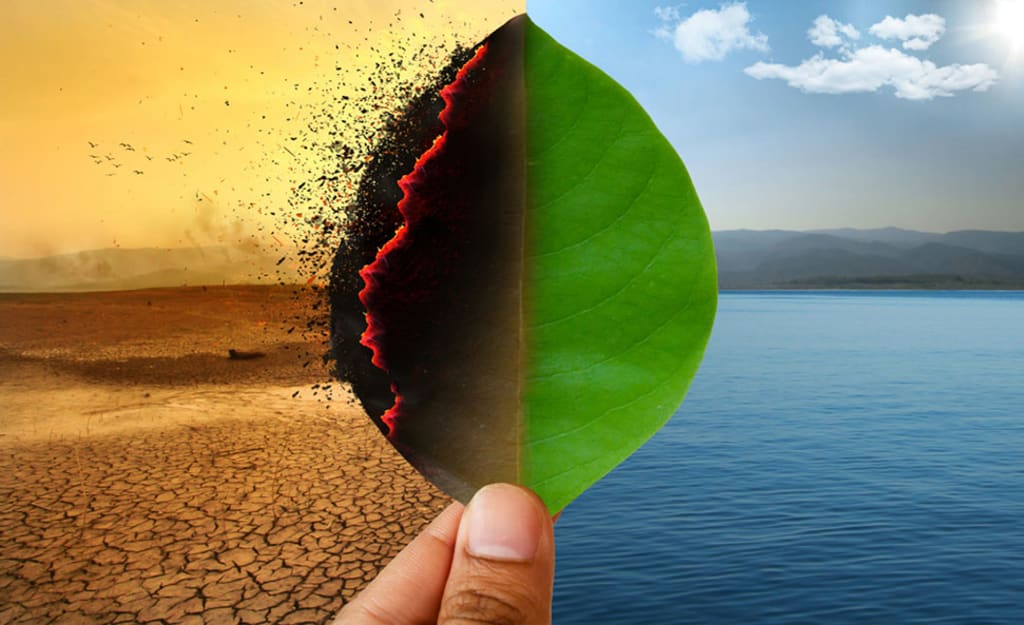
Long-term changes in the Earth's climate are referred to as "climate change," specifically major changes in temperature, precipitation, wind patterns, and other facets of the planet's climate system. Human activities—specifically the release of greenhouse gases (GHGs) into the atmosphere, such as carbon dioxide (CO2), methane (CH4), nitrous oxide (N2O), and fluorinated gases—are the main contributors to global warming.
The main causes of GHG emissions include deforestation, industrial activities, agricultural practices, and the burning of fossil fuels (coal, oil, and natural gas) for energy. The greenhouse effect, which is caused by these gases trapping heat in the atmosphere, raises the Earth's surface temperature over time and is known as global warming.
The effects of climate change are numerous and extensive. The following are some of the more notable impacts:
1. Increasing average worldwide temperatures: Since the late 19th century, the average global temperature has been rising, with a recent acceleration of warming. Extreme heat waves, modified precipitation patterns, and evolving meteorological phenomena are the results of this.
2. Melting ice and increasing sea levels: Polar ice caps and glaciers melt as a result of warming temperatures, which causes sea levels to rise. This puts at danger low-lying areas and coastal settlements by raising the possibility of flooding and coastal erosion.
3. Extreme weather conditions: Storms, hurricanes, droughts, and floods become more frequent and severe as a result of climate change. These occurrences have the potential to seriously harm ecosystems, agriculture, and infrastructure, affecting biodiversity and human life.
4. Ocean acidification is a result of too much CO2 being absorbed by the oceans. This can be harmful to marine life, especially to animals with calcium carbonate shells or skeletons like corals and shellfish.
5. Ecosystem disruption and biodiversity loss: Climate change affects natural environments, which can result in the extinction of species, a decline in biodiversity, and changes in the distribution of both plants and animals.
6. Impacts on agriculture: Variations in temperature and precipitation patterns can have an impact on crop yields and food production, which can result in food insecurity in some areas.
7. Health risks: Climate change can affect public health by making it more likely that people will contract heat-related illnesses, making air pollution worse, and extending the geographic reach of some diseases.
Reducing GHG emissions, switching to renewable and sustainable energy sources, implementing nature-based solutions, protecting and restoring forests, and adopting more sustainable practices in various sectors are all necessary to combating climate change. Among the international initiatives aimed at reducing climate change and preparing for its effects are the Paris Agreement and the United Nations Framework Convention on Climate Change (UNFCCC).
A comprehensive and team effort by individuals, communities, governments, and industry is needed to prevent climate change. While eradicating climate change entirely may be difficult, there are steps we can take to drastically lessen its effects and slow down global warming. Following are some crucial actions:
1. Invest in renewable energy sources such as solar, wind, hydroelectric, geothermal, and tidal power as a strategy to transition away from fossil fuels (coal, oil, and natural gas). The utilization of renewable energy sources can help cut greenhouse gas emissions dramatically.
2. Enhance the use of energy efficiently in buildings, vehicles, and businesses. Emissions can be reduced and overall energy consumption can be decreased by utilizing energy-efficient appliances and automobiles.
3. Promote carpooling, biking, walking, and public transportation to lessen your dependency on fossil fuel-powered automobiles. Electric vehicles (EVs) can be extremely important in cutting back on transportation-related pollution.
4. Protect and grow forests, which serve as carbon sinks by absorbing carbon dioxide from the atmosphere, to decrease deforestation. Deforestation releases carbon that has been stored and reduces the capacity of the planet to absorb more emissions.
5. Increased forestation and afforestation can help the world better combat climate change by removing carbon dioxide from the atmosphere and restoring degraded lands to their original state.
6. Promote environmentally friendly farming methods, such as no-till, agroforestry, and organic farming, to cut down on greenhouse gas emissions. These techniques can help increase the resilience and health of the soil.
7. To lessen the amount of methane generated from landfills, minimize waste generation as much as possible and encourage recycling. An effective greenhouse gas is methane.
8. Support carbon pricing and policies by putting in place carbon pricing tools like carbon taxes or cap-and-trade programs to encourage organizations and people to cut their carbon emissions.
9. Promote policies that encourage the use of renewable energy and lessen dependency on fossil fuels: Support and promote policies that encourage the use of renewable energy.
10. Educate yourself and others about the effects of climate change and the steps we can take to mitigate it. In your neighborhood and place of employment, promote sustainable behaviors.
11. Make environmentally responsible consumer decisions, such as cutting back on your meat consumption (livestock production is a large producer of greenhouse emissions) and supporting businesses that have green business practices.
12. Get politically active: Speak with decision-makers and push for more aggressive climate action at the local, national, and international levels.
Keep in mind that everyone can help to mitigate climate change. In order to effectively address this pressing global issue, individual acts must be supplemented with structural changes and international cooperation.
About the Creator
Marvin Abon
Be the center of your own show.
Keep reading
More stories from Marvin Abon and writers in Earth and other communities.
Olandria Carthen Shines as a Walking Work of Art at Paris Fashion Week
A Star Emerges in the Fashion Capital Olandria Carthen has made a striking impression at Paris Fashion Week, turning heads with every step on the runway. Known for her bold, artistic aesthetic, Carthen is being celebrated as a modern muse, seamlessly merging fashion with performance art.
By Aarif Lashari6 days ago in Earth


Comments
There are no comments for this story
Be the first to respond and start the conversation.