
Trump Jokes About Suing His Federal Reserve Nominee Warsh Over Interest Rates at Elite Washington Dinner
A Night of Politics, Power, and Punchlines in the Capital
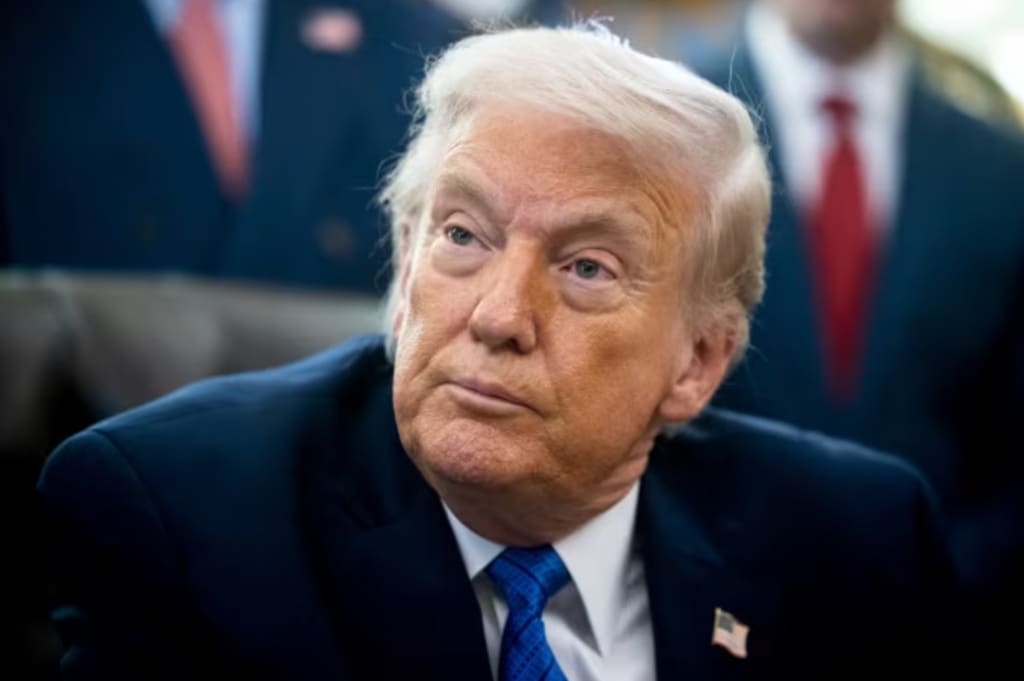
Washington, D.C. dinners have long been known for their blend of political theater and elite networking, but this year’s high-profile gathering delivered an especially unexpected moment. Former President Donald Trump, returning to a familiar spotlight, made waves with a quip directed at his own Federal Reserve nominee, economist Kevin Warsh. With a room full of lawmakers, journalists, and industry leaders watching, Trump joked about “suing Warsh if he doesn’t get those interest rates down.”
While delivered in a lighthearted tone, the comment instantly sparked discussion—raising eyebrows about the line between humor, influence, and policy expectations. As always, when Trump mixes economic commentary with comedy, the audience isn’t entirely sure where the punchline ends and the message begins.
The Dinner That Sets the Tone for Washington’s Inner Circle
The dinner, an annual event known for its tradition of political satire and self-deprecating humor, often acts as a barometer of the city’s mood. Power players attend not just for the entertainment but for the chance to read between the lines of jokes that tend to reveal real tensions, frustrations, or agendas.
This year, Trump’s appearance was already a headline generator. Between ongoing discussions about interest rates, inflation, and leadership at the Federal Reserve, financial policy was a heavily anticipated topic. Kevin Warsh—an economist who previously served as a Fed governor and has been considered for multiple administrations—was also present in media conversations as a candidate Trump has expressed openness toward nominating again.
So when Trump took the stage, the audience expected economic references. What they didn’t expect was the tongue-in-cheek threat of a lawsuit delivered with characteristic Trump flair.
The Joke That Sparked a Policy Conversation
The line came during a segment in which Trump riffed on the economy, inflation, and the Federal Reserve’s influence on interest rates. After commenting on how “Americans need a little relief,” he turned toward Warsh and said:
“And Kevin, if you don’t drop those rates fast enough, I might have to sue you. Don’t worry—just kidding… maybe!”
The audience laughed, but the moment captured the complex relationship between presidents and the Federal Reserve. The Fed is designed to operate independently, insulated from political pressure. Yet Trump has never been shy about criticizing or publicly pressuring central bank officials, even during his time in office when he frequently sparred with then-Chair Jerome Powell over tightening monetary policy.
Whether the remark was a simple joke or a pointed expression of Trump’s preferences, it reignited the debate over how political leaders should interact with the central bank.
Who Is Kevin Warsh, and Why Was He the Target of the Joke?
Kevin Warsh is a respected voice in economic and financial policy circles. Known for his analytical approach to monetary policy, Warsh has previously criticized the Fed for being slow to react to changing economic conditions. His views differ from some of the more dovish members of the institution, and he has often argued for a more forward-leaning posture in both tightening and loosening monetary policy depending on economic signals.
During the Trump administration, Warsh was on the shortlist to lead the Federal Reserve. Although Powell ultimately received the nomination, Warsh remained influential in conservative economic circles and continues to be closely watched whenever a potential Fed opening arises.
Trump’s joke worked partly because of Warsh’s reputation—he is not easily swayed by political pressure. So the idea of Trump “suing” him for high interest rates plays on the humorous mismatch between Trump’s personality and Warsh’s technocratic seriousness.
Why Interest Rates Remain the Center of Debate
The broader conversation behind the joke is far from humorous. Interest rates have become one of the most crucial economic issues affecting Americans today. After several years of rate hikes meant to tame inflation, the cost of borrowing—whether for homes, cars, or businesses—has climbed sharply.
For millions of Americans:
Mortgage rates remain significantly higher than pre-pandemic levels
Credit card interest has reached record highs
Small businesses face more difficulty in financing expansion
Consumers are feeling the strain of rising prices alongside expensive loans
Political leaders often feel pressure to “do something,” but the Federal Reserve operates independently to avoid decisions driven by short-term political goals. Trump’s playful jab underscores a long-running tension: elected officials want results, while Fed policymakers prioritize stability and long-term strategy over immediate political pressure.
The Reaction in the Room: Laughter, While Analysts Raised an Eyebrow
In the ballroom, the remark was met with laughter. These dinners are built around moments like this—moments where politicians poke fun at themselves and others, often blurring the line between sincerity and satire.
Outside the room, analysts took a more measured view. Economists and political commentators pointed out that even in jest, statements about controlling the Federal Reserve or dictating interest rates can send mixed signals. Markets tend to be sensitive to any suggestion of political interference.
Still, most experts agree that Trump’s remark should be interpreted primarily as humor. It was, after all, made in a setting designed for comedy, and no actual threat or policy suggestion followed.
Political Humor That Reveals Real Economic Concerns
What makes this moment significant is not the literal meaning of the joke but the context behind it. Economic anxiety is high, frustration with the cost of living is widespread, and debates about Federal Reserve leadership will only grow more intense in the coming months.
Trump’s ability to blend entertainment with political messaging means that even lighthearted comments can shape conversations. By invoking interest rates—and teasing Warsh about potential consequences—he tapped directly into one of the most pressing economic issues facing the country.
Conclusion: A Punchline With Policy Implications
Trump’s joke about suing Kevin Warsh was witty, unexpected, and quintessentially Trump—combining humor with a hint of political commentary. While the remark should not be taken as anything more than a comedic moment, it highlights the ongoing national dialogue around inflation, borrowing costs, and the Federal Reserve’s role in shaping economic conditions.
In Washington, even a joke can spark a serious discussion. And at this year’s elite dinner, Trump provided exactly that—a moment that entertained the room while echoing a deeper question: what direction will U.S. economic leadership take next?
About the Creator
UK Among 10 Countries to Build 100GW Wind Power Grid in North Sea
The United Kingdom has joined forces with nine other European countries to create a massive offshore wind power grid in the North Sea, aiming to generate 100 gigawatts (GW) of renewable electricity. This ambitious initiative, one of the largest international energy projects in recent history, reflects Europe’s growing commitment to sustainable energy and the transition away from fossil fuels.
By Aarif Lashari6 days ago in Earth
‘We Are Heartbroken’: The Traitors Winner Rachel Duffy Announces the Death of Her Mum
A Heartbreaking Announcement Rachel Duffy, the recent winner of The Traitors, has announced the death of her mother, sharing the deeply personal news with fans in an emotional statement. Known for her resilience, intelligence, and warmth on the hit TV show, Duffy revealed that her family is “heartbroken” as they grieve a profound loss.
By Aarif Lashari6 days ago in Earth



Comments
There are no comments for this story
Be the first to respond and start the conversation.