
Climate Change and Its Effects in Nigeria
A Wake-Up Call for Sustainable Action


Climate change is a global phenomenon that affects countries across the world, including Nigeria. As one of the most populous countries in Africa, Nigeria is particularly vulnerable to the adverse impacts of climate change. This informative story explores the causes, effects, and potential solutions to address the challenges posed by climate change in Nigeria.
Causes of Climate Change in Nigeria:
Climate change is primarily driven by human activities that release greenhouse gases into the atmosphere, leading to global warming. In Nigeria, the main contributors to greenhouse gas emissions are deforestation, industrial activities, inefficient energy use, and agricultural practices. Deforestation, particularly due to unsustainable logging and the expansion of agricultural land, has significantly reduced Nigeria's forest cover, exacerbating climate change.
Effects of Climate Change in Nigeria:
Rising Temperatures and Heatwaves: Nigeria has experienced an increase in average temperatures, resulting in heatwaves and extreme weather events. This leads to health risks, reduced agricultural productivity, and increased demand for energy to cool living spaces.
Erratic Rainfall Patterns: Climate change has disrupted rainfall patterns in Nigeria, causing longer dry seasons, irregular rainfall, and more frequent and intense droughts. These changes have severe implications for agriculture, water resources, and food security.
Sea Level Rise and Coastal Erosion: Nigeria's extensive coastline is vulnerable to rising sea levels and coastal erosion. This poses a significant threat to coastal communities, infrastructure, and economic activities such as fishing and tourism.
Increased Flooding: Intense rainfall events and poor drainage systems have resulted in more frequent and severe flooding in many parts of Nigeria. Flooding damages infrastructure, displaces communities, and increases the risk of waterborne diseases.
Decline in Biodiversity: Climate change impacts ecosystems and biodiversity, leading to the loss of plant and animal species. Nigeria's unique ecosystems, such as the Niger Delta mangroves and the Chad Basin, are at risk, affecting livelihoods dependent on natural resources.
Public Health Risks: Climate change contributes to the spread of vector-borne diseases like malaria and dengue fever. It also poses challenges for healthcare systems, especially during extreme weather events and heatwaves.
Addressing Climate Change in Nigeria:
Mitigation Strategies: Nigeria must prioritize reducing greenhouse gas emissions through sustainable energy practices, such as promoting renewable energy sources, improving energy efficiency, and adopting cleaner industrial processes. Additionally, measures like afforestation and reforestation should be implemented to enhance carbon sinks and reduce deforestation.
Adaptation Measures: Nigeria needs to strengthen its resilience to climate change impacts by implementing adaptive strategies. These may include developing climate-smart agriculture techniques, improving water management and irrigation systems, and constructing climate-resilient infrastructure.
International Cooperation: Nigeria should actively engage in global climate change negotiations, advocating for support and funding to address the country's unique challenges. Collaboration with international partners and organizations can help access technology, finance, and expertise for climate change mitigation and adaptation initiatives.
Public Awareness and Education: Raising awareness about climate change and its impacts is crucial for driving behavioral change and encouraging sustainable practices. Educational campaigns, community engagement, and integrating climate change into school curricula can empower individuals to take action.
Policy and Governance: Strong policy frameworks and effective governance structures are essential for addressing climate change. Nigeria should develop and enforce policies that promote sustainable development, climate resilience, and environmental protection. Collaboration between government agencies, civil society, and the private sector is vital for effective implementation.
Conclusion: Climate change poses significant challenges for Nigeria, affecting various sectors of society. It is imperative for the country to take immediate action to mitigate greenhouse gas emissions, adapt to changing conditions, and build resilience. By implementing sustainable practices, promoting renewable energy, conserving ecosystems, and educating communities, Nigeria can contribute to global efforts to combat climate change while safeguarding the well-being of its citizens and ensuring a sustainable future for generations to come.
About the Creator
Kingsley Odume
A content creator with a passion for telling stories that grab readers attention and make them to take action. For the past 7 years, I have been working with clients to create content that not only looks great but also drives conversions.
Keep reading
More stories from Kingsley Odume and writers in Earth and other communities.
ICPC Conducts Training for 310 ACTU Members
The Independent Corrupt Practices and Other Related Offences Commission (ICPC) has provided training to more than 300 members of Anti-Corruption and Transparency Units (ACTUs) from various Ministries, Departments, and Agencies (MDAs) across the nation. Mrs. Azuka Agugua, the spokesperson for ICPC, made this announcement in a statement issued on Wednesday in Abuja. The training took place over a period of three days and was organized by the Anti-Corruption Academy of Nigeria (ACAN), the research and training division of ICPC.
By Kingsley Odume 3 years ago in Journal
Old Red Cedar
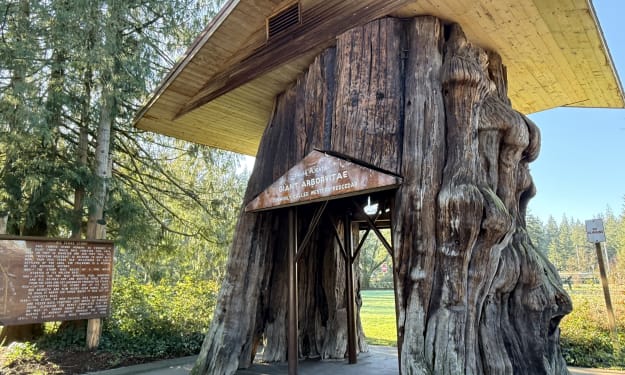
Western red cedar, over 1000 years old, you grew for 200 years and towered over others, silently observing sights in the forest that are no more, your secrets buried within your spirit. The bark covering your tree trunk, said to be about 23 feet around, was hollow when men discovered you. Inside the hollow trunk, a fire somehow began; you cannot tell us when, how, or why, and there is no record of it. The fire caused your death. Slowly, you died, from the inside out. Such a sad loss for an old soul of the forest, with centuries of knowledge in its cells. Houses, watercraft, shingles, bowls, bows and arrows, and paper that men used to write what they knew of your history could have been made from your body, branches, and bark. Truly, fire was a better death for you than a logger’s saw.
By Andrea Corwin a day ago in Earth
Severe Geomagnetic Storm Could Bring Northern Lights Across Much of the U.S.
On Monday evening, skywatchers from the Pacific Northwest to the Midwest got ready for something out of the ordinary: a celestial display that typically occurs at high northern latitudes. Americans who provide forecasts as a powerful cloud of charged particles from the sun accelerates toward the Earth's magnetic field, the National Oceanic and Atmospheric Administration (NOAA) has issued a "G4 (Severe) geomagnetic storm watch."
By Raviha Imran2 days ago in Earth



Comments
There are no comments for this story
Be the first to respond and start the conversation.