
Climate Change and Conflict: The War-Driven Environmental Crisis in the Middle East
The Destructive Nexus of War and Climate Change: A Middle Eastern Perspective"

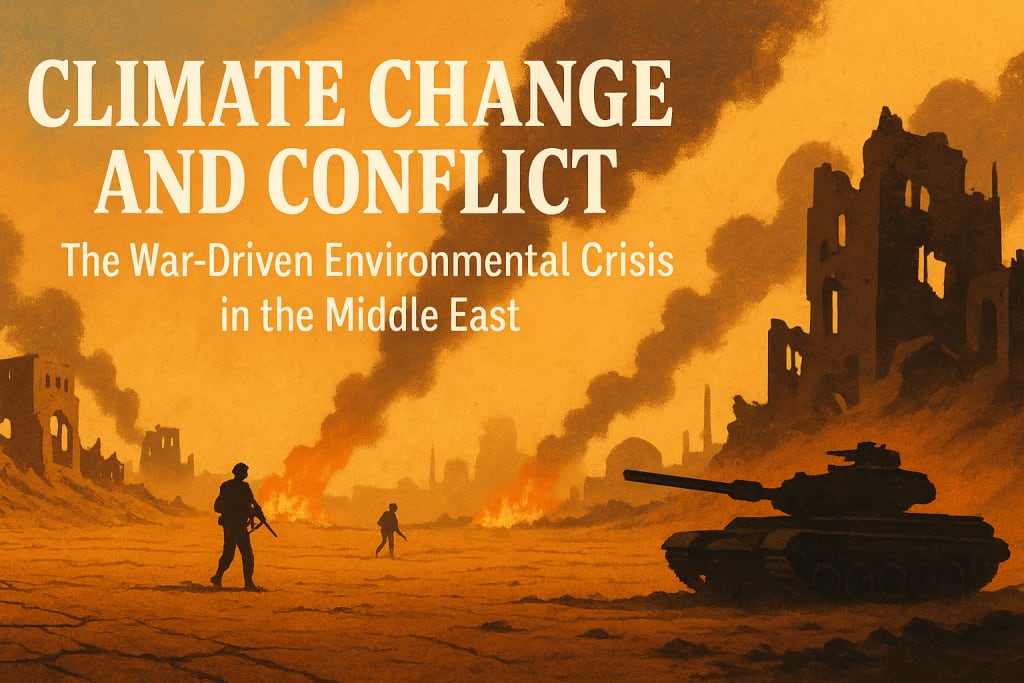
The Middle East, a region already grappling with severe climatic challenges, is witnessing an escalating environmental crisis, exacerbated by ongoing conflicts. While climate change is a global issue, its effects are particularly pronounced in the Middle East, where wars have not only deepened political instability but have also intensified the environmental degradation of the land. The destructive consequences of armed conflict, when coupled with climate change, create a vicious cycle of instability that affects millions of people, particularly in countries like Syria, Iraq, Yemen, and others.
The Climate Crisis in the Middle East
The Middle East is one of the most vulnerable regions to climate change, experiencing extreme temperatures, scarce water resources, and prolonged droughts. Rising temperatures, dwindling water supplies, and increased desertification threaten agriculture, food security, and human livelihoods. The region is already characterized by arid and semi-arid environments, and the impact of climate change only accelerates these conditions. By 2050, projections suggest that parts of the Middle East could become uninhabitable due to extreme heat, further stressing already fragile ecosystems and human populations.
Water scarcity is one of the most pressing challenges exacerbated by climate change. Countries like Iraq, Syria, and Turkey rely heavily on the Tigris and Euphrates river systems, which are already under pressure from population growth, agriculture, and industrial demands. Climate change-induced alterations to rainfall patterns and snowmelt have reduced the flow of these vital rivers, threatening both regional water security and the livelihoods of millions. The lack of sufficient water has also led to increased competition and disputes over water resources, further inflaming regional tensions.
The Impact of War on the Environment
Conflict in the Middle East has long-lasting and multifaceted effects on the environment. The devastation caused by wars—whether through the destruction of infrastructure, deforestation, land contamination, or the targeting of critical resources—magnifies the environmental challenges posed by climate change. The consequences of war on the environment are often ignored in the immediate aftermath of violence, yet the scars left on the land can persist for decades, if not centuries.
In Syria, the ongoing civil war since 2011 has not only caused immeasurable human suffering but has also wreaked havoc on the environment. Forests have been felled to fuel the war effort, while agricultural lands have been destroyed or abandoned. The war has also contaminated water sources and disrupted essential infrastructure, including water treatment facilities. The collapse of Syria’s agricultural sector, which had already been struggling due to droughts and water scarcity exacerbated by climate change, has left millions of Syrians vulnerable to food insecurity.
In Iraq, decades of war, including the 2003 invasion by the United States and subsequent conflicts with ISIS, have caused widespread environmental damage. Bombings have destroyed oil fields, releasing toxic chemicals into the air and water. In addition, the extensive use of heavy machinery and explosives has led to soil contamination and the destruction of fragile ecosystems. The country's rivers, particularly the Tigris and Euphrates, have been heavily impacted by pollution and the diversion of water for military purposes.
The conflict in Yemen, which began in 2015, has similarly led to severe environmental degradation. Yemen, already one of the most water-scarce countries in the world, faces a dire situation, with the war exacerbating the destruction of its already fragile water infrastructure. The fighting has also led to the destruction of farmland, while the use of landmines and unexploded ordnance has rendered vast areas of land unusable for agriculture.
The Link Between War and Climate Change
The link between war and climate change is not merely coincidental. Conflict exacerbates the effects of climate change by disrupting environmental management and by diverting resources away from adaptation efforts. War-torn countries are often unable to prioritize or implement effective policies to mitigate the impacts of climate change. Furthermore, the destruction of infrastructure, such as irrigation systems and power grids, limits the capacity of governments to respond to environmental disasters or invest in sustainable development.
As the climate continues to change, the likelihood of conflict over resources—especially water and arable land—grows. In a region where many countries already face competition for water resources, climate change acts as a catalyst for further conflict. The potential for disputes over water, agricultural land, and energy resources is heightened as these resources become scarcer due to shifting rainfall patterns, desertification, and rising temperatures.
The nexus of climate change and conflict also has implications for displacement. As regions become less habitable due to extreme heat, droughts, and resource shortages, millions of people are forced to leave their homes in search of better living conditions. The refugee crisis resulting from environmental disasters compounded by conflict has led to the destabilization of neighboring countries, further straining regional and international systems.
International Efforts to Address the Crisis
The international community has recognized the link between climate change and conflict in the Middle East, but efforts to address the issue remain limited and often fall short. The United Nations and various humanitarian organizations are working to provide aid and support to affected populations, but the scale of the crisis often overwhelms their resources. Additionally, political instability and ongoing conflict prevent the implementation of long-term, sustainable solutions.
There is a need for greater attention to environmental peacebuilding, which aims to address the environmental roots of conflict and promote cooperation over shared resources. Multilateral agreements and regional cooperation on water management, for instance, could help alleviate tensions and prevent conflict over this critical resource. Furthermore, integrating climate adaptation and mitigation strategies into peace processes could ensure that countries are better prepared to face the dual challenges of climate change and conflict.
Conclusion
The Middle East faces a profound crisis at the intersection of climate change and conflict. The region's vulnerability to extreme climate events, coupled with the devastating effects of war, has created a perfect storm of environmental and human suffering. While the international community must work to address the immediate humanitarian needs in conflict zones, it is equally important to recognize the long-term environmental challenges and their role in perpetuating instability.
To mitigate the impact of climate change and reduce the risk of future conflict, it is crucial that policymakers prioritize both environmental sustainability and peace building in their responses. Only by addressing the environmental and political dimensions of the crisis can the Middle East begin to heal and build a more stable and sustainable future.
About the Creator
Faiq Ahmad
Am experienced Field Security Officer working on the Engro Enfrashare Telecom Project.
I actively earn through various online platforms.This reflects my adaptability, tech skills, and commitment to continuous learning and financial growth.
Keep reading
More stories from Faiq Ahmad and writers in Earth and other communities.
Climate Change: A Global Wake-Up Call
Climate Change: A Global Wake-Up Call Exploring the Causes, Consequences, and Urgent Actions Needed to Protect Our Planet Climate change is no longer a distant threat—it is a present-day reality that affects every corner of the Earth. From rising temperatures and melting glaciers to extreme weather events and shifting ecosystems, the signs are all around us. This global wake-up call demands immediate attention, collective action, and lasting commitment from individuals, governments, and industries.
By Faiq Ahmad9 months ago in Earth
Without Democracy, Donald Trump’s Venezuelan Oil Quest Will Fail
Donald Trump’s renewed interest in Venezuelan oil may seem, on the surface, like a hard-nosed geopolitical calculation. Venezuela holds the world’s largest proven oil reserves, and amid global energy uncertainty, access to those resources is undeniably tempting. But history, economics, and politics all point to the same conclusion: without democratic reform in Venezuela, any attempt by a Trump-led US administration to secure reliable Venezuelan oil will ultimately fail.
By Aarif Lashari5 days ago in Earth
So You Decided To Become a Nurse Practitioner:
So you decided to become an "Advanced Practice" nurse. Congratulations!... is what I would say if this was a good idea. Grad school? In this economy? What were you thinking? Likely it was something along the lines of either 1) “I've seen these other chucklefucks do it— Why can't I?” or even 2) “I've got a nice career, I should shake it up. I miss feeling like I have no clue what I'm doing.”
By Sandor Szabo2 days ago in Fiction


Comments
There are no comments for this story
Be the first to respond and start the conversation.