
Climate Change: A Global Wake-Up Call
"Exploring the Causes, Consequences, and Urgent Actions Needed to Protect Our Planet"

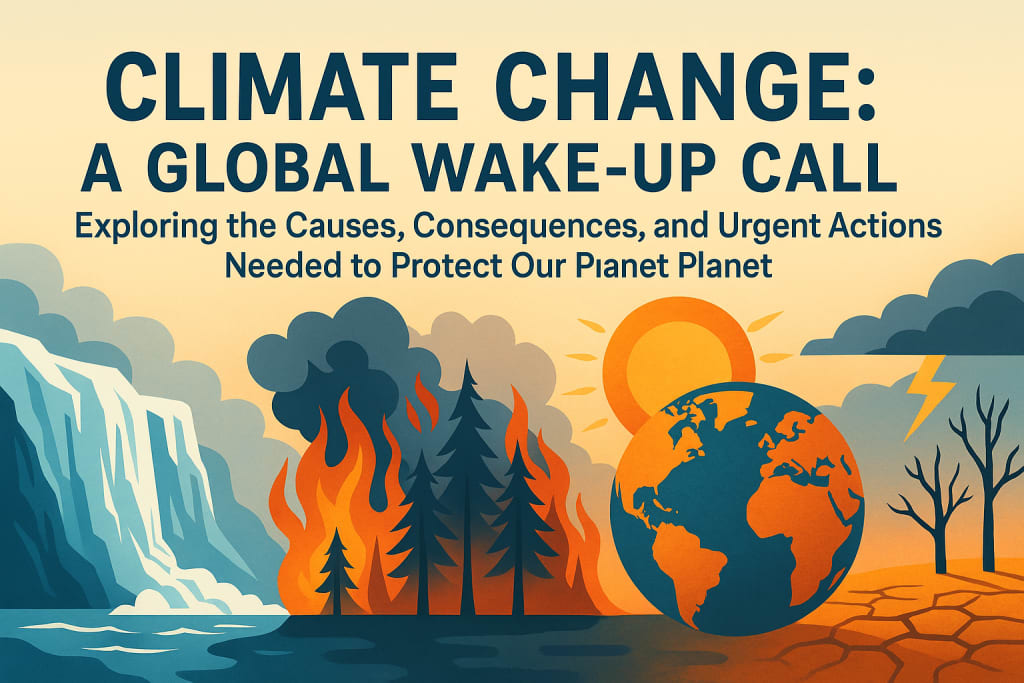
Climate Change: A Global Wake-Up Call
Exploring the Causes, Consequences, and Urgent Actions Needed to Protect Our Planet
Climate change is no longer a distant threat—it is a present-day reality that affects every corner of the Earth. From rising temperatures and melting glaciers to extreme weather events and shifting ecosystems, the signs are all around us. This global wake-up call demands immediate attention, collective action, and lasting commitment from individuals, governments, and industries.
The Science Behind Climate Change
Climate change refers to long-term alterations in temperature, precipitation, wind patterns, and other aspects of the Earth's climate system. While climate has naturally fluctuated over millennia, the current phase of global warming is largely driven by human activities—especially since the Industrial Revolution.
The primary culprit is the excessive emission of greenhouse gases (GHGs) such as carbon dioxide (CO₂), methane (CH₄), and nitrous oxide (N₂O). These gases trap heat in the Earth's atmosphere, creating a “greenhouse effect” that leads to warming. Burning fossil fuels (coal, oil, and natural gas), deforestation, industrial processes, and agriculture contribute significantly to this buildup.
According to the Intergovernmental Panel on Climate Change (IPCC), the Earth's average surface temperature has already increased by about 1.1°C since the late 19th century. If current trends continue unchecked, we could see an increase of 1.5°C to 2°C or more within this century, leading to severe and possibly irreversible impacts.
Visible Impacts Across the Globe
The effects of climate change are wide-ranging and increasingly visible:
Melting Polar Ice and Rising Sea Levels: The Arctic is warming at twice the global average, leading to rapid ice melt. This contributes to rising sea levels, threatening low-lying coastal areas with flooding and erosion.
Extreme Weather Events: More intense hurricanes, floods, droughts, and wildfires are becoming common. For instance, Australia and California have witnessed devastating wildfires in recent years, while parts of Africa and Asia have experienced record-breaking floods.
Ocean Warming and Acidification: Oceans absorb much of the excess heat from global warming, leading to coral bleaching and disrupted marine ecosystems. Additionally, the absorption of CO₂ is causing ocean acidification, harming shellfish and other marine life.
Biodiversity Loss: Many species are struggling to adapt to changing climates, leading to habitat loss and extinction. Forests, wetlands, and coral reefs are especially vulnerable.
Human Health and Livelihoods: Heatwaves, air pollution, and changing disease patterns are affecting public health. Meanwhile, crop failures and water shortages are impacting food security, particularly in developing countries.
Root Causes and Human Responsibility
While natural factors like volcanic eruptions and solar variations do influence the climate, the dominant force behind recent changes is human activity. The way we produce energy, manage land, and consume resources has tipped the natural balance.
Deforestation, for example, not only releases carbon stored in trees but also reduces the Earth’s ability to absorb CO₂. Similarly, intensive livestock farming produces large quantities of methane, a potent greenhouse gas.
Urbanization and overconsumption also play a role. Modern lifestyles, especially in wealthy nations, are heavily dependent on energy, transportation, and materials that generate emissions. While developing countries contribute less to global emissions, they often suffer the worst consequences of climate change.
Solutions and the Path Forward
Despite the alarming situation, there is still hope. Scientists, environmentalists, and policymakers around the world are working to develop solutions. But real change will require a united effort and bold action at all levels.
1. Transition to Clean Energy:
Replacing fossil fuels with renewable energy sources like solar, wind, hydro, and geothermal is key. Clean energy technologies are becoming more affordable and efficient, making this transition increasingly practical.
2. Promote Sustainable Agriculture and Forestry:
Practices like agroforestry, organic farming, and reforestation can help absorb carbon and protect ecosystems. Preserving rainforests and other carbon sinks is especially important.
3. Improve Energy Efficiency:
From buildings to vehicles, making systems more energy-efficient reduces emissions. Simple steps like insulating homes, using energy-saving appliances, and adopting electric transportation can make a big difference.
4. Support Climate Policies:
Governments play a critical role in regulating emissions and investing in green infrastructure. International agreements like the Paris Agreement aim to limit global warming to well below 2°C. Citizens can advocate for stronger climate policies and hold leaders accountable.
5. Raise Awareness and Education:
Understanding the science and consequences of climate change helps people make informed decisions. Schools, media, and communities can play a role in spreading awareness and encouraging sustainable behavior.
6. Adaptation and Resilience:
While mitigation is vital, adaptation is also necessary. Communities must prepare for changing conditions—through flood defenses, drought-resistant crops, and resilient infrastructure.
The Role of Individuals
Although large-scale solutions are crucial, individual actions also matter. Reducing personal carbon footprints—by driving less, eating more plant-based foods, avoiding single-use plastics, and supporting eco-friendly businesses—can collectively create a powerful impact.
More importantly, individuals can influence change by voting, speaking out, and educating others. Climate change is not just an environmental issue—it’s a moral and social one that affects current and future generations.
Conclusion
Climate change is the defining challenge of our time. Its consequences threaten the very systems we depend on—nature, health, economy, and peace. But the future is not written in stone. By acknowledging the crisis, understanding its causes, and acting decisively, humanity can still chart a better course.
This global wake-up call is not just a warning—it’s an opportunity. An opportunity to protect our planet, rethink our ways of living, and build a more sustainable and just world for all.
About the Creator
Faiq Ahmad
Am experienced Field Security Officer working on the Engro Enfrashare Telecom Project.
I actively earn through various online platforms.This reflects my adaptability, tech skills, and commitment to continuous learning and financial growth.
Keep reading
More stories from Faiq Ahmad and writers in Earth and other communities.
Man Shot Dead by Police After Aiming Bow and Arrow at Officers
A man has been shot dead by police after allegedly aiming a bow and arrow at officers, authorities have confirmed. The fatal encounter has triggered public debate over police use of force, crisis response protocols, and how law enforcement handles situations involving unconventional weapons.
By Aarif Lashari3 days ago in Earth


Comments
There are no comments for this story
Be the first to respond and start the conversation.