
Climate & Weather Systems
Climate and weather are two fundamental atmospheric concepts that shape our daily lives and the long-term conditions of our planet.


While weather refers to short-term atmospheric conditions such as Temperature, precipitation, humidity, and wind, climate encompasses the long-term patterns and averages of these elements over extended periods. Understanding climate and weather systems is crucial for predicting environmental changes, preparing for natural disasters, and studying global climate change.
(I)Understanding Weather Systems
Weather systems describe the dynamic movement of air masses, pressure systems, and moisture within the Earth’s atmosphere. The primary components influencing weather include:
- Temperature – Determined by solar radiation, temperature varies based on latitude, altitude, and the presence of water bodies and landforms.
- Air Pressure – Differences in air pressure create wind patterns and influence storm formations.
- Humidity – The amount of moisture in the air affects cloud formation, precipitation, and general atmospheric conditions.
- Precipitation – Rain, snow, sleet, and hail result from condensation of moisture in the atmosphere.
- Wind Patterns – Winds are driven by the Earth's rotation and pressure differences, playing a key role in weather dynamics.
Weather systems operate on different scales, from local thunderstorms to large-scale cyclones and anticyclones. The primary weather systems include:
- Cyclones (Low-Pressure Systems) – Areas of low atmospheric pressure that bring cloudy weather, precipitation, and strong winds.
- Anticyclones (High-Pressure Systems) – Associated with clear skies, dry conditions, and calm weather.
- Fronts – Boundaries between air masses, including warm fronts, cold fronts, and occluded fronts, which cause changes in weather patterns.
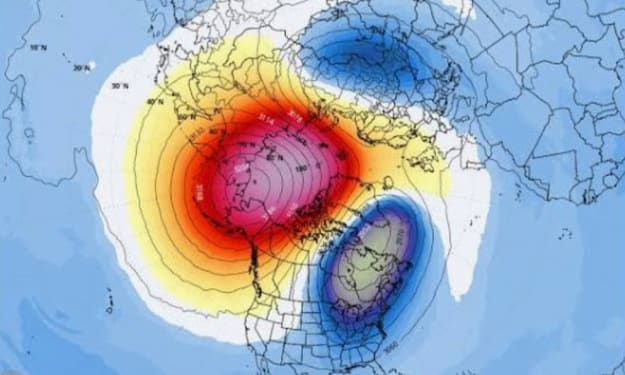
- Jet Streams – Fast-moving air currents in the upper atmosphere that influence storm tracks and temperature variations.
(II)Understanding Climate
Climate is the average weather conditions of a region over a long period, typically 30 years or more. It is influenced by multiple factors, including:
- Latitude – Determines the amount of solar energy received; equatorial regions are warmer, while polar regions are colder.
- Altitude – Higher altitudes have cooler temperatures due to decreased atmospheric pressure.
- Proximity to Water Bodies – Oceans and lakes regulate temperature, making coastal climates milder.
- Ocean Currents – Movements of warm and cold water influence coastal and regional climates.
- Vegetation and Land Use – Forests, deserts, and urban areas affect local climates through absorption and reflection of heat.
- Atmospheric Circulation – Large-scale wind patterns, such as trade winds and monsoons, shape climatic conditions.
(III)Climate Zones
The Earth is divided into distinct climate zones based on temperature and precipitation patterns:
- Temperate Climate – Moderate temperatures with seasonal variations in precipitation.
- Tropical Climate – Found near the equator, characterized by warm temperatures and high rainfall.
- Dry (Arid and Semi-Arid) Climate – Includes deserts and steppe regions with minimal precipitation.
- Continental Climate – Found in the interiors of continents with hot summers and cold winters.
- Polar Climate – Extremely cold temperatures with ice and snow cover most of the year.
(IV)Climate Change and Its Impact
Climate change refers to long-term alterations in temperature, precipitation, and other climatic elements, often driven by human activities. The primary causes of climate change include:
- Greenhouse Gas Emissions – Carbon dioxide (CO2), methane (CH4), and other gases trap heat in the atmosphere, leading to global warming.
- Deforestation – The loss of forests reduces carbon absorption and disrupts local climates.
- Industrial Activities – Factories and transportation release pollutants that impact atmospheric conditions.
- Natural Causes – Volcanic eruptions, solar radiation variations, and oceanic cycles also influence climate patterns.
(V)The consequences of climate change include:
- Rising Global Temperatures
- More frequent and intense hurricanes, droughts, and heatwaves
- Melting polar ice caps and rising sea levels
- Disruptions to agriculture and food security
- Loss of biodiversity and ecosystem imbalances
IN THE END
Climate and weather systems are interconnected, shaping the environment and human societies. While weather determines our daily activities, climate defines long-term patterns essential for agriculture, economy, and sustainability. Understanding these systems helps us mitigate risks, adapt to changes, and make informed decisions to combat climate change. As global temperatures continue to rise, efforts to reduce carbon footprints and transition to renewable energy sources become increasingly vital in ensuring a stable climate for future generations.
About the Creator
Badhan Sen
Myself Badhan, I am a professional writer.I like to share some stories with my friends.
Keep reading
More stories from Badhan Sen and writers in Earth and other communities.
Earth’s magnetic field and dynamo theory
The Earth's magnetic is essential for life, as it helps shield the Earth from harmful solar radiation and cosmic rays. Without it, life on Earth would be significantly more exposed to space weather. Understanding the Earth's magnetic field requires looking at both its nature and the dynamo theory, which is the most widely accepted explanation of its origin.
By Badhan Senabout a year ago in Earth
Earthquakes Today
Earthquakes are a daily reminder that the planet beneath our feet is constantly in motion. Today was no exception. Across different regions of the world, seismic instruments recorded a series of small to moderate earthquakes—most of them unnoticed by the general public, yet each one contributing to scientists’ understanding of how Earth releases stress along its tectonic boundaries. While major, destructive earthquakes capture headlines, the reality is that earthquakes happen every day, often dozens at a time. Today’s activity followed that familiar pattern: brief moments of shaking in some areas, subtle ground movement in others, and long strings of data flowing into global monitoring systems. A Snapshot of Earthquakes Today Throughout the day, earthquakes were detected in both well-known seismic zones and regions where shaking is less common. Coastal fault systems, subduction zones near ocean trenches, and continental plate boundaries all showed signs of movement. Most of today’s earthquakes were relatively low in magnitude, meaning they posed little to no danger to people or infrastructure. In places where earthquakes are frequent, such as parts of the Pacific Rim, small tremors are considered routine. Residents may feel a quick jolt, hear a faint rumble, or notice hanging objects sway briefly before everything settles again. Elsewhere, similar-sized quakes might go entirely unnoticed, detected only by sensitive instruments. The takeaway from today’s seismic activity is not alarm, but continuity: Earth is behaving exactly as geologists expect it to. Why Earthquakes Occur So Frequently Earth’s outer shell is broken into massive slabs called tectonic plates. These plates are constantly moving, though usually at speeds measured in centimeters per year. Where they collide, pull apart, or slide past one another, stress builds up over time. When that stress is released suddenly, an earthquake occurs. Today’s earthquakes are part of that ongoing process. Some happened along major fault lines that have been active for millions of years. Others occurred within plates themselves, caused by smaller fractures responding to distant stress changes. Each event, no matter how small, helps redistribute energy within the crust. Importantly, a day with multiple earthquakes does not necessarily signal that a larger one is imminent. In many cases, frequent small quakes actually release stress gradually, reducing the likelihood of a major rupture in the short term. What Scientists Learn From Today’s Quakes Every earthquake recorded today adds to a growing global dataset. Seismologists analyze factors such as depth, magnitude, wave patterns, and location to understand what is happening below the surface. Shallow earthquakes, even if small, are more likely to be felt by people, while deeper ones may pass unnoticed. Today’s events included a mix of both, offering insights into how stress is distributed at different levels of the Earth’s crust. Scientists also watch for earthquake “swarms,” where many small quakes occur in a concentrated area over a short period. These swarms can be linked to fluid movement underground, volcanic systems, or gradual fault adjustments. When swarms appear, researchers monitor them closely, though most fade without leading to a larger event. How Communities Experience Earthquakes Today For most people, today’s earthquakes were little more than a brief interruption—if they noticed them at all. In regions accustomed to seismic activity, daily life continues with little concern after minor shaking. Buildings designed to withstand earthquakes absorb the motion, and residents know basic safety steps by heart. In areas where earthquakes are less common, even a small tremor can spark curiosity or concern. Social media often fills with posts asking, “Did you feel that?” These moments serve as reminders that preparedness matters everywhere, not just in high-risk zones. Today’s earthquakes, while largely harmless, reinforce the importance of awareness. Knowing what to do during shaking—such as dropping to the ground, taking cover, and holding on—can make a critical difference during stronger events. Are Earthquakes Becoming More Common? A common question after days like today is whether earthquakes are increasing. The short answer is no—at least not in a way that indicates growing danger. What has increased is our ability to detect them. Modern seismic networks are far more advanced than those of previous decades. Instruments now pick up tiny earthquakes that would have gone unnoticed in the past. As a result, it can seem like earthquakes are happening more often, when in reality we are simply observing them more accurately. Today’s activity fits well within historical norms. Earth has always been active, and it will continue to be so long after human timelines have passed. The Role of Preparedness Even on a day dominated by small earthquakes, preparedness remains essential. Large earthquakes are rare, but they do occur without warning. Today’s minor tremors are a reminder to review safety plans, secure heavy furniture, and ensure emergency supplies are accessible. Preparedness is not about fear—it is about readiness. Communities that invest in earthquake-resistant infrastructure and public education recover more quickly when stronger shaking occurs. Looking Ahead As today comes to a close, seismic monitoring will continue uninterrupted. New earthquakes will occur overnight, tomorrow, and every day after that. Most will be small. A few may be felt. Very few will cause damage. Earthquakes today remind us that the planet is alive with motion beneath its surface. While we cannot stop or predict them with precision, we can understand them, respect them, and prepare for their impact. In that sense, today’s earthquakes are not just geological events—they are lessons in coexistence with a dynamic planet, one that is constantly reshaping itself, one subtle tremor at a time.
By Saboor Brohi 2 days ago in Earth



Comments (1)
Love this . Great work.