
Christ the Redeemer
Exploring the Construction, Engineering, and Symbolism of Brazil's Iconic Statue of Jesus Christ

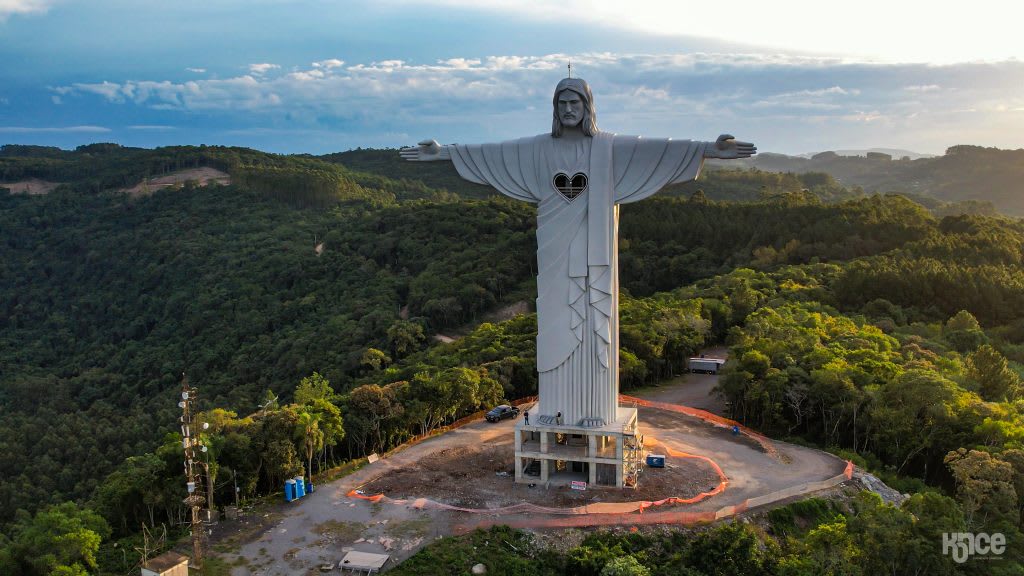
Christ the Redeemer is a statue of Jesus Christ located in Rio de Janeiro, Brazil. It stands at 98 feet tall, not including its pedestal, and is one of the most iconic landmarks in Brazil. The statue is made of reinforced concrete and soapstone, and was designed by French sculptor Paul Landowski and built by Brazilian engineer Heitor da Silva Costa. It was completed in 1931 and has since become a symbol of Christianity around the world.
The statue is situated at the peak of the Corcovado mountain, which stands at 2,330 feet above sea level, and overlooks the city of Rio de Janeiro. It is one of the most popular tourist attractions in Brazil, and visitors can reach the statue by taking a scenic train ride through the Tijuca Forest or by hiking to the top of the mountain. The view from the top of the statue is breathtaking and offers panoramic views of Rio de Janeiro and its surrounding mountains and beaches.
Christ the Redeemer is not only a religious and cultural symbol, but also a remarkable engineering feat. The construction of the statue began in 1922, and it took nine years to complete. The statue is built to withstand strong winds and earthquakes, and its design incorporates several elements of art deco and modernist styles.
The statue's arms stretch out 92 feet wide, giving it a wingspan that rivals that of a Boeing 747. It is illuminated at night and can be seen from many parts of the city of Rio de Janeiro. The statue has undergone several restorations over the years to ensure its preservation, and in 2007, it was named one of the New Seven Wonders of the World.
In addition to its religious significance, Christ the Redeemer is also a symbol of unity and peace. It serves as a reminder of Brazil's cultural and religious diversity, as well as its unique natural beauty. Visitors to the statue often feel a sense of awe and inspiration, and it has become a destination for pilgrims, tourists, and locals alike.
Overall, Christ the Redeemer is a magnificent work of art and engineering, and an enduring symbol of faith, hope, and unity for people around the world.
The idea of building a statue of Christ on the Corcovado mountain dates back to the mid-19th century, when a group of Brazilian Catholics proposed the idea to the emperor of Brazil, Dom Pedro II. However, it was not until the early 20th century that the project gained momentum. In 1921, a group of Catholic organizations in Brazil launched a campaign to build the statue, and it was agreed that the project would be funded entirely by donations.
The design for the statue was selected through a competition, which was won by French sculptor Paul Landowski. The statue was originally planned to be made of concrete and covered in soapstone, but after several technical difficulties, it was decided to build the entire statue out of reinforced concrete.
The construction of the statue was a major engineering challenge, given its location on the steep slopes of the Corcovado mountain. A railway was built to transport materials and workers up the mountain, and a temporary chapel was erected to house the statue's head and arms during the construction process.
After nine years of construction, the statue was finally completed on October 12, 1931, and it was inaugurated by Brazilian President Getulio Vargas. Since then, Christ the Redeemer has become one of the most recognizable landmarks in the world, attracting millions of visitors each year.
In recent years, the statue has undergone several renovations and improvements, including the installation of a new lighting system in 2008, and the construction of an elevator and escalator system in 2003 to make it easier for visitors to access the statue. The site has also been designated as a UNESCO World Heritage Site.
Christ the Redeemer has also played a significant role in Brazilian history and culture. During the 1960s and 1970s, the statue became a symbol of resistance against Brazil's military dictatorship, and was used as a rallying point for protests and demonstrations.
In addition, the statue has been featured in numerous films, TV shows, and music videos, and has become a popular backdrop for photo shoots and advertisements. It has also been the site of several major events, including the 2016 Summer Olympics torch relay, which saw the Olympic torch carried to the statue's summit by a group of Brazilian athletes.
Today, Christ the Redeemer continues to be a major tourist attraction and pilgrimage site, drawing visitors from around the world to marvel at its size, beauty, and significance. The statue has become a symbol not only of Brazil and its people, but also of the enduring power of faith, hope, and unity in a troubled world.
About the Creator
Philippines Paper Bags Market: Packaging Shifts, Environmental Policy & Changing Consumption Patterns
Philippines Paper Bags Market Overview The Philippines paper bags market is undergoing a structural shift as environmental regulation, packaging reform and consumer awareness increasingly influence material choices across industries. According to IMARC Group, The Philippines paper bags market size was valued at USD 28.59 Million in 2025 and is projected to reach USD 46.95 Million by 2034, growing at a compound annual growth rate of 5.66% from 2026-2034. This expansion reflects gradual but consistent changes in packaging practices rather than a single disruptive trend.
By Manisha Dixitabout 9 hours ago in Earth
The Devil's Cut
“Comrade, finally you’re awake.” The voice was smooth, sensual. A flickering incandescent bar was all that lit the white, sterile room. All Vladimir remembered was everything going black. He tried to move his arms and found them strapped to the gurney.
By Matthew J. Fromm7 days ago in Fiction



Comments
There are no comments for this story
Be the first to respond and start the conversation.