
Philippines Paper Bags Market: Packaging Shifts, Environmental Policy & Changing Consumption Patterns
How regulation, retail activity and sustainability goals are influencing the paper bags market in the Philippines

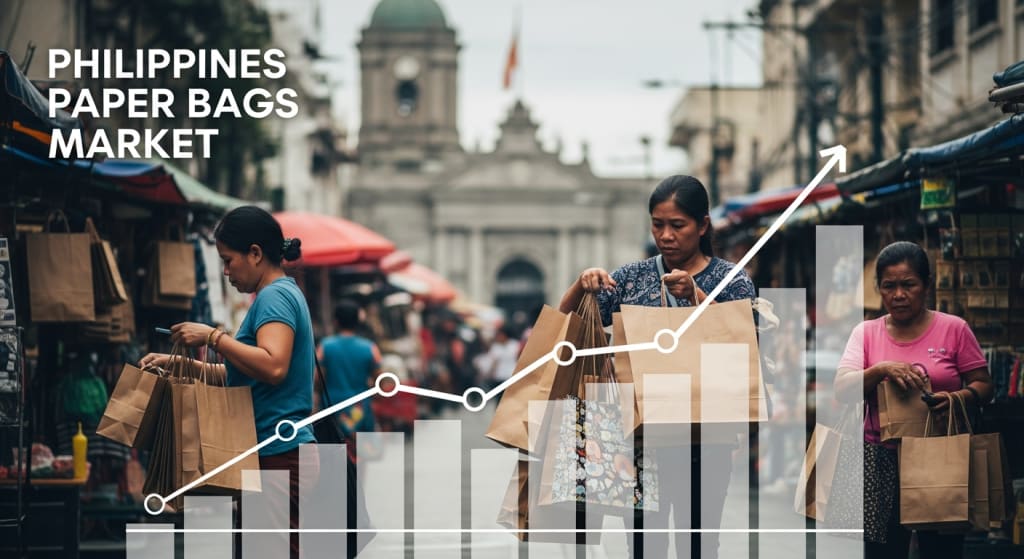
Philippines Paper Bags Market Overview
The Philippines paper bags market is undergoing a structural shift as environmental regulation, packaging reform and consumer awareness increasingly influence material choices across industries. According to IMARC Group, The Philippines paper bags market size was valued at USD 28.59 Million in 2025 and is projected to reach USD 46.95 Million by 2034, growing at a compound annual growth rate of 5.66% from 2026-2034. This expansion reflects gradual but consistent changes in packaging practices rather than a single disruptive trend.
Paper bags serve a wide range of applications in the Philippines, including retail shopping, food service, grocery distribution, pharmaceuticals and industrial packaging. Their increased use is largely linked to policy-driven efforts to reduce plastic waste, as well as operational adjustments made by retailers, manufacturers and logistics providers seeking alternative packaging formats.
Driving Growth in the Philippines Paper Bags Market
One of the primary drivers of market growth is regulatory pressure on single-use plastics. Several local government units across the Philippines have implemented ordinances restricting plastic bag distribution. While enforcement and scope vary by region, these measures have encouraged businesses to adopt paper-based alternatives for compliance and operational continuity.
Another contributing factor is expansion in retail and food service activity. Supermarkets, convenience stores, quick-service restaurants and takeaway outlets continue to increase their footprint across urban and semi-urban areas. Paper bags are commonly used for secondary packaging, particularly in food delivery and takeaway services, where paper is viewed as functional and compliant with evolving waste regulations.
E-commerce growth also influences demand. Although corrugated boxes dominate primary packaging, paper bags are increasingly used for in-store pickup, boutique retail shipping and lightweight deliveries. Small and medium enterprises, especially those operating online, often choose paper bags for branding consistency and logistical simplicity.
Consumer behavior plays a supporting role. While cost and durability remain key purchasing considerations, there is rising awareness of waste management and environmental impact. This has influenced retailers to standardize paper packaging options, particularly in sectors where product weight and moisture exposure are manageable.
Manufacturing improvements have further supported market expansion. Advances in paper treatment, coating and bag design have improved load capacity, moisture resistance and durability. These technical developments allow paper bags to serve applications that previously relied exclusively on plastic formats.
Request a Sample Report with the Latest 2026 Data & Forecasts
What the Opportunities Are
The Philippines paper bags market presents several areas of opportunity across production, design and application.
1. Food-Grade and Moisture-Resistant Paper Bags
Food service applications require packaging that can withstand heat, grease and limited moisture. Improved coatings and laminated paper technologies allow paper bags to meet functional requirements without compromising disposal standards.
2. Customization and Branding
Retailers increasingly view packaging as a functional component of brand communication. Paper bags allow for printing, labeling and design flexibility, creating opportunities for manufacturers offering customized solutions.
3. Regional Manufacturing Expansion
As demand rises, there is opportunity to expand localized production facilities. Domestic manufacturing reduces reliance on imports and improves supply responsiveness, especially during peak retail seasons.
4. Recyclable and Certified Materials
Paper sourced from responsibly managed forests and certified supply chains can support corporate sustainability goals. Demand for traceable, recyclable inputs is growing across organized retail and export-oriented businesses.
5. Institutional and Government Procurement
Public institutions, educational facilities and government offices increasingly adopt paper-based packaging for procurement compliance. This creates stable, contract-based demand for standardized paper bag formats.
Operational Considerations
Despite growth potential, paper bags are not universally substitutable. They face limitations in wet environments, heavy-load transport and extended reuse cycles. As a result, adoption is often selective and application-specific. Cost sensitivity remains a factor, particularly for small retailers, as paper bags generally have higher unit costs than thin plastic alternatives.
Supply chain stability is another consideration. Paper pulp pricing, energy costs and logistics influence production economics. Manufacturers must balance sustainability goals with price competitiveness and material availability.
Recent News & Developments in the Philippines Paper Bags Market
• Jan 2025: Several metropolitan municipalities expanded enforcement of plastic reduction ordinances, prompting retail chains to standardize paper bag usage across newly regulated districts.
• May 2025: A domestic packaging manufacturer invested in upgraded paper-processing equipment to improve output efficiency and bag strength, supporting increased retail demand.
• Oct 2025: Industry surveys indicated a 17% year-on-year increase in paper-based packaging adoption among mid-sized retailers, driven by regulatory compliance and operational alignment.
Why Should You Know About Philippines Paper Bags Market?
Understanding the Philippines paper bags market provides insight into how environmental policy translates into material demand across supply chains. The market reflects broader shifts in waste management strategy, retail operations and packaging design rather than short-term substitution trends.
For businesses, the sector illustrates how regulatory frameworks influence procurement decisions and packaging standards. For manufacturers, it highlights the importance of material innovation and production efficiency. From a sustainability perspective, the market shows how incremental changes—rather than immediate replacements—shape long-term packaging transitions.
The paper bags market is therefore not simply about replacing plastic. It represents how environmental considerations, operational constraints and consumer expectations interact within a developing economy to reshape packaging choices over time.
About the Creator
Keep reading
More stories from Manisha Dixit and writers in Earth and other communities.
Philippines Vinyl Record Market: Retro Revival, Collector Culture & Music Consumption Trends
Philippines Vinyl Record Market Overview The Philippines vinyl record market is experiencing a notable resurgence as music enthusiasts, collectors and younger audiences embrace analog sound, retro charm and physical music media experiences. Vinyl records — once overshadowed by digital formats such as CDs and streaming — are re-establishing themselves as premium, tangible and culturally meaningful products that celebrate musical artistry and sonic warmth. The Philippines vinyl record market size was valued at USD 40.57 Million in 2025 and is projected to reach USD 71.38 Million by 2034, growing at a compound annual growth rate of 6.48% from 2026-2034. This growth reflects a global resurgence in vinyl popularity, renewed interest in tangible music ownership, and increasing engagement with music culture that values authenticity, collectible formats and immersive listening experiences. (Market data based on IMARC Group analysis.)
By Manisha Dixit2 days ago in Trader
Astonishing Snow Leopard Hunt Filmed in Pakistan’s Remote Mountains
High in the jagged peaks of northern Pakistan, where icy winds carve through barren rock and human presence is scarce, a rare and astonishing moment has been captured on camera: a snow leopard executing a powerful hunt in the wild. The footage, filmed in Pakistan’s remote mountainous regions, has stunned wildlife experts, conservationists, and nature lovers around the world. More than just a dramatic spectacle, the video offers a rare window into the secretive life of one of Earth’s most elusive big cats.
By Fiaz Ahmed Brohi3 days ago in Earth


Comments
There are no comments for this story
Be the first to respond and start the conversation.