
China's Zhurong rover discovers ancient beach evidence on Mars' Utopia Basin.
China's Zhurong Rover Discover

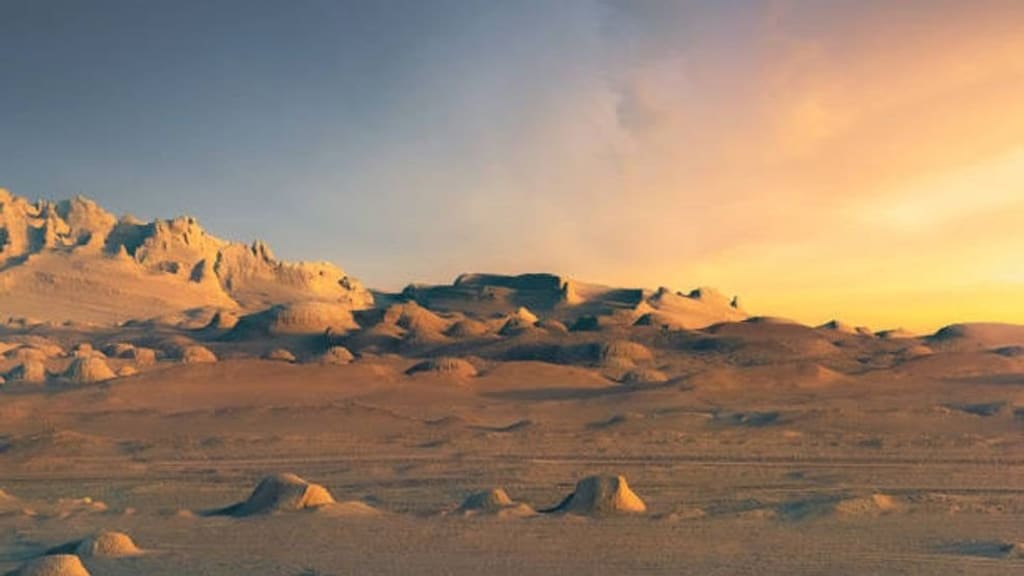
China's Zhurong rover discovers ancient beach evidence on Mars' Utopia Basin.
China’s Zhurong rover has made a groundbreaking discovery that could reshape our understanding of Mars’ history. The rover part of China’s Tianwen 1 mission has found evidence suggesting that an ancient ocean may have once existed in the Utopia Planitia region one of the largest impact basins on the Red Planet. This finding supports the long standing theory that Mars was once a warm wet world with conditions potentially favorable for life. The discovery centers around a set of landforms and sedimentary structures that bear a striking resemblance to those found on Earth’s beaches and shallow water environments. Scientists analyzing the rover’s data have identified ripple like patterns in the Martian soil suggesting that liquid water once shaped the landscape. These patterns are similar to those formed by waves and currents on Earth’s coastlines indicating that a body of water might have once existed in this region.
Utopia Planitia has been a subject of interest for decades due to its unique geological features. Previous missions including NASA’s Viking 2 lander in the 1970s provided hints that water may have played a role in shaping the area. However Zhurong’s detailed ground level observations add crucial evidence to this hypothesis. The rover’s cameras and ground penetrating radar have provided a more comprehensive picture of the subsurface structure revealing layers that suggest prolonged water activity. One of the most significant aspects of this discovery is that it aligns with previous research suggesting that Mars had a northern ocean billions of years ago. Some planetary scientists have long believed that a vast ocean covered much of the northern hemisphere of Mars and the presence of an ancient beach in Utopia Planitia provides additional support for this theory. If confirmed this could mean that Mars once had a stable climate capable of sustaining large bodies of water for extended periods.
The presence of ancient water bodies on Mars has profound implications for the planet’s past habitability. On Earth bodies of water are essential for life serving as a medium for chemical reactions that give rise to biological processes. If Mars once had an ocean or a large lake in Utopia Planitia it increases the chances that microbial life could have emerged at some point in the planet’s history. Scientists will now focus on analyzing the composition of the sediments and minerals in the region to determine whether they contain any organic compounds or chemical signatures associated with life.
Zhurong’s ground penetrating radar has also provided insights into the subsurface structure of Utopia Planitia. It has detected layers of sediment and potential ice deposits beneath the surface which could offer further evidence of past water activity. This discovery is particularly exciting because it suggests that remnants of Mars’ ancient water cycle may still be preserved underground. If underground ice is confirmed in this region it could serve as a valuable resource for future human exploration.
The rover’s findings are also significant for our understanding of Mars’ climate history. Mars is now a cold arid desert with a thin atmosphere but evidence from multiple missions suggests that it once had a much denser atmosphere that could have supported liquid water on the surface. The presence of an ancient shoreline indicates that Mars may have undergone dramatic climate shifts over billions of years. Understanding these changes could help scientists determine what caused the planet to lose its atmosphere and water which is crucial for understanding planetary evolution in general. This discovery also raises new questions about Mars’ hydrological cycle. If there was an ocean or large lake in Utopia Planitia where did the water go. Scientists theorize that much of it either evaporated into space due to atmospheric loss or became trapped as ice beneath the surface. Determining the fate of Mars’ water is key to understanding whether the planet could still harbor life in some form today.
Zhurong’s findings add to a growing body of evidence from other missions including NASA’s Perseverance and Curiosity rovers which have also found signs of ancient lakes and river deltas on Mars. Each new discovery paints a more detailed picture of a planet that was once far more Earth like than it appears today. The fact that multiple locations on Mars show signs of past water activity suggests that the planet had a global or semi global hydrological system in the distant past.
China’s Tianwen 1 mission which includes Zhurong, is a major milestone in planetary exploration. It marks China’s first successful attempt at landing and operating a rover on Mars and the mission has already yielded significant scientific insights. The rover has exceeded its primary mission duration continuing to send valuable data back to Earth. These discoveries reinforce China’s growing role in space exploration and contribute to international efforts to uncover Mars’ secrets.
Moving forward scientists will continue analyzing the data from Zhurong to gain a deeper understanding of the ancient beach like features. Further studies may involve comparing Zhurong’s findings with those from other Mars missions to determine the extent of past water coverage on the planet. If additional evidence confirms that a northern ocean once existed it could have major implications for future exploration including the search for signs of past or even present microbial life. The implications of these discoveries extend beyond Mars. Understanding the history of water on Mars can provide insights into planetary habitability in general helping scientists determine the conditions necessary for life to emerge. It also informs future missions including potential human exploration by identifying areas where water resources may still exist.
As space agencies and private companies plan for future Mars missions discoveries like this will guide decisions about landing sites resource utilization and scientific priorities. Whether for robotic exploration or eventual human settlement knowing where water once existed and where it might still be will be crucial. China’s Zhurong rover has provided a vital piece of the puzzle in our quest to understand Mars’ past. Its discovery of possible ancient beach formations in Utopia Planitia adds strong evidence to the theory that Mars was once home to vast bodies of water. This finding not only enhances our understanding of Mars’ history but also strengthens the case for its past habitability. As scientists continue to analyze the data we may be one step closer to answering one of humanity’s biggest questions Did life ever exist on Mars?
About the Creator
Adnan Rasheed
Author & Creator | Writing News , Science Fiction, and Worldwide Update| Digital Product Designer | Sharing life-changing strategies for success.
Keep reading
More stories from Adnan Rasheed and writers in Earth and other communities.
Partial solar eclipse 1 month away The moon will take a bite out of the sun on March 29.
Partial solar eclipse 1 month away The moon will take a bite out of the sun on March 29. A breathtaking celestial event is on the horizon as the moon will partially obscure the sun on March 29, 2025 creating a striking partial solar eclipse visible across North America Europe and parts of Northwest Africa. While this eclipse won’t bring total darkness it will still be a remarkable sight for sky watchers particularly in eastern North America where the partially eclipsed sun will rise dramatically above the horizon. A solar eclipse occurs when the moon passes between the Earth and the sun casting a shadow on our planet. In the case of a partial solar eclipse the alignment is not perfect meaning only a portion of the sun is obscured. Unlike a total eclipse where the sun is completely blocked for a brief period this event will leave a crescent shaped portion of the sun still visible, creating a mesmerizing effect often described as the sun having a bite taken out of it.
By Adnan Rasheed11 months ago in Earth
Without Democracy, Donald Trump’s Venezuelan Oil Quest Will Fail
Donald Trump’s renewed interest in Venezuelan oil may seem, on the surface, like a hard-nosed geopolitical calculation. Venezuela holds the world’s largest proven oil reserves, and amid global energy uncertainty, access to those resources is undeniably tempting. But history, economics, and politics all point to the same conclusion: without democratic reform in Venezuela, any attempt by a Trump-led US administration to secure reliable Venezuelan oil will ultimately fail.
By Aarif Lashari5 days ago in Earth
So You Decided To Become a Nurse Practitioner:
So you decided to become an "Advanced Practice" nurse. Congratulations!... is what I would say if this was a good idea. Grad school? In this economy? What were you thinking? Likely it was something along the lines of either 1) “I've seen these other chucklefucks do it— Why can't I?” or even 2) “I've got a nice career, I should shake it up. I miss feeling like I have no clue what I'm doing.”
By Sandor Szabo2 days ago in Fiction




Comments
There are no comments for this story
Be the first to respond and start the conversation.