
Changing Rainfall Patterns in East Africa.
Implications for Farmers

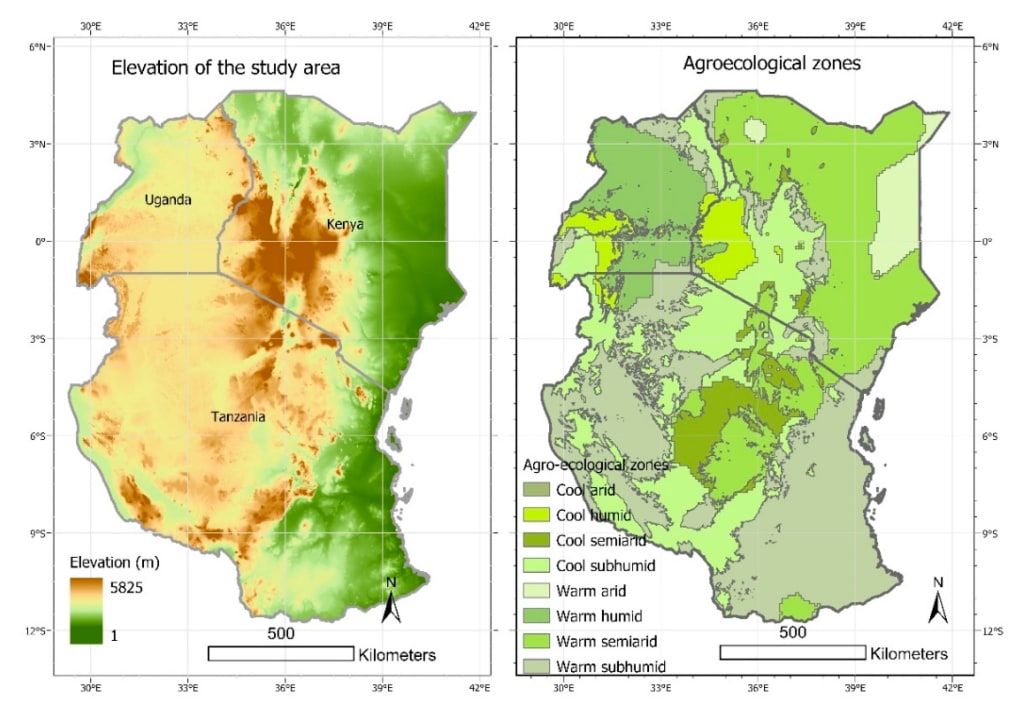
Climate change, which leads to low agricultural productivity, tragic losses of crops and livestock, and worsened food insecurity and water scarcity, has been the major challenge faced by rural farmers in Africa. The adoption of proper adaptation measures to climate change has become inevitable for people who depend on agricultural production and subsistence farming. Climate extremes resulting from climate change have made many African rural farmers more vulnerable as many of them have insufficient adaptation strategies and limited access to financial resources (Rahut et al., 2021; Trisos et al., 2022; Ayanlade et al., 2023), and the situation is unlikely to become better.
Changing rainfall patterns in East Africa have significant implications for farmers in the region. East Africa, known for its diverse agricultural activities, heavily relies on rain-fed agriculture. The recent shifts in rainfall patterns due to climate change have posed numerous challenges and opportunities for farmers.
Traditionally, East Africa has had two distinct rainy seasons - the long rains (March to May) and the short rains (October to December). However, these patterns have become increasingly erratic and unpredictable. Extended dry spells followed by heavy rainfall or vice versa have become common occurrences. This unpredictability disrupts planting and harvesting schedules, making it difficult for farmers to plan their activities.
One of the most immediate implications of changing rainfall patterns is crop yield variability. Prolonged droughts can lead to crop failure, food shortages, and loss of income for farmers. On the other hand, excessive rainfall can cause flooding and waterlogging, destroying crops and infrastructure. To adapt, farmers need to diversify their crops and implement water management techniques such as rainwater harvesting and irrigation.
Another challenge is the spread of pests and diseases. Increased humidity and temperature variations create favorable conditions for the proliferation of pests like armyworms and diseases like maize rust. Farmers have to invest more in pest control measures, which can be costly and harmful to the environment.
Additionally, changing rainfall patterns affect livestock farming. Drier conditions can reduce the availability of pasture and water, leading to malnutrition and decreased livestock productivity. Farmers must explore alternative feed sources and water management strategies, such as digging boreholes and constructing water pans, to mitigate these challenges.
Water scarcity is a growing concern in East Africa, exacerbated by shifting rainfall patterns. Access to clean water for both irrigation and household use becomes limited during droughts. This not only affects crop production but also the general well-being of communities. Farmers must adopt water-efficient farming practices and invest in water storage facilities to ensure a steady supply.
Climate change also impacts the timing of planting and harvesting. With unpredictable rainfall, farmers may miss the optimal planting window, affecting crop development and yield. To adapt, farmers should consider early-maturing crop varieties and improved storage facilities to prevent post-harvest losses.
On a positive note, changing rainfall patterns can also bring opportunities for innovation and diversification. Some farmers have embraced climate-smart agriculture techniques such as conservation farming, agroforestry, and crop rotation to enhance resilience. These practices help retain soil moisture, reduce erosion, and improve soil fertility, ultimately leading to increased yields.
Moreover, climate-smart farming practices can help sequester carbon, contributing to climate change mitigation efforts. Some farmers in East Africa have also ventured into non-traditional crops and value-added processing to reduce reliance on rain-fed agriculture and generate alternative income streams.
In conclusion, changing rainfall patterns in East Africa have profound implications for farmers. These shifts disrupt traditional farming practices, affecting crop and livestock production, increasing the prevalence of pests and diseases, and intensifying water scarcity. However, they also present opportunities for innovation and diversification through climate-smart agriculture practices. To adapt successfully, farmers, governments, and international organizations must work together to provide support, resources, and knowledge to build resilience in the face of a changing climate.
About the Creator
John Nnaji
CEO Billion$ Concepts: Talent Box of Africa
HOME OF INTERESTING VIDEOS
BLOGGER❣️❤️❤️❤️EMAIL for all promotions
[email protected]
Keep reading
More stories from John Nnaji and writers in Earth and other communities.
Adaptation Measures for Coastal Communities Facing Sea Level Rise in Africa
Coastal areas are very sensitive to climate change due to sea-level rise leading to negative impacts such as coastal erosion. The impact of sea-level rise is increased by coastal developments, land use change and population growth, and causes societal problems such as increased salinity of groundwater and soils, the necessity to migrate and loss of infrastructure. Developing countries are generally more vulnerable to coastal changes due to their limited capacity to prevent and absorb the related effects. To stimulate coastal adaptation in developing countries it is important to evaluate different adaptation strategies and identify opportunities. Potential adaptation strategies in coastal areas include hard structures, beach nourishment, ecosystem restoration, retreat, zoning and building codes.
By John Nnaji 2 years ago in Earth
What’s Going On in the World Nowadays?
The world today feels louder, faster, and more divided than ever before. News travels in seconds, crises overlap, and societies are undergoing changes that once took decades to unfold. From political instability and economic pressure to rapid technological growth and shifting social values, humanity is standing at a crossroads. To understand what is truly going on in the world nowadays, we must look beyond headlines and examine the deeper forces shaping our present and future.
By shaoor afridi3 days ago in Earth



Comments
There are no comments for this story
Be the first to respond and start the conversation.