
“Cameroon in 2025: Between Promise, Protest, and a Push for Change”
“Why this Central African nation is back in the spotlight — from elections and economic hopes to social tensions and natural wealth.”

Cameroon in 2025: Between Promise, Protest, and a Push for Change
Cameroon often goes unnoticed on global media, but in 2025 the country has surged into headlines — and for many different reasons. From contested elections and economic uncertainty to the promise of its vast natural wealth, many in the world are asking: What is happening in Cameroon — and why should we care?
A Country of Rich Resources — and Unfulfilled Potential
Cameroon is among Africa’s more resource‑endowed countries. It boasts abundant forests, agricultural land, oil and mineral resources, and is historically a significant producer of cocoa, coffee, cotton, and timber.
According to a recent economic update, Cameroon’s real GDP grew by 3.5% in 2024, slightly better than in 2023, helped by rising cocoa prices, better cotton yields, and improved power supply.
Inflation has dropped from about 7.4% in 2023 to about 4.5% in 2024.
Yet these statistics mask deeper structural problems: poverty remains widespread, incomes per capita remain low, and many citizens rely on subsistence agriculture or informal economy.
Experts argue that to reach its potential — and meet ambitions to become a more developed economy — Cameroon needs reforms: better governance, diversified exports beyond commodities, and sustainable management of its natural wealth.
2025 Election — a Flashpoint for Discontent
One major reason Cameroon is trending now is the national presidential election held in late 2025. The results declared incumbent Paul Biya — at 92 years old, the world’s oldest serving head of state — the winner with about 53.66% of votes, granting him an eighth term in office.
However, many citizens and opposition supporters rejected the outcome. Issa Tchiroma Bakary, the main challenger, claimed he had won, alleging fraud and announcing his own results — sparking widespread protests.
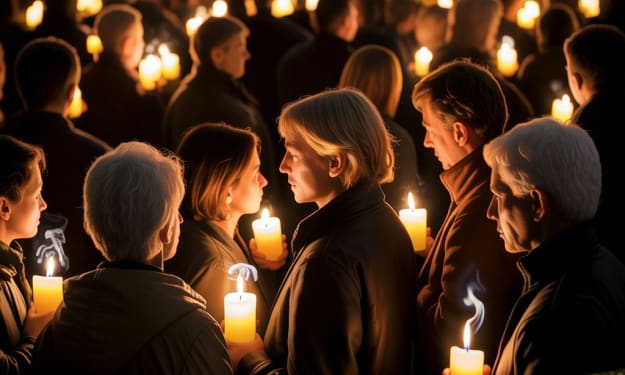
The aftermath has been tense: protests in major cities, violence, arrests, and allegations of human rights abuses.
Many Cameroonians — especially young people — feel disillusioned, frustrated by a political system that, in their view, no longer reflects their needs. The post‑election crisis has shone a spotlight on long‑standing grievances: corruption, ineffective governance, lack of opportunity, and inequality.
Humanitarian Crises: Conflict, Displacement, and Social Strain
Beyond politics and economics, Cameroon is also wrestling with serious humanitarian challenges. Ongoing conflict in certain regions — particularly in the Anglophone Northwest and Southwest, and instability in the Far North — has displaced large numbers of people internally.
Recently, heavy floods worsened the situation: thousands of families were forced into shelters, access to health services was disrupted, and food insecurity rose sharply.
Women and children, especially displaced persons, faced increased risks, including gender‑based violence and limited access to maternal care. International agencies like UNFPA scrambled to provide sexual and reproductive health services and support for survivors of abuse — but funding remains insufficient.
In many ways, what unfolds in Cameroon is a difficult mix of natural adversity, internal conflict, and structural vulnerabilities — a dangerous combination that threatens to undermine hope and stability.
Natural Wealth vs. Environmental and Social Costs
Cameroon’s forests and natural resources are often called its “green gold.” The 2025 economic update from World Bank highlights how sustainable management of forests and resources could drive future inclusive growth, especially through ecotourism, medicinal plant industries, and forest‑based services.
But there is a catch: Cameroon's historical patterns — deforestation, over‑exploitation, environmental neglect — have already degraded large parts of its ecosystems.
If Cameroon wants to build a sustainable future, it must balance economic development with conservation — and find ways to turn natural capital into long-term wealth without destroying what makes its environment unique.
Voices of Resilience: Culture, Youth, and Hope for Change
Despite turmoil, many Cameroonians continue to hope and work for change. Young people — a majority in a country where median age hovers around 19 — are pushing for reforms, better education, jobs, fairness, and a future that values their voices.
There’s also growing awareness among civil society, NGOs, and international partners to support vulnerable communities — especially displaced people, women, and children. Programs aimed at improving education, health, and climate resilience are underway.
Furthermore, regional and global institutions urge Cameroon’s government to mobilize domestic resources, improve governance, and strengthen the business environment, to make growth more inclusive and sustainable.
Why the World Is Watching — and Why You Should Care
Caeroon’s story in 2025 is not just about a single country’s troubles. It reflects broader global themes: climate resilience, resource management, political stability, youth empowerment, migration, human rights, and the struggle for good governance.
For the global economy: Cameroon’s export commodities — cocoa, coffee, timber — connect with markets around the world. Instability or crop failures ripple beyond its borders.
For environment & sustainability: Its forests play crucial roles in global biodiversity and climate regulation. Mismanagement threatens not only local communities but global ecological balance.
For human rights & migration: Conflict and displacement can lead to refugee flows, regional instability, and international humanitarian burden.
For future generations: Cameroon’s youth — if supported — could contribute significantly to Africa’s future. But unchecked poverty, conflict, and under‑investment risk turning hope into despair.
In short: what happens in Cameroon matters. And what happens to Cameroon — its successes or failures — affects more than just its borders.
Challenges Ahead — And What Must Change
Looking at where Cameroon stands today, several key priorities emerge if the country is to move from crisis to promise:
Inclusive political reforms: Transparent governance, accountability, fair elections, and an end to repression — so people believe in their leaders and in democracy.
Economic diversification: Reduce dependence on commodity exports, invest in industry, services, sustainable agriculture, and human capital.
Natural resource management: Protect forests, invest in ecotourism, enforce environmental regulations — to turn natural wealth into sustainable prosperity.
Humanitarian support & social services: Provide stable access to health, education, social protection — especially to displaced, vulnerable populations.
Youth empowerment & job creation: Invest in education, skills training, entrepreneurship — give hope and opportunities to millions of young Cameroonians.
Conclusion — A Nation at a Crossroads
Cameroon in 2025 stands at a crossroads. With its natural wealth, youthful population, and potential for growth, it could emerge as a success story in Africa. Yet at the same time — with political crisis, humanitarian challenges, environmental risks, and social instability — it could also suffer stagnation, decline, or even deeper crisis.
What unfolds in the coming years depends not just on government decisions, but on societal will: the ability of Cameroonians — young and old — to demand justice, accountability, fairness. Their ability to protect their land and environment; to invest in human capital; to build institutions that respect rights and dignity.
For those watching from abroad — including diaspora communities, investors, NGOs, global citizens — Cameroon’s path is a reminder: the future isn’t predetermined. It’s shaped by choices. And right now, Cameroon is choosing its direction.
About the Creator
Keep reading
More stories from Saif Ullah and writers in Earth and other communities.
“After the Headlines: What the 2025 Stockton Shooting Reveals About Gun Violence in America”
Late on Saturday, November 29, 2025, a peaceful family gathering at a banquet hall in Stockton, California turned into a nightmare. What should have been a celebration ended in tragedy: four people were killed and ten others wounded in a mass shooting.
By Saif Ullah3 months ago in Criminal
Mount Sinai, the World’s Oldest Monastery, and the Prophet’s Letter: Faith, History, and a Controversial Development Plan
At a sacred site revered by Muslims, Christians, and Jews alike, an ambitious modernization project has stirred debate after reports of graves being relocated—raising questions about heritage, memory, and the cost of progress.
By Irshad Abbasi 3 days ago in Earth


Comments
There are no comments for this story
Be the first to respond and start the conversation.