
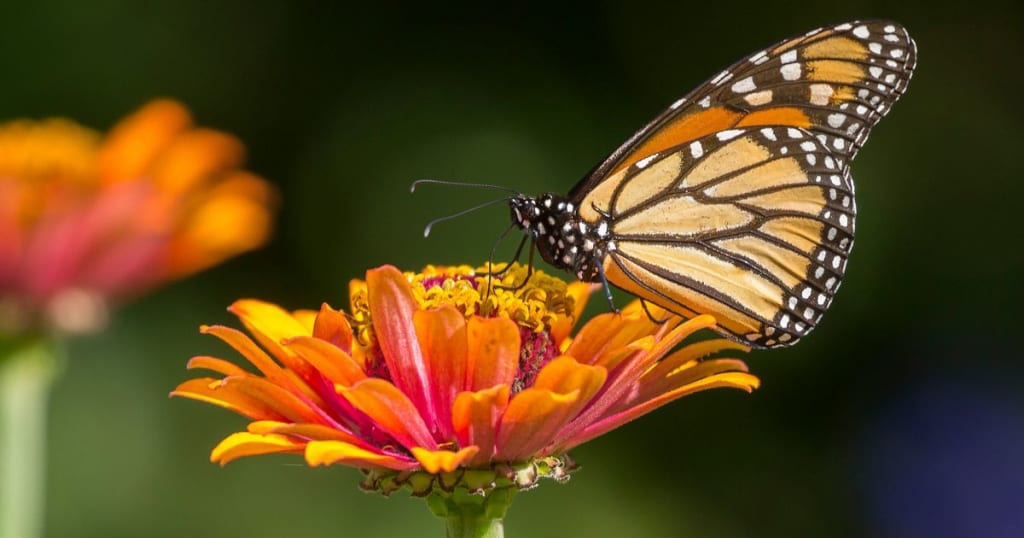
A butterfly is a type of insect that belongs to the order Lepidoptera, which includes moths as well. They are known for their beautiful wings, which are covered in scales and can come in a variety of colors and patterns.
Butterflies typically go through a four-stage life cycle: egg, larva (caterpillar), pupa (chrysalis), and adult. The larva stage is when the caterpillar feeds and grows, and the pupa stage is when it undergoes metamorphosis and transforms into an adult butterfly.
Butterflies can be found all over the world and are important pollinators for many plant species. Some species of butterflies are also used as indicators of environmental health, as they are sensitive to changes in their habitat.
Butterflies are generally active during the day and rest at night. They are cold-blooded and need to regulate their body temperature by basking in the sun or finding shade. They feed on nectar from flowers using their long, thin proboscis, which they unroll and insert into the flower to suck up the sweet liquid.
Butterflies are also important indicators of climate change, as changes in temperature and weather patterns can affect their life cycle and migration patterns. Some butterfly species have already been impacted by habitat loss, pollution, and climate change, and are considered endangered or threatened.
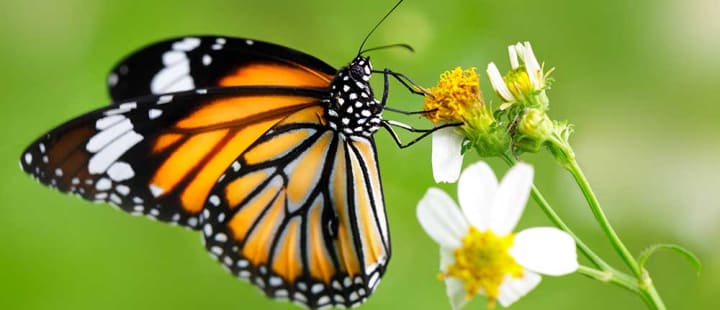
Butterflies have long been associated with symbolism and cultural significance in many parts of the world. In some cultures, they represent transformation, rebirth, and the soul. They have also been used in art, literature, and mythology as symbols of beauty, freedom, and fragility.
Overall, butterflies are fascinating and important creatures that play a significant role in our ecosystem and culture.
Butterflies are also popular among collectors, who seek to capture and preserve their beauty. However, this practice can be harmful to butterfly populations and is often illegal. In many countries, it is illegal to collect or trade in endangered butterfly species.
To protect butterfly populations, conservation efforts include preserving and restoring their habitat, reducing pollution and pesticide use, and raising awareness about their importance and the threats they face. Butterfly gardens and butterfly houses, where people can observe and learn about butterflies in a controlled environment, are also becoming more popular.
Butterflies are also studied by scientists for their unique characteristics and behaviours, such as their ability to migrate over long distances and their use of visual cues to navigate. They have been the subject of many scientific studies on topics such as genetics, ecology, and evolution.
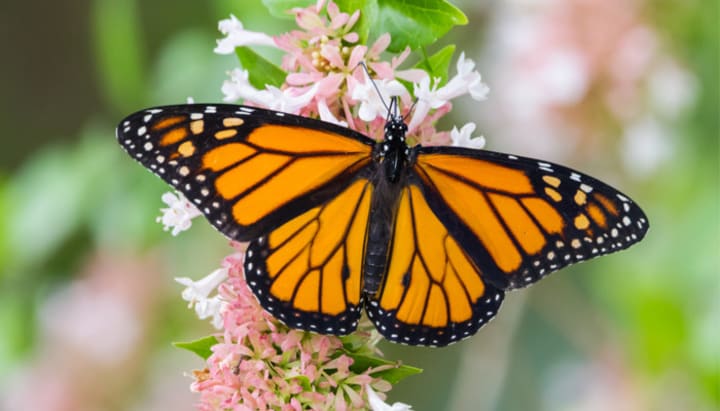
In conclusion, butterflies are not only beautiful but also important insects that play a crucial role in our ecosystem. They face many threats, including habitat loss, pollution, and climate change, and conservation efforts are necessary to protect them. By appreciating and protecting these delicate creatures, we can help ensure their survival for generations to come.
One of the most fascinating aspects of butterflies is their unique life cycle and metamorphosis. The process of metamorphosis involves a complete transformation of the butterfly from its larval form, the caterpillar, into its adult form, the butterfly.
During the larva stage, the caterpillar consumes large amounts of food to fuel its growth and development. Once it reaches maturity, it spins a cocoon or chrysalis around itself and undergoes a remarkable transformation. The caterpillar's body breaks down into a soupy substance, and its cells reorganize into a new form, with wings, legs, and other structures needed for the adult butterfly's life.
After a period of time, the adult butterfly emerges from the chrysalis, and its wings slowly unfold and dry. The newly emerged butterfly will then begin its search for food, a mate, and a suitable habitat. Depending on the species, adult butterflies may live for only a few days or for several months.
Butterflies are also known for their remarkable ability to migrate over long distances. Some species, such as the monarch butterfly, travel thousands of miles each year between their breeding grounds in the north and their wintering grounds in the south. Scientists are still trying to understand the mechanisms behind this incredible feat, which involves a combination of visual cues, internal clocks, and other factors.
In addition to their ecological and scientific significance, butterflies have also played an important role in human culture and art. They have been used as symbols of beauty, transformation, and freedom, and have appeared in paintings, literature, and other forms of art throughout history.
About the Creator
Keep reading
More stories from Sangeetha S and writers in Earth and other communities.
WATER FALL
A waterfall is a natural wonder where water flows over a steep incline or a cliff, creating a beautiful cascade of water. Waterfalls can be found all over the world, and they vary in size and shape. Some waterfalls are small and tranquil, while others are large and powerful.
By Sangeetha S3 years ago in Earth
Birds with Wild Hairdos
Cockatoos are known for their expressive crests, which they raise or lower depending on their mood. The crests can be white, yellow, or pink. These charismatic birds are native to the Australian continent, the islands of the Indo-Australian archipelago, and parts of New Guinea. There are 21 different species of cockatoo, varying in size from the diminutive Galah to the imposing Sulphur-crested Cockatoo. Most cockatoo species are highly social birds, forming strong pair bonds that often last a lifetime. Cockatoos are primarily herbivores, with a diet consisting of seeds, nuts, fruits, roots, and occasionally insects and larvae.
By Rasma Raisters3 days ago in Earth
The timing of Earth's ice ages may be influenced by Mars.
According to recent calculations, Mars may influence the date of ice ages by helping to establish a 2.4 million-year rhythm in Earth's orbit. Recently, researchers investigated the possibility of a tiny planet leaving a discernible imprint in long-term climate records.
By Francis Dami6 days ago in Earth


Comments
There are no comments for this story
Be the first to respond and start the conversation.