
Bridging Continents: Exploring the Potential Europe-Africa Crossing
Exploring the Challenges and Potential of Linking Two Continents Across the Strait of Gibraltar
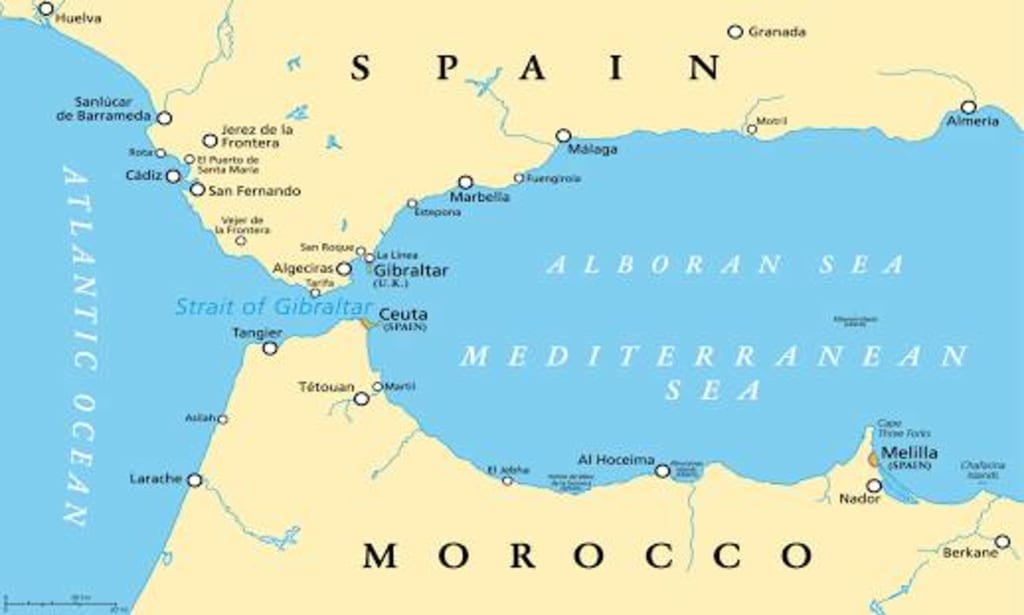
Africa and Europe, two vast continents, lie just a stone's throw away from each other, separated by the Strait of Gibraltar. This narrow waterway serves as the gateway between the Mediterranean Sea and the Atlantic Ocean, bordering Spain, Morocco, and the British Overseas Territory of Gibraltar. The notion of constructing a bridge to connect these continents seems tantalizingly within reach, yet remains a complex endeavor. This ambitious concept is intricately interwoven with territorial claims, international agreements, and geopolitical intricacies that have shaped the region's history.
The Strait of Gibraltar, a geographic crossroads, is more than just a passageway. Its strategic significance, historical heritage, and economic importance render it a focal point of contention among three nations. Spain, Morocco, and the UK all stake their claim, each motivated by distinct historical, cultural, and geopolitical factors. However, despite differing viewpoints, the international community recognizes the value of maintaining unobstructed maritime passage, ensuring the uninterrupted flow of commerce and transportation.
The natural features of the region also pose significant challenges. The Rock of Gibraltar, a stunning natural reserve and archaeological treasure, captivates tourists with its unique allure. Yet, its significance complicates any attempts at construction. The most feasible starting point for a bridge would likely be Gibraltar itself. However, as negotiations surrounding the territory's status continue, the complexities of Brexit and the desire for free movement post-EU departure further complicate matters.
In the realm of geopolitical considerations, a Europe-Africa bridge faces numerous hurdles. Diplomatic relations between the UK, Spain, and Morocco have a history of volatility, casting doubts on whether they could collaboratively undertake a colossal construction project. Moreover, Morocco's colonial history has left lasting scars, potentially fueling suspicions about the motives behind such an investment. While Europe faces an influx of migrants from Africa and the Middle East, a bridge could inadvertently become a migration hub, heightening opposition from multiple fronts.
But could engineering prowess overcome these hurdles? Comparisons to the Channel Tunnel, which connects the UK and France, offer insight into the potential complexities of such an undertaking. This undersea tunnel project, though challenging and costly, ultimately triumphed, revolutionizing travel between the two nations. However, the Europe-Africa crossing presents a distinct set of challenges.
Engineers and architects have pondered potential solutions for decades. While the longest bridge in the world, the Dayang-Kushan Grand Bridge, spans over 100 miles, the complexities of crossing open water are vastly different. The Channel Tunnel's success has sparked interest in an underwater tunnel, but the geological and engineering challenges are formidable. Recent studies have highlighted potential routes, including leveraging existing high-speed rail lines in Spain and Morocco. This approach, while promising, raises questions about feasibility, cost, and sustained cooperation among three nations.
Despite the allure of linking Gibraltar and Morocco through a tunnel, several factors cast doubt on the project's realization. The tremendous cost of construction, the necessity of long-term collaboration among nations with a history of tensions, and the uncharted territory of a tunnel of this magnitude all contribute to uncertainty. Furthermore, the potential demand for such a crossing remains uncertain, as existing transportation methods like ferries and airports serve the region's connectivity needs.
As Tangiers, a picturesque Moroccan city, experiences exponential growth in tourism, the appeal of a direct Europe-Africa route may gain momentum. The allure of swift and efficient travel could transform Tangiers into a premier tourist destination, bolstered by its strategic location. While the bridge or tunnel project may not be imminent, its potential to reshape regional infrastructure and redefine intercontinental travel remains a tantalizing prospect.
In conclusion, the concept of connecting Europe and Africa through a bridge or tunnel across the Strait of Gibraltar embodies both visionary ambition and practical complexity. The region's historical, geopolitical, and engineering challenges underscore the intricacies of such an endeavor. While the path ahead is uncertain, the allure of a direct link between two continents may one day surmount the obstacles that currently stand in its way.
About the Creator
Keep reading
More stories from writers in Earth and other communities.
Unusually Early Arctic Breakdown Forming in February: Meteorologists Sound the Alarm
Meteorologists worldwide are issuing an unprecedented warning: an Arctic breakdown—a major disturbance in the polar atmosphere—is forming earlier than expected this February. This early event could reshape weather across the Northern Hemisphere, leading to unusual cold snaps, heat waves, and storm activity.
By Ayesha Lashari5 days ago in Earth




Comments (1)
Good info.