
Black Holes and the Cosmos
Mind-Bending Possibilities of Cosmic Creation

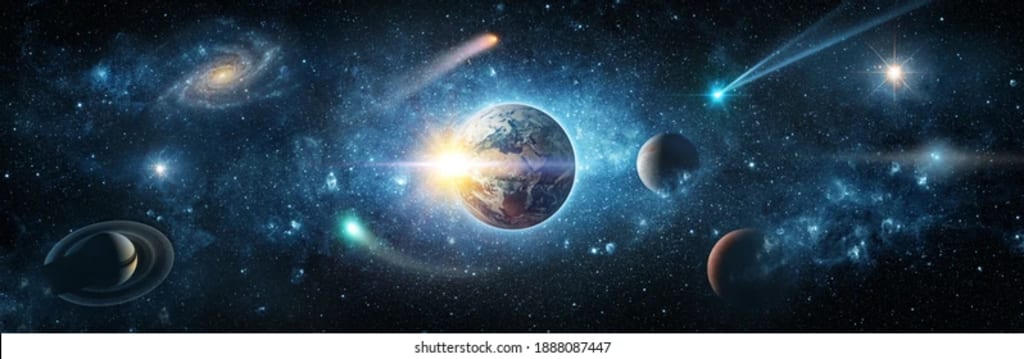
The universe is a vast, enigmatic expanse filled with wonders beyond our imagination, and black holes stand as one of its most perplexing phenomena. These celestial entities, often depicted as insatiable voids consuming everything in their vicinity, are far more complex than they appear. They do not merely distort space and time; they challenge our very understanding of existence. What if, in a cosmic twist of fate, our universe is nestled within a black hole, with the potential for infinite universes spiraling out from the gravitational jaws of these mysterious structures?
To grasp the notion that our universe could be inside a black hole, we must first understand how black holes form. Typically, they are born from the remnants of massive stars that collapse under their own gravity. For a black hole to form, an astronomical body must be compressed to a critical density—so dense that its gravitational pull becomes strong enough to prevent anything, even light, from escaping. However, contrary to popular belief, density isn't always the defining factor. A black hole’s size can be enormous while having a surprisingly low density. For instance, supermassive black holes, like the one at the center of our Milky Way galaxy, can contain millions of solar masses within a diameter that spans millions of kilometers, resulting in a density that could rival that of air.
This leads us to an intriguing thought experiment: what if we could inflate a balloon filled with cosmic air to the size of the observable universe? The observable universe, which we can see and measure, spans approximately 45 billion light-years in radius and contains countless galaxies, stars, and other celestial objects. If we were to consider all this mass—equal to a million billion billion suns—and distribute it evenly throughout the volume of the universe, we find that the average density is remarkably low, comparable to just five hydrogen atoms per cubic meter. Surprisingly, this means that there is enough mass within the observable universe to create a black hole, leading us to the conclusion that we might be living deep inside a cosmic black hole.
However, the universe's expansion complicates this hypothesis. A black hole, as we understand it, would not be expected to exhibit the same expansive characteristics as our universe. But there is a profound twist in this narrative. Black holes warp space-time in such a way that they fundamentally alter our understanding of reality. At the event horizon of a black hole, the roles of time and space are inverted: while time continues indefinitely in our normal universe, inside a black hole, time becomes finite, and space takes on a radically different geometry.
Inside a black hole, the structure of space is astonishing. Space can stretch infinitely in one direction while contracting in others, creating a universe that behaves in ways that defy our comprehension. As matter falls into the black hole, it is inexorably drawn towards a singularity—a point where space and time lose all meaning, and the laws of physics as we know them break down. This singularity could represent the end of that universe, but paradoxically, it may also be the beginning of another.
The concept of the Big Crunch—a hypothetical scenario in which the universe collapses back into a singularity—suggests that from this implosion, a new universe could emerge, akin to a rubber ball that rebounds after being squished. If this were true, every black hole could potentially give rise to new universes, resulting in a cosmic hierarchy of black holes birthing subsequent realities.
This cascading process of black hole creation and universe birth could lead to a cosmic selection, where universes that are better suited to generating black holes would thrive, while those incapable of doing so would fizzle out. Our universe may have been finely tuned through this selection process, optimizing conditions for the formation of stars, planets, and even life itself.
The implications of this theory are staggering. If our universe is indeed one among many, nestled inside a black hole, then the cosmos could be an infinite expanse of worlds filled with the potential for life. The idea that we might be part of a grand cosmic cycle, where black holes continually give birth to new realms, is both humbling and awe-inspiring.
In conclusion, the mysteries of black holes not only challenge our understanding of physics but also provoke profound philosophical questions about existence. As we continue to explore these enigmas, we may come closer to understanding our place in a universe that could be a vibrant tapestry of interconnected realities, each formed from the remnants of the last. The potential for life, rebirth, and cosmic evolution resonates through these ideas, igniting our curiosity and reminding us of the vast unknown that lies beyond our comprehension. The exploration of black holes and their implications serves as a testament to the boundless creativity of the universe, inviting us to ponder the infinite possibilities that await us in the cosmos.
About the Creator
Mariana
I'm a storyteller at heart, weaving narratives that uncover the extraordinary. I write to provoke thought, inspire and stir the soul. Join me in exploring the magic in the mundane, where creativity and passion leave a lasting impact.
The Weather Tomorrow Feels More Personal Than Ever
Every night before going to bed, I check the weather for tomorrow. It used to be a small, mechanical act — like setting an alarm or brushing my teeth. Now it feels almost existential. I tap into the forecast app and stare at those color-coded icons as though they’re tarot cards trying to tell me something about what kind of day I’ll wake up to.
By Trend Vantageabout 18 hours ago in Earth
The Collapse of a Brazilian Bank Ensnares Politicians and Judges
Brazil is grappling with one of the most shocking financial scandals in recent history: the collapse of a major bank that has sent tremors through the economy, the political system, and the judiciary. What began as a financial crisis quickly transformed into a story of political entanglement, judicial scrutiny, and public outrage, raising questions about oversight, accountability, and the fragile trust that binds citizens, bankers, and politicians. The implications of this collapse are vast, affecting not just shareholders and depositors, but also shaking the foundations of governance in Brazil. The Collapse: A Perfect Storm of Mismanagement The bank in question, a significant player in Brazil’s retail and corporate banking sectors, reportedly faced years of mismanagement, risky lending practices, and opaque financial dealings. For years, internal audits hinted at irregularities, but these warnings were either ignored or covered up. When the collapse finally occurred, thousands of customers lost access to their accounts, and businesses relying on the bank for loans and credit lines faced immediate disruption. The ripple effect extended beyond the banking sector, affecting real estate, commerce, and public confidence in financial institutions. Politicians in the Crossfire As investigations unfolded, authorities discovered that several politicians had deep financial ties to the bank. Allegations include preferential loans, insider deals, and the use of political influence to shield executives from scrutiny. These revelations have sparked outrage among the public, who see the situation as yet another example of how money and power intersect in ways that harm ordinary citizens. Brazil’s history of corruption scandals — including Operation Car Wash — has made the public wary of politicians’ involvement in business, and this banking collapse appears to confirm those fears. Some politicians are now under formal investigation, facing charges ranging from corruption to conflict of interest. Legal experts predict that the case could lead to resignations, trials, and possibly convictions. Judges Under Scrutiny The crisis has also ensnared members of the judiciary. Reports indicate that some judges may have overlooked warning signs, delayed investigations, or facilitated questionable transactions involving the bank. While it is unclear whether these actions were deliberate or a result of systemic inefficiencies, the optics are troubling. Public confidence in the judiciary is essential for democracy, yet this scandal highlights the vulnerability of institutions when financial and political interests collide. Brazilian citizens are now demanding transparency, calling for independent oversight to ensure justice is applied equally — whether to bankers, politicians, or judges. Economic and Social Fallout Beyond politics and the courts, the bank’s collapse has real-world consequences for everyday Brazilians. Customers report frozen accounts, lost savings, and halted payments. Small business owners face canceled loans and delayed contracts. Even those not directly affected worry about contagion in the financial system, fearing a broader economic downturn. Experts warn that if regulatory systems fail to prevent similar crises, Brazil’s economic growth could slow, foreign investment could decline, and public trust in institutions may erode further. The social cost — protests, strikes, and political unrest — is already visible in major cities. Why Oversight Failed The collapse raises important questions about regulation in Brazil. Financial watchdogs and central bank authorities are under pressure to explain how such a significant failure went unnoticed. Analysts suggest several systemic issues: Weak regulatory enforcement — audits and compliance checks were reportedly insufficient. Political interference — pressure from powerful politicians may have delayed corrective measures. Opaque financial practices — complex corporate structures and hidden liabilities masked the bank’s instability. This combination created a perfect storm, allowing risky practices to continue unchecked until the bank could no longer operate. Lessons for Brazil and Beyond The scandal is more than a national story — it is a cautionary tale for emerging economies worldwide. Financial institutions, no matter how large or influential, cannot be above scrutiny, and political entanglements must be carefully managed. Transparency, independent oversight, and robust regulatory frameworks are essential to prevent similar disasters. In countries where finance and politics overlap too closely, the risk of systemic failure is amplified, with devastating consequences for ordinary citizens. What Happens Next? Brazilian authorities are now facing immense pressure to act swiftly. Investigations will likely continue for months, if not years. Some potential outcomes include: Trials and convictions of bank executives and politicians Reforms in banking regulations and financial oversight Strengthened judicial accountability mechanisms Measures to restore public confidence in the financial system Meanwhile, citizens and businesses are left to navigate uncertainty, hoping for clear answers and protections against further damage. Final Thoughts The collapse of this Brazilian bank is more than a financial event — it is a story about the fragility of systems where money, politics, and justice intersect. It serves as a stark reminder that trust is the foundation of both banking and governance. When that trust is broken, the consequences are profound and far-reaching. For Brazil, this is a moment of reckoning. For the world, it is a cautionary tale about the need for transparency, oversight, and accountability in every institution that touches the lives of millions.
By Muhammad Hassanabout 12 hours ago in Earth




Comments (2)
Thanks for sharing
Interesting article