
Beyond Our Imagination - The Astonishing Size of the Universe
Beyond Our Imagination - The Astonishing Size of the Universe: Exploring the Vastness of Space.

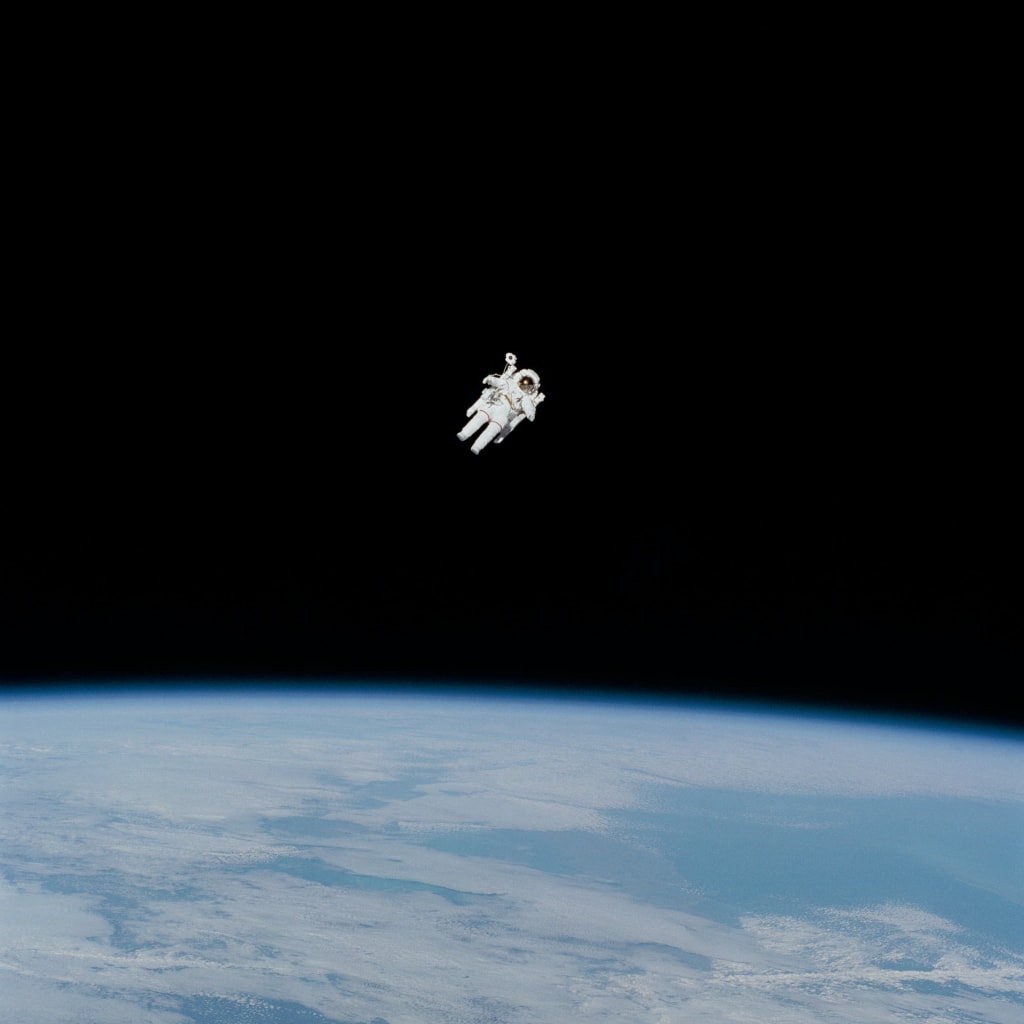
Have you ever considered the size of the universe as you gazed up at the night sky? The idea of the limitless space beyond our tiny planet can be frightening. Human minds find it difficult to grasp the universe's immense size. However, the universe continues to impress upon us just how vast it is as we explore and learn more about it.
We must begin with our own galaxy, the Milky Way, in order to fully comprehend the immensity of the universe. A barred spiral galaxy with about 100 billion stars, the Milky Way is. The galaxy is expected to be 13.6 billion years old and has a diameter of approximately 100,000 light-years. But there are an estimated 2 trillion galaxies in the observable universe, of which the Milky Way is only one.
The Andromeda Galaxy, which is around 2.5 million light-years from the Milky Way, is the closest galaxy. Another spiral galaxy, Andromeda, is thought to have 1 trillion or more stars. However, even Andromeda is a minuscule dot in the vastness of the cosmos.
We must explore beyond our own galaxy and even beyond our neighborhood group of galaxies if we are to fully understand the immensity of the universe. The diameter of the observable cosmos is thought to be 93 billion light-years. This indicates that it took 93 billion years for the light coming from the universe's furthest detectable objects to reach us.
But what about the vastness of the universe that exists outside of our own? In actuality, we don't know. The size of the cosmos may be unlimited or limited yet still incomprehensibly large.
Consider the distances between things as a means to visualize the immensity of the cosmos. Proxima Centauri, which is located approximately 4.2 light-years from our solar system, is the closest star to it. It would still take us more than four years to get to Proxima Centauri even if we were to move at the speed of light, to put things in perspective.
But what about the universe's furthest objects? The estimated distance of the most distant galaxy, GN-z11, is 13.4 billion light-years. This indicates that it took 13.4 billion years for the light that we see from GN-z11 to reach us.
Not only is the mass of the universe enormous, but so is its size in terms of distance. There are thought to be 10 billion galaxies in the observable universe, each with billions or possibly trillions of stars. But this is only the apparent problem. Dark matter and dark energy are also present, making up around 95% of the universe's total mass and energy.
Although we cannot directly observe or measure dark matter, its gravitational effects on visible matter have convinced us that it exists. Dark matter is thought to account for around 27% of the universe's total mass and energy.
We know even less about dark energy, a component that is even more enigmatic. It is estimated to make up about 68% of the universe's total mass and energy and is thought to be the cause of the universe's accelerated expansion.
The size of the universe is both mind-boggling and humble-inspiring. It serves as a reminder that, in the big scheme of things, we are but a minute speck. However, it also motivates us to push the limits of our knowledge and understanding by engaging in further research and education.
Humans are incredibly curious about the universe and how we fit into it. To investigate other planets and moons in our own solar system, we have deployed rovers and probes. We have launched satellites into orbit.
About the Creator
Ahamed Thousif
🌟 Welcome to the realm of exploration, where communities come alive through the power of words! 📚✨ Join me as we embark on a journey to discover the vibrant tapestry of stories and Poems.
VISIT - "MY FOOD BLOG"
Keep reading
More stories from Ahamed Thousif and writers in Earth and other communities.
Unleashing the Secrets of the Weather Gods: Will it Rain This Week?
Opening: Will it rain this week? is a subject that has been on everyone's mind lately. The weather gets increasingly erratic as spring gives way to summer, upsetting our plans with sudden downpours and thunderstorms. But what if we could make weather predictions that were more precise? What if we could discover the weather gods' secrets and use their power to improve the way we plan our lives? To answer this question and finally reveal the secrets of the weather gods, a group of scientists is delving further into the atmosphere's mysteries.
By Ahamed Thousif3 years ago in Earth
The Giant Beneath the Ceiling
At the heart of the Natural History Museum in London, visitors entering the magnificent Hintze Hall are greeted by a breathtaking sight: the enormous skeleton of a blue whale suspended from the ceiling. This remarkable display, known as “Hope,” represents not only the largest animal ever known to have lived on Earth but also a powerful message about conservation and humanity’s relationship with nature.
By Irshad Abbasi about 22 hours ago in Earth



Comments
There are no comments for this story
Be the first to respond and start the conversation.