
Beneath the Baltic Sea
Creatures living in the Baltic


The Baltic Sea borders Estonia, Latvia, Lithuania, Finland, Sweden, Russia, Poland, and Germany. It is the largest body of brackish water on Earth. The Baltic Sea is an extension of the North Atlantic Ocean and reaches as far north as the Arctic Circle. It separates Scandinavia from the rest of Europe.

Angel sharks are sandy colored with a darker coloring to provide them with camouflage. They can be found scouring the sandy sea floor. Angel sharks are mostly found along the Continental Divide and enjoy eating small fish, crustaceans, and other invertebrates.
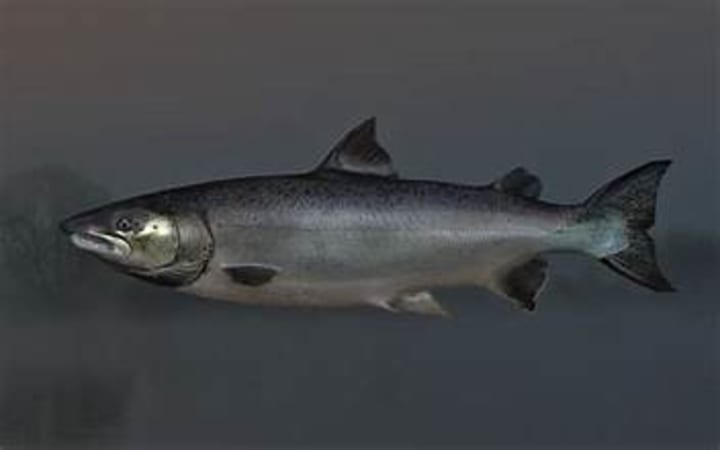
Baltic Sea salmon have silver scales with dark spots on their backs. These are a highly valued species both ecologically and commercially. They begin life in freshwater rivers and then migrate to the Baltic Sea.
Basking sharks (pictured above) are grayish-brown. They swim along the surface of the ocean with their huge mouths wide open, using their massive gill rakers to filter through the water. These are gentle giants that eat microscopic zooplankton.

Bluntnose sixgill sharks are large with blunt, stubby-looking noses. They have large heads and thick muscular bodies. Their upper parts are greenish brown, tan, or black with dark spots along their sides. They enjoy eating large cartilaginous or bony fish and rays.

European eels are skinny, long, and muscular. They have slit-like gills and one pair of pectoral fins. These eels change color with the salinity of the water. They appear darker in fresh water than salt water. They enjoy dining on small fish and invertebrates like mollusks and clams. They will also scavenge for dead fish and eat worms.

European pikes have heads with a bony appearance, and their bodies are long and narrow. They have many sharp teeth, and their eyes are right above their snouts. European pikes have darker-colored bodies with lighter spots. They dine on small fish, small birds, and small mammals.
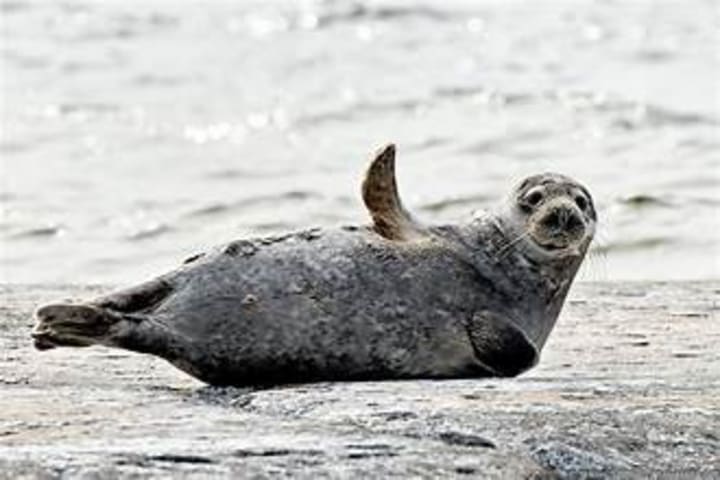
Gray seals are adorable animals with large black eyes, long whiskers, and large nostrils, and their heads are shaped like a dog's. In coloring, these seals are mottled gray with white or dark gray with lighter gray. They mainly dine on fish but also eat octopus, seabirds, crustaceans, and squid.

Harbor porpoises are dark gray on top with lighter gray along their sides and a white underbelly. They have short round bodies and small heads. They have dark stripes running along the corners of their mouths to their pectoral fins. Their social structure is generally solitary or in small groups, unlike other dolphin species that form larger pods. They are hunters and feed mainly on fish.

Porbeagle sharks are similar to great white sharks. They have dark- to light-gray upper bodies with white underbellies. They are large creatures that enjoy dining on large bony fish, octopus, squid, and other sharks.

Ringed seals have dark gray or black faces with mottled black and light beige mottling on their bodies. These seals have long whiskers and large dark eyes. They enjoy dining on invertebrates, fish, amphibians, and shrimp.

Small spotted catsharks are a light sand color with darker-colored saddles and spots. Their spots are dark gray, dark brown, or black. These sharks are long and thin and have large cat-like eyes with blunt snouts. They prefer eating bony fish, crustaceans, small octopus, squid, and other small invertebrates.

Spiny dogfish are long, thin sharks with pointed snouts. They are dark gray. These sharks have two dorsal fins with two un-grooved stinging spines. They prefer eating small bony fish, crustaceans, octopus, and smaller sharks.

Thorny skates have flat, square-shaped bodies with triangular snouts and tails. Their upper bodies are covered with rose-like thorns. They are brown on the upper side and white beneath. Thorny skates dine on small fish, crustaceans, and worms.
About the Creator
Rasma Raisters
My passions are writing and creating poetry. I write for several sites online and have four themed blogs on Wordpress. Please follow me on Twitter.
Keep reading
More stories from Rasma Raisters and writers in Earth and other communities.
65% of Workers Are Interested in ‘Microshifting’ Their Schedules as an Alternative to the Strict 9-to-5
The traditional 9-to-5 workday has long been considered the standard, but recent research suggests that employees are seeking more flexibility than ever before. A striking 65% of workers report interest in ‘microshifting’ their schedules, a concept that allows them to adjust their work hours in smaller increments rather than sticking to a rigid daily routine. For many, this is more than just a scheduling preference — it’s a way to reclaim control over their time, reduce stress, and boost productivity.
By Muhammad Hassana day ago in Earth
How Much Do You Need in an ISA for a Passive Income That Beats the State Pension?
For many people in the UK, the State Pension is expected to form the backbone of retirement income. But with rising living costs and growing uncertainty about the future, more savers are asking a crucial question: Can I build a passive income that beats the State Pension — and how much would I need in an ISA to do it?
By Aarif Lashari3 days ago in Earth




Comments
There are no comments for this story
Be the first to respond and start the conversation.