
Amazing Animals Mozambique
The wildlife of East Africa

Mozambique has 740 bird species, 236 mammal species, more than 225 reptile species, 90 amphibian species, and 1450 species of fish.
Official National Animal

The African Elephant
Native Animals
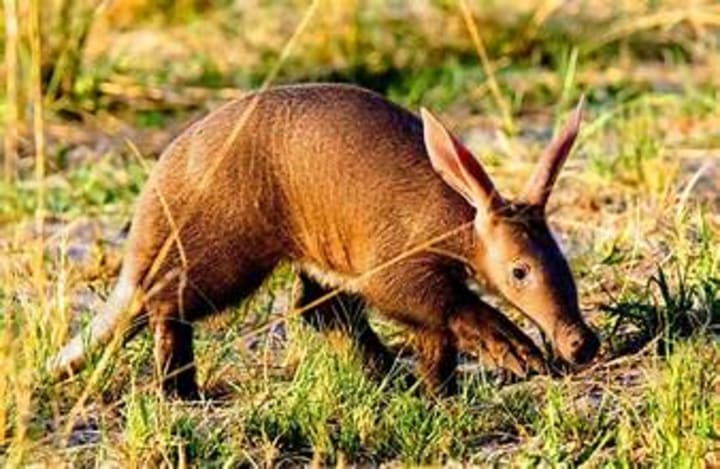
Aardvarks are a medium-sized species of mammals native to sub-Saharan Africa. They are burrowing animals with pig-like snouts. These are insectivores feeding on ants and termites. They live in burrows and are active during the night.
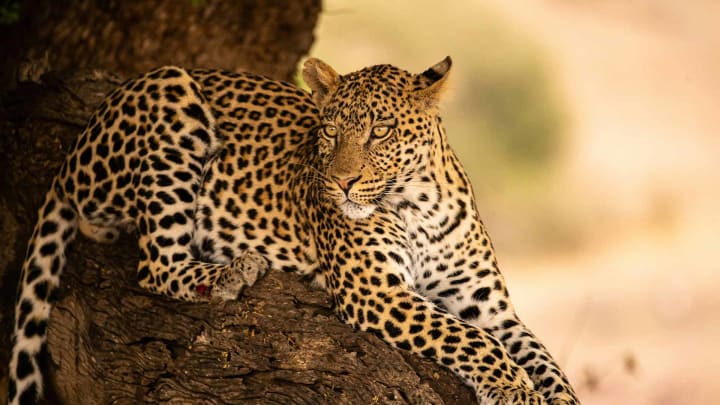
African leopards are the most common and widespread leopard species. They inhabit rainforests and arid desert habitats of Mozambique.
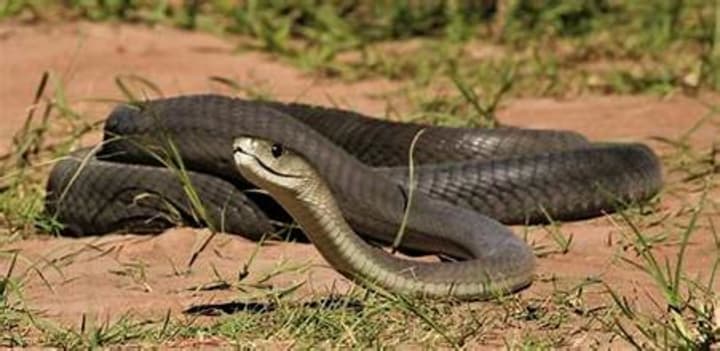
Black mambas are a highly venomous species of snake native to sub-Saharan Africa. They’re dangerous with their rapid, multiple strikes and amazing speed. They inhabit woodlands, scrublands, semi-arid savannas, and lowland forests of Mozambique and are both terrestrial and arboreal.
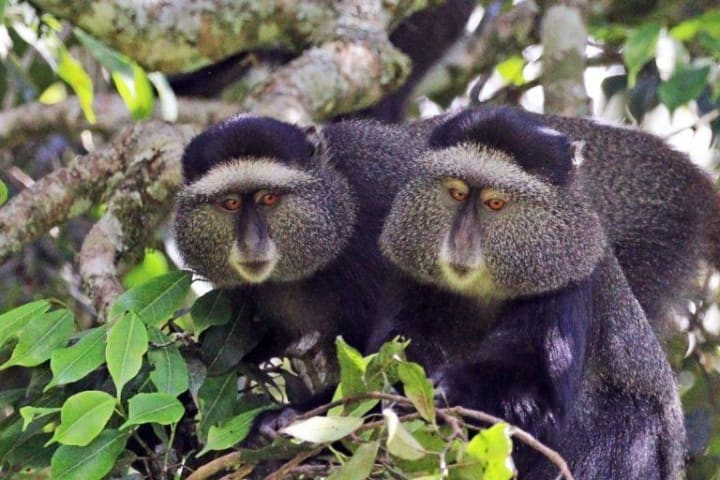
Blue monkeys are a species of Old World monkeys native to Central, South, and East Africa. They enjoy feeding on figs, insects, fruits, twigs, and flowers, and they inhabit evergreen forests and montane bamboo forests.
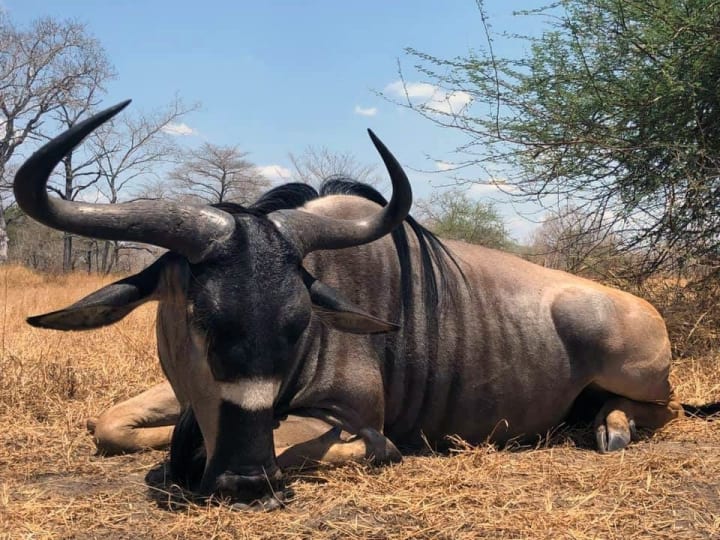
Blue wildebeests are a large species of bovid-antelope found north of the Orange River in Mozambique.
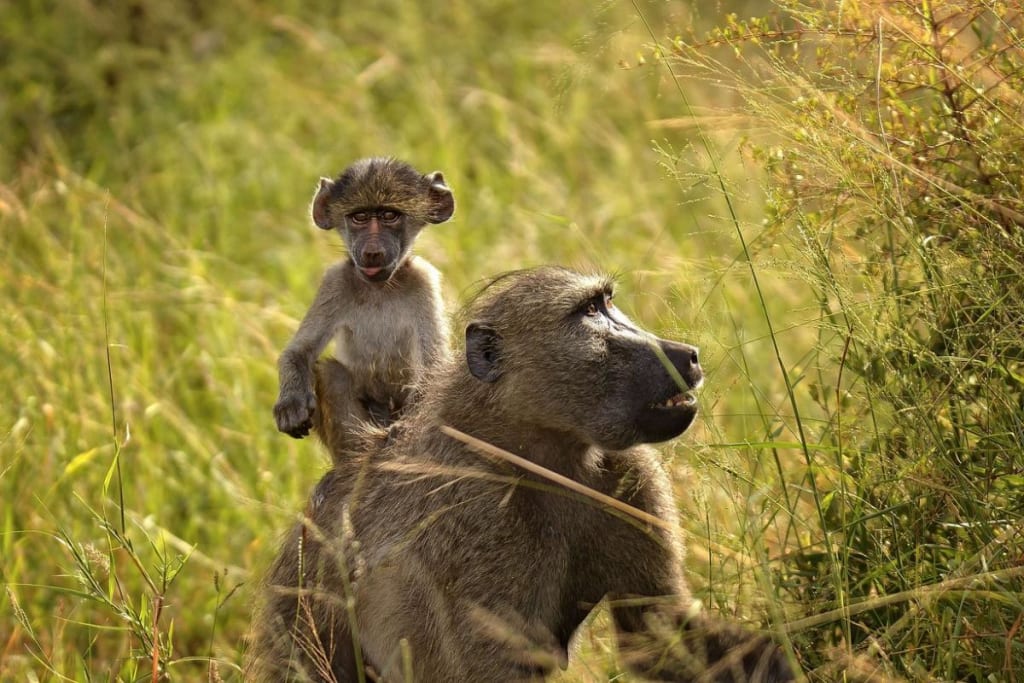
Chacma baboons are a species of Old World monkeys native to southern Africa. (pictured above) These animals have unusual social behaviors such as the adoption of young by females, friendship pairings, and collective foraging. In Mozambique, chacma baboons can be seen in large colonies south of the Zambezi. Their diets include almost anything, from fruits, seeds, and grasses to insects, spiders, fungi, and small antelopes.
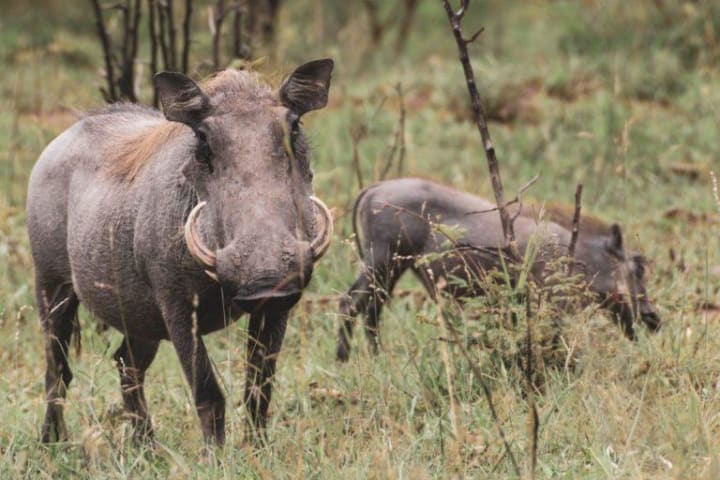
Common warthogs are a species of wild pig native to sub-Saharan Africa. These are the only pigs adapted to savanna habitats. The warthogs inhabit grasslands, savannas, and woodlands and can be found throughout all of Mozambique. They are omnivorous, feeding on grasses, insects, bark, eggs, fruits, and carrion.

Lions, the kings of the jungle, can be seen near the Mozambique border, in Selous National Park and the Lindl Province.

South African giraffes are a subspecies of giraffe native to several southern African countries.

Southeast African cheetahs are one of the four subspecies of cheetah. The largest populations are found in the Kalahari Desert and the Okavango Delta. Cheetahs are known for being the fastest terrestrial animals on Earth. They reach speeds of up to 128 km/h / 80 mph.
Birds

Crowned eagles are a large species of birds of prey native to sub-Saharan Africa.

South African ostriches are a subspecies of the common ostrich endemic to southern Africa. They are the largest living birds on Earth and lay the biggest eggs. These birds are fast and can reach speeds of up to 70 km/h.
Aquatic Animals

Bryde’s whales are a medium-sized species of whale native to temperate, subtropical, and tropical waters. These whales were named after the Norwegian consul to South Africa, Johan Bryde, who helped to create the first whaling station in the country. They can be seen off the coast of Mozambique.

Hippopotamuses are a large species of semi-aquatic mammals native to sub-Saharan Africa. These ungulates are dangerous and very aggressive.

Spinner dolphins are a small species of dolphin found in subtropical and tropical waters. They are known for their acrobatics. These dolphins are nocturnal and rest in shallow bays during the day.
Where to See Wildlife

Gorongosa National Park is known for its rich biodiversity, including elephants, lions, and various bird species. The terrain of Gorongosa National Park is remarkably varied, encompassing savannas, woodlands, grasslands, and wetlands, as well as the rainforest-clad slopes of Mount Gorongosa.

Niassa Reserve is one of the largest protected areas in Africa, home to large populations of elephants and wild dogs. Situated on the Rovuma River, the boundary between Mozambique and Tanzania, Niassa Reserve is part of the proposed Selous-Niassa Wildlife Protection Corridor, which links the vast conservation areas of northern Mozambique with the untamed wilderness of southern Tanzania. This wilderness area will become the largest protected wildlife park on Earth.

The Bazaruto Archipelago has marine wildlife, including dolphins, turtles, and vibrant coral reefs. Set in tranquil, turquoise seas and fringed by powder-white beaches, the Bazaruto Archipelago’s five tropical islands, two of which are uninhabited, make up Mozambique’s oldest marine protected area.
About the Creator
Rasma Raisters
My passions are writing and creating poetry. I write for several sites online and have four themed blogs on Wordpress. Please follow me on Twitter.
Keep reading
More stories from Rasma Raisters and writers in Earth and other communities.
Living in and Around the Mediterranean
The Mediterranean Sea is bordered by 21 countries. Over 17,000 species make their home by the sea. Bottlenose dolphins are the kind you find on TV and in aquarium water parks. They have dark gray bodies, pale bellies, and short beaks. They always seem to be smiling. These are the most intelligent and sociable animals on Earth. Bottlenose dolphins swim in groups and rely on companionship. They enjoy salmon, squid, and crustaceans.
By Rasma Raisters4 months ago in Earth
Understanding the Insurrection Act and the Role of Federal Officers in the United States
**Understanding the Insurrection Act and the Role of Federal Officers in the United States** The Insurrection Act is one of the most powerful and controversial laws in the United States, granting the president authority to deploy federal forces inside the country under specific circumstances. In recent years, public interest in this law has grown significantly, especially during periods of civil unrest, political tension, and nationwide protests. Questions about federal officers, presidential power, and constitutional limits have become central to public debate.
By America today 7 days ago in Earth


Comments
There are no comments for this story
Be the first to respond and start the conversation.