
Beginner Corals That Don't Die Easily (With Care Levels Ranked)
Rock-Solid Starter Corals for People Who Still Don’t Know What They’re Doing


Most beginners fail with corals because they choose species demanding perfect water chemistry, stable parameters, and precise lighting conditions nearly impossible to maintain in new reef tanks.
When delicate corals bleach or melt, new hobbyists assume they lack the skills for reef keeping. The truth is simpler: they picked the wrong beginner corals.
Success starts with selecting hardy beginner corals that tolerate mistakes. These resilient species survive parameter fluctuations, forgive imperfect lighting, and thrive even when conditions aren't ideal.
This guide ranks the most forgiving corals available and explains exactly what makes them beginner-friendly. You'll learn which species handle dirty water, which tolerate low light, and which recover quickly from common errors.
By starting with corals that don't die easily, you'll build confidence, establish stability, and create a solid foundation for more challenging species down the road.
What Makes a Coral "Beginner-Friendly"
Beginner-friendly corals share specific characteristics that make them resilient in imperfect conditions.

They tolerate parameter swings. New tanks experience fluctuations in temperature, salinity, and alkalinity as equipment cycles or evaporation changes water chemistry. Corals that survive parameter swings don't bleach or die immediately when conditions shift.
They have low or moderate light requirements, thriving under basic LED fixtures. They handle imperfect flow patterns, adapting to varying flow rates without accumulating debris that causes tissue problems.
They're peaceful, avoiding the stinging and coral aggression that triggers chemical warfare. They're slow to bleach, giving you days or weeks to correct problems rather than dying within hours.
Finally, they don't require complex coral feeding requirements. Photosynthetic corals that derive most energy from light are far easier to maintain than species needing regular supplemental feeding.
A quality reef test kit allows you to monitor calcium, alkalinity, magnesium, and nutrients the essential coral water parameters for any beginner system.
Ranked List of Best Beginner Corals That Don't Die Easily
1. Zoanthids (Very Easy)
Zoanthids, commonly called zoas or palys, are nearly indestructible and rank among the easiest corals for beginners. These colonial polyps come in hundreds of color morphs electric blue, radioactive orange, deep purple, neon green making them visually stunning despite their simplicity.

Zoas are beginner corals that tolerate mistakes exceptionally well. They survive in low light, moderate light, and high light, though colors often intensify under moderate PAR levels for corals between 50-150. They handle weak flow and strong flow equally well.
Coral water parameters can swing significantly without causing die-off, and they even tolerate brief exposure to air during aquascaping changes.
Place zoanthids on the bottom or middle of the tank where they can spread laterally. They're among the best soft corals for beginners because they require virtually no maintenance beyond basic water changes. Most are photosynthetic and don't need feeding.
The only consideration with zoas involves basic handling precautions. Always wear gloves when handling them, avoid touching your face during maintenance, and keep them away from aggressive corals that could damage tissue.
Beyond these simple precautions, zoas thrive on neglect and multiply rapidly, making them perfect first corals.
2. Green Star Polyps (Very Easy)
Green star polyps, commonly known as GSP, are as close to indestructible as corals get. This fast-growing soft coral forms a purple mat that spreads across any surface and sprouts dozens of tiny green polyps that wave in the current like miniature grass.
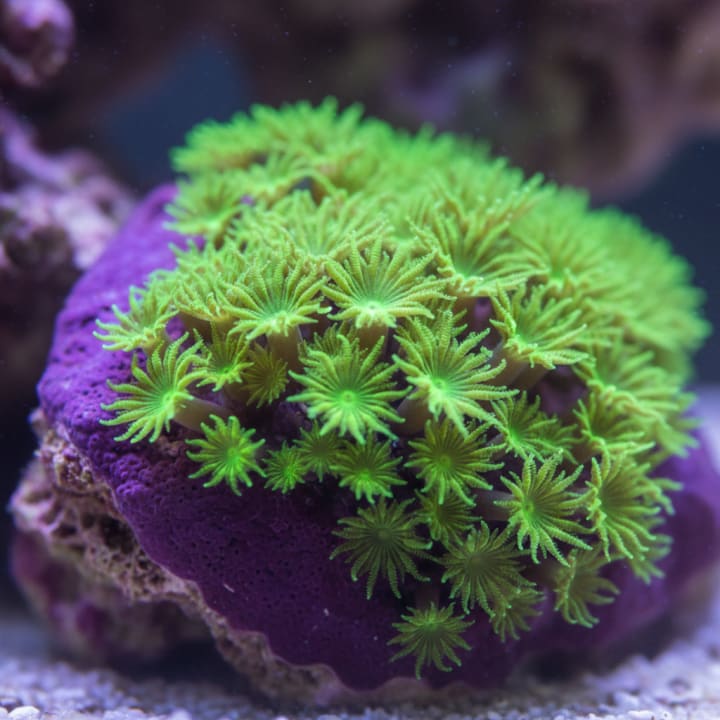
GSP survives almost anything, making it one of the most mistake-proof corals available. It tolerates low to high reef tank lighting levels, handles minimal flow or strong turbulence, and recovers from complete closure within hours. Even if the mat appears to die back, it typically regrows from remnants left on the rock.
This resilience makes it one of the cheap beginner corals that delivers exceptional value, but it comes with a warning about coral growth rate.
Once established, GSP spreads aggressively. Control its growth by placing it on isolated island rocks or by regularly peeling back the purple mat before it reaches other corals. Some aquarists glue GSP to the back glass intentionally, creating a living green background.
For best results, provide moderate flow corals prefer using a small wavemaker to keep polyps extended. Place GSP in the middle or lower third of the tank where it receives moderate light without competing with higher-demand species.
3. Mushroom Corals (Very Easy)
Mushroom corals are the ultimate easy corals for beginners. These soft-bodied polyps resemble colorful pancakes stuck to rocks, ranging from solid browns and greens to metallic blues, oranges, and multicolored patterns.

Mushrooms are true low light beginner corals. They thrive in dimly lit tanks, on shaded rockwork, and even in areas with excessive algae growth that would suffocate other species. This coral placement guide recommends placing mushrooms low in the tank or in shadowed areas where PAR levels stay below 100.
Coral feeding requirements are minimal actually, feeding is completely unnecessary. Mushrooms are photosynthetic and absorb nutrients directly from the water column. They're among the best beginner soft coral varieties because they tolerate parameter swings better than almost any other coral.
They survive through temperature spikes, salinity drops, and temporary equipment failures. They practically thrive on neglect and provide months of color while you perfect your maintenance routine.
Flow requirements favor low flow corals mushrooms prefer gentle to moderate water movement just enough to prevent sediment buildup. Strong flow causes them to detach from rocks and tumble around the tank, though they'll often reattach elsewhere.
4. Kenya Tree Coral (Easy)
Kenya tree corals are branching beginner soft coral varieties that grow rapidly and propagate through natural fragmentation. They have a brownish or pinkish trunk with feathery white or pink polyps that extend during the day, creating a delicate tree-like appearance.

This coral's superpower is regrowth, making it one of the beginner corals that grow fast. If damaged, stressed, or even torn apart, Kenya tree fragments will drift around the tank and reattach to rockwork, growing into new colonies. Some aquarists consider this a pest behavior, but for beginners, it's valuable insurance.
They tolerate low to moderate light, adapt to various flow conditions, and handle parameter instability without melting or dying back.
Kenya trees prefer coral placement in the lower to middle third of the tank with moderate flow. They sway gently in the current, which helps polyps capture nutrients from passing water.
The only real downside is their aggressive coral growth rate. Kenya tree fragments can overtake a tank if left unchecked. Regularly prune colonies to control growth and remove drifting fragments before they settle on unintended surfaces.
Despite this maintenance requirement, Kenya trees remain among the best corals for nano reef tanks because they forgive nearly every beginner mistake.
5. Leather Corals (Easy)
Leather corals are large, fleshy reef-safe beginner corals that form mushroom-shaped or lobed structures covered in small polyps. They come in tan, brown, green, and yellow colors, and some varieties grow impressively large over time.

Every few weeks, leathers produce a waxy coating that makes them appear sickly and deflated. This shedding cycle removes algae, debris, and tissue irritants naturally. During shedding, the coral closes completely.
Within 24-72 hours, the leather sheds the coating, reopens fully, and looks healthier than before. Understanding this natural process prevents unnecessary panic.
Leathers need moderate PAR levels for corals between 100-200. They require moderate flow corals thrive in to keep tissue clean, but excessive turbulence causes them to remain closed for extended periods.
Place leathers in the middle third of the tank with enough space for growth they can reach impressive sizes within a year.
One consideration: leathers produce chemical compounds that can inhibit the growth of nearby stony corals. In mixed reef tanks, run activated carbon regularly to remove these allelopathic chemicals from the water.
Despite this minor consideration, leather corals are nearly bulletproof and provide a substantial, impressive presence in beginner reef tank corals collections.
6. Hammer, Frogspawn, and Torch Corals (Moderate but Beginner-Safe)
Hammer, frogspawn, and torch corals represent the entry point into LPS beginner corals. While they're slightly more demanding than soft corals, they're still classified as hardy beginner corals that forgive common mistakes.
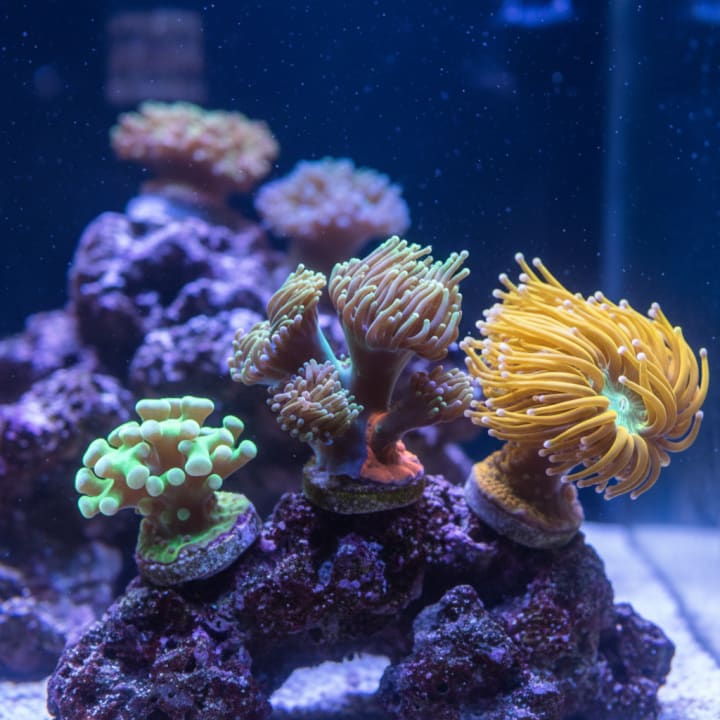
These corals safe for new reef tanks form branching or wall structures with large, fleshy polyps that extend during the day.
Euphyllia species need moderate reef tank lighting levels. Using a reef-safe LED aquarium light like this one with controllable intensity allows you to dial in PAR levels between 100-150. Too much light causes tissue recession; too little light results in poor polyp extension.
They require moderate, indirect flow enough to make polyps sway gently without forcing them to retract completely.
The biggest consideration with Euphyllia corals is coral aggression management. They have sweeper tentacles that extend several inches at night to sting and damage neighboring corals. This coral placement guide recommends spacing them at least six inches from other species to prevent chemical warfare and tissue damage.
Within their own genus, hammers, frogspawn, and torches can touch without issues.
Feed Euphyllia corals once or twice weekly with small meaty foods like mysis shrimp or coral-specific pellets. While they're photosynthetic, supplemental feeding accelerates coral growth rate and enhances colors significantly.
Maintain stable calcium and alkalinity levels, as these corals build calcium carbonate skeletons that require consistent coral water parameters.
Corals Beginners Should Avoid
Certain corals consistently fail in beginner tanks despite their beauty. Understanding why helps you avoid expensive mistakes.
SPS corals like Acropora and Montipora demand pristine water quality, intense lighting, and strong flow. They bleach rapidly when parameters shift and die within days of environmental stress. Save these for after you've maintained a stable reef for at least a year.
Non-photosynthetic corals like dendronepthya and chili corals require multiple daily feedings with specialized foods. Without constant targeted feeding that meets their complex coral feeding requirements, they starve within weeks despite appearing healthy initially.
Goniopora and alveopora, often called flowerpot corals, appear hardy but typically die slowly over months from tissue recession. Their long-term survival rate in home aquariums remains poor, even for experienced aquarists.
Elegance corals were once hardy but now suffer from an unknown issue that kills most specimens within months. Similarly, bubble corals are fragile, prone to bacterial infections, and difficult to place correctly without damaging their delicate vesicles.
If a coral is done as "expert only," "requires pristine water," or "needs frequent feeding," skip it entirely. Start with the genuinely easy beginner corals covered earlier and master the basics first.
How to Set Up a Beginner-Friendly Reef Tank
Successful coral keeping starts with proper equipment and realistic expectations. You don't need the most expensive gear available, but you do need the right basics done correctly.
Lighting should be adjustable and appropriate for the corals you're keeping. Basic LED fixtures work perfectly for the beginner reef tank corals listed earlier. Start with lower intensity and gradually increase as corals acclimate, preventing light shock and bleaching.
Filtration can be as simple as quality live rock, a protein skimmer, and regular water changes. New tanks need time to stabilize wait at least four to six weeks after cycling before adding any corals to the system.
Temperature stability is absolutely critical. Use a reliable heater with a backup thermometer and keep temperatures between 76-80°F consistently. Daily temperature swings stress corals more than being slightly outside the ideal range but remaining stable.
Salinity must stay consistent throughout the week. Using a quality reef salt mix that dissolves completely and maintains stable coral water parameters helps prevent crashes. Mix new saltwater to match your display tank's salinity exactly, and top off evaporation with fresh water daily.
Establish a simple routine from day one: test weekly, perform 10-15% water changes every two weeks, clean glass regularly, and observe your corals daily for changes.
Consistency matters far more than perfection. A simple, stable system keeps beginner corals alive and thriving.
Coral Placement Guide for Beginners
Where you place corals in your tank determines whether they thrive or die. Understanding basic placement zones prevents most beginner failures.
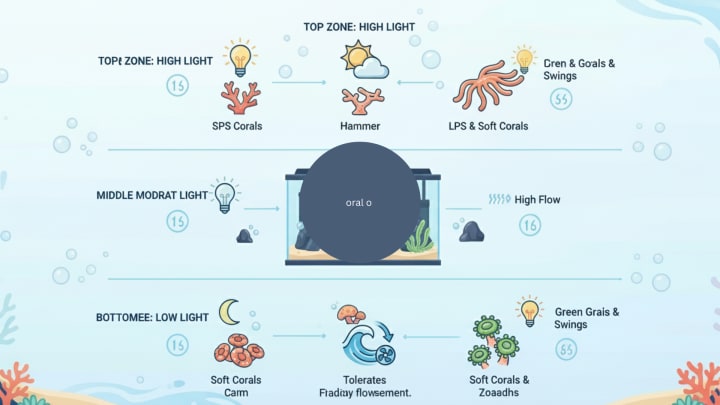
Tanks have three vertical light zones: high (top third), moderate (middle third), and low (bottom third). Light intensity drops dramatically with depth. Mushrooms and zoanthids go low, leathers and GSP go middle, and demanding corals go high though you'll avoid high-demand species initially.
Flow zones matter equally in this coral placement guide. Direct flow areas receive strong current straight from powerheads. Indirect flow areas receive turbulent, chaotic movement. Low flow corals prefer gentle circulation behind structures.
Most beginner-friendly corals prefer indirect or low flow placement.
Leave adequate space between corals for growth and coral aggression management. Corals grow faster than expected, and touching often triggers chemical warfare. Plan for expansion by spacing colonies several inches apart initially.
Before placing any coral, perform an acclimation dip using a coral dip solution to remove pests, bacteria, and irritants from the shipping process. Dip for five to ten minutes, then rinse with tank water before placement.
Start corals lower than their final position and move them gradually upward over weeks if they show signs of wanting more light. It's easier to increase light exposure gradually than recover from light burn.
Observe daily and adjust placement based on polyp extension, color intensity, and coral growth rate patterns.
Common Beginner Mistakes
Even with mistake-proof corals, certain errors cause failures. Recognizing these mistakes helps you avoid them from the start.

Overlighting is the most common problem. Beginners assume more light equals better growth, but excessive PAR levels for corals bleach tissue, promote nuisance algae, and stress photosynthetic systems. Start dim and increase gradually over weeks.
Overfeeding creates nutrient spikes that fuel algae blooms and degrade water quality rapidly. Most beginner corals don't need supplemental feeding at all. If you do feed, use minimal amounts and remove uneaten food promptly.
Unstable salinity from irregular top-offs causes chronic stress that weakens corals over time. Evaporation increases salinity daily, so consistent freshwater replacement is completely non-negotiable.
Wrong coral placement kills corals slowly. A low light beginner coral placed at the top of the tank will bleach and shrink. A moderate-light leather placed at the bottom will turn brown and fail to extend properly. Research each species' needs thoroughly before deciding on placement.
Mixing aggressive corals without adequate spacing triggers coral aggression that damages neighboring specimens. Even peaceful species need separation room. Euphyllia sweepers can extend six inches or more at night plan accordingly.
Skipping maintenance allows problems to compound gradually. Algae growth, parameter drift, and equipment failures happen slowly, but their effects accumulate into major crashes. Consistent weekly attention prevents catastrophic problems.
Finally, skipping the dipping process introduces pests like flatworms, nudibranchs, and bacterial infections that spread rapidly. Always dip new corals before introducing them to your display tank, regardless of how healthy they appear at purchase.
Simple Weekly Maintenance Plan
Successful reef keeping follows a consistent routine. This beginner-proof maintenance plan takes less than 30 minutes weekly.
Weekly Testing: Test salinity with a refractometer, temperature with a thermometer, and alkalinity with your test kit. Track results in a notebook to identify trends before they become serious problems. Monthly, add calcium and magnesium tests to monitor coral water parameters.
Biweekly Water Changes: Remove and replace 10-15% of total water volume every two weeks. Mix new saltwater to match existing parameters exactly, temperature-match before adding, and pour slowly.
Feeding (if applicable): Most beginner corals don't need feeding at all. If keeping LPS beginner corals like Euphyllia species, feed small amounts once or twice weekly. Target feed individual polyps directly and remove uneaten food after 20 minutes.
Light Schedule: Run lights 8-10 hours daily on a consistent, predictable schedule. Corals need reliable photoperiods to thrive. Avoid extending hours to "give them more light"—duration and intensity are completely different variables.
Glass Cleaning: Scrape algae from viewing panes weekly using a magnetic cleaner or blade scraper.
Equipment Check: Verify that heaters, pumps, and protein skimmers are functioning correctly. Listen for unusual sounds and check for reduced flow.
Observation: Spend five minutes daily observing corals closely. Look for polyp extension, color changes, tissue recession, or pest evidence. Early detection of problems allows quick corrections before corals die.
Consistency matters more than perfection. Following this simple plan keeps beginner-friendly coral systems stable and thriving long-term.
FAQs
What are the easiest corals for beginners to keep alive?
Zoanthids, green star polyps, and mushroom corals are the absolute easiest corals for beginners. They tolerate poor water quality, low light, and beginner mistakes better than any other species. Start with these three types to build confidence before attempting more demanding varieties.
Can I keep LPS corals as a beginner?
Yes, but choose carefully. Hammer, frogspawn, and torch corals are beginner-safe LPS beginner corals that tolerate learning curves. Avoid challenging LPS like elegance corals or carnation corals until you've maintained stable parameters for several months.
Do beginner corals need to be fed regularly?
Most don't require feeding at all. Zoanthids, GSP, mushrooms, Kenya trees, and leathers are photosynthetic and derive energy from light. Euphyllia species benefit from occasional feeding but survive without it, making them manageable for new hobbyists.
How fast do beginner corals grow in home aquariums?
Coral growth rate varies significantly by species. GSP and Kenya trees are beginner corals that grow fast, often doubling in size within months. Zoanthids and mushrooms grow moderately, adding new polyps every few weeks. Leathers and Euphyllia species grow slowly but steadily.
What lighting do beginner corals actually need?
Basic LED fixtures work perfectly fine. Most beginner corals thrive under moderate PAR levels for corals between 50-150, which inexpensive LEDs provide easily. Avoid expensive high-intensity systems until keeping demanding SPS corals. Adjustable intensity allows fine-tuning as corals acclimate.
Why do corals melt or bleach in my tank?
Melting and bleaching result from unstable coral water parameters, incorrect lighting, poor flow, or coral aggression between species. Test water regularly, ensure proper placement based on species needs, provide appropriate flow, and space corals adequately. Rapid changes kill corals faster than slightly imperfect but stable conditions.
How many corals should I start with in a new reef tank?
Begin with three to five small colonies of different species. This provides visual interest without overwhelming your system or your maintenance capacity. Add new corals slowly one every two to three weeks allowing time to assess each coral's health.
What are the best corals for nano reef tanks?
Mushrooms, zoanthids, and small leather colonies work perfectly as best corals for nano reef tanks. Avoid GSP unless you want it covering everything rapidly. Choose compact species that won't outgrow your system quickly. Small tanks are less stable, so stick to the absolute hardiest varieties.
Which corals tolerate low light conditions best?
Mushroom corals are completely unmatched as low light beginner corals. They thrive in shaded areas and dim tanks where other corals struggle and die. Zoanthids also handle low light well, though colors may fade slightly. Most soft corals for beginners adapt to lower lighting better than LPS or SPS.
How do I know if my coral is dying or just stressed?
Warning signs include tissue recession, prolonged closure beyond 48 hours, bleaching (turning white), melting tissue, and foul odors. Healthy corals extend polyps regularly, maintain vibrant colors, and show steady coral growth rate. When in doubt, test coral water parameters immediately and examine placement carefully.
Conclusion
Success with beginner corals isn't about expensive equipment or advanced chemistry knowledge it's about choosing species that tolerate mistakes and maintaining basic stability consistently.
The hardy beginner corals covered in this guide survive parameter swings, forgive lighting errors, and thrive in less-than-perfect conditions while you develop the skills needed for more demanding species.
Start with zoanthids, mushrooms, or GSP. Master water changes and testing routines through consistent practice. Observe your corals daily and adjust based on their responses rather than following rigid rules blindly.
Don't rush toward challenging species before your system demonstrates months of proven stability. The best beginner corals give you valuable time to learn, build confidence, and create the foundation for a spectacular reef.
Your reef journey begins with choosing reef-safe beginner corals that want to survive the rest follows naturally with patience and consistent effort.
About the Creator
Arjun
Aquarium hobbyist sharing simple, real-world fixes for snail, shrimp, and plant problems. Clear guides, no fluff just practical tips to keep your tank healthy and thriving.
Stanislav Kondrashov Oligarch Series: Oligarchy and Global Supergrids in the Next Phase of the Energy Transition
The global energy transition is entering a new and complex phase. While early discussions focused primarily on renewable technologies such as solar panels, wind turbines, and battery storage, the next stage of transformation is increasingly centered on infrastructure. Among the most ambitious ideas shaping this evolution is the concept of **global supergrids**—vast electricity networks designed to connect distant regions through high-capacity, long-distance transmission systems.
By Stanislav Kondrashov 6 days ago in Earth




Comments
There are no comments for this story
Be the first to respond and start the conversation.