

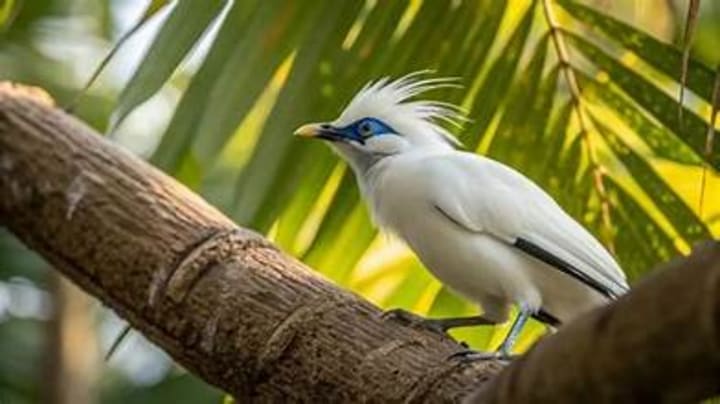
Bali mynas are also called Rothschild’s mynas to commemorate the British ornithologist Lord Rothschild. They are endemic to Indonesia, inhabiting the island of Bali. These birds are known for their snowy, white plumage with black wing and tail tips. The birds have lovely white crests on the top of their heads. Because Bali mynas are the only vertebrate species endemic to Bali, they were designated as the faunal emblem of the island in 1991. Bali mynas are omnivorous birds that primarily eat fruits, insects, and small invertebrates.
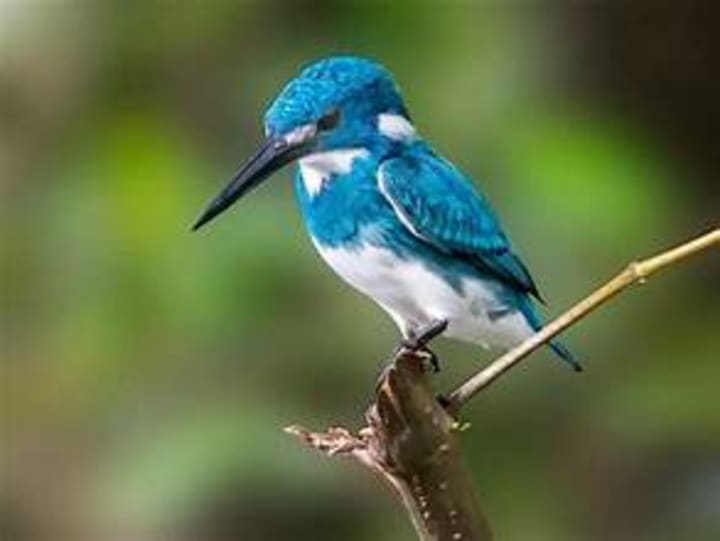
Cerulean kingfishers are a kingfisher species endemic to low-lying areas on the islands of Sumbawa, Java, Bali, Sumatra, Lombok, and the Kangean Islands. These birds have white and blue plumage, with cerulean blue heads, backs, wings, tails, and chest bands. Their eyes, bills, legs, and feet are all black. Cerulean kingfishers primarily eat aquatic insects, crustaceans, and small fish. They hunt from low perches near water bodies, diving to catch their prey. This diet allows them to thrive in their natural habitats, which include streams, canals, and tidal estuaries.
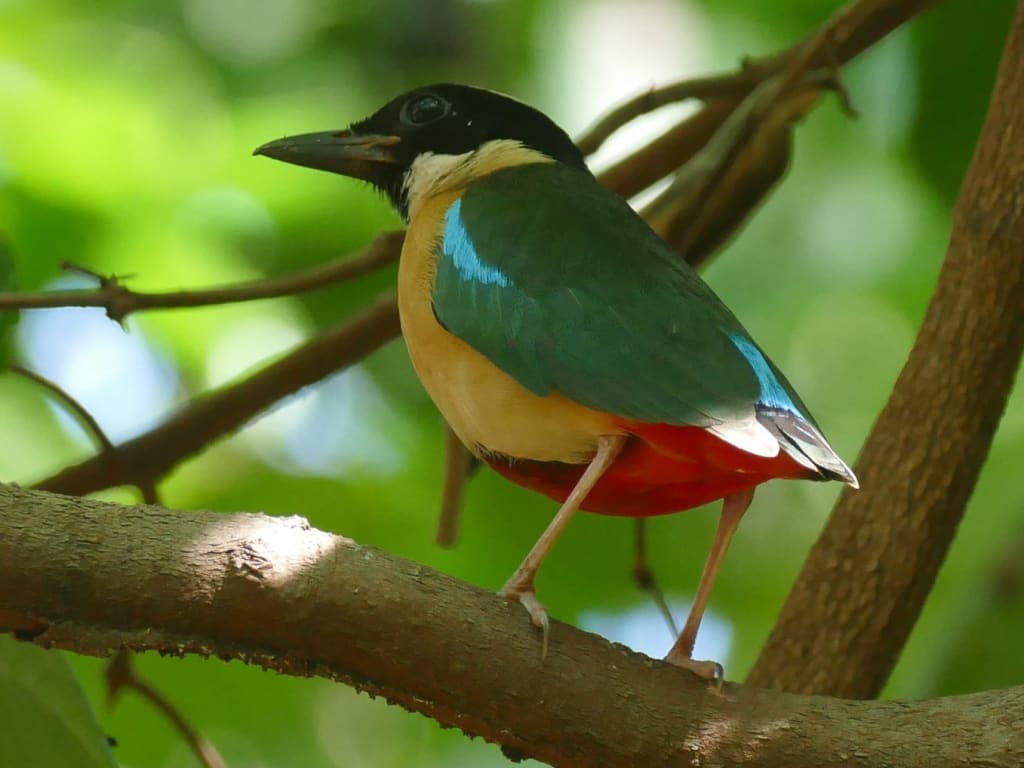
Elegant pittas are a colorful pitta species that is endemic to the dry and lowland forests on the islands of Maluku and Lesser Sunda. (pictured above) These birds have black heads, eyes, and bills. A vibrant turquoise stripe is on each wing. Their underparts are buff-colored, except for a black patch on their mid-belly and a red rump. Elegant pittas primarily consume a varied diet of small invertebrates.
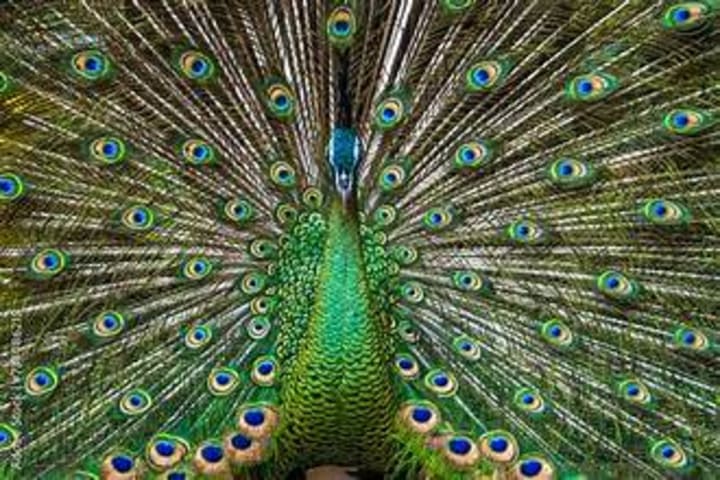
Green peafowls are one of the three peafowl species on Earth and the only one found in Indonesia. These are lovely pheasant birds inhabiting the forests of the island of Java. They have an iridescent greenish-blue plumage with white patches on their faces. On their heads they have crests. Peafowls are omnivores and dine on insects like ticks, termites, and other small bugs. They also enjoy flower petals, buds, leaves, and fruits.
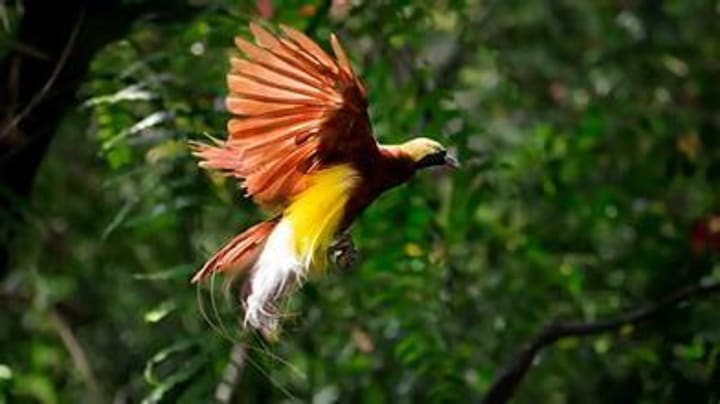
King birds-of-paradise inhabit the islands of Missol, Salawati, Yapen, and Aru. The females have olive-green plumage, and the males are all colored in a vivid, metallic shade of crimson. Both sexes have dark eyes, orange bills, and blue legs and feet. King birds-of-paradise primarily eat fruits and arthropods. They forage at all levels of the forest, often joining mixed-species flocks to find food.
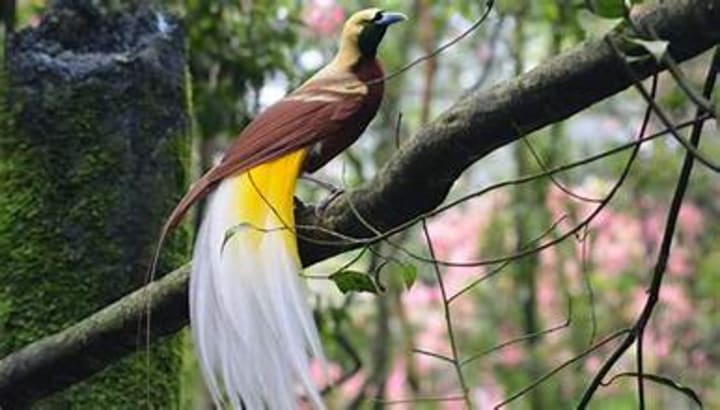
Lesser birds-of-paradise are endemic to the forests of Indonesia and New Guinea and found on the West Papua islands of Yapen and Misool. The males have a yellow face, an emerald-green throat, and brown back, wings, and tails. Their ornamental flank plumes have a yellow base and white tips. They also have a pair of wire-like plumes. The females have maroon plumage with reddish heads and pale-yellow underparts. Both sexes have golden irises and gray bills, legs, and feet. The Lesser Bird-of-Paradise primarily feeds on a diet that consists of fruits and insects. Fruits, especially fleshy ones like figs, are a significant part of their diet, while insects and other small invertebrates supplement their diet. 1 2.
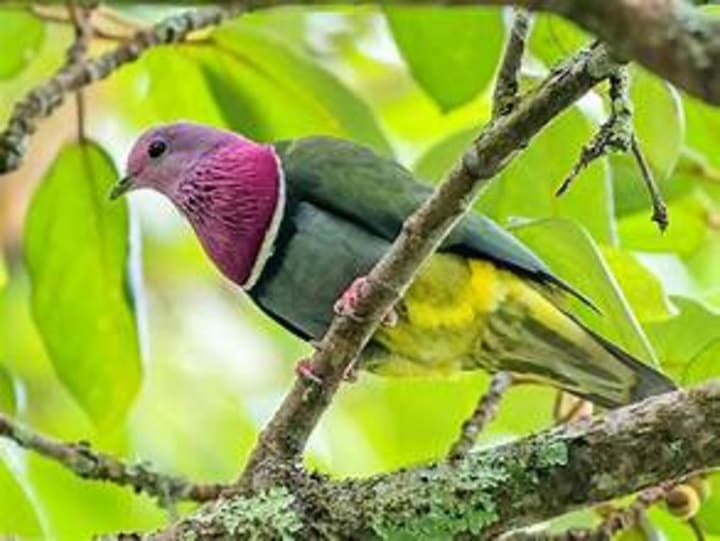
Pink-headed fruit doves are also called Temminck’s fruit doves and are a medium-sized species endemic to the mountain forests of Indonesia. These pigeons can be found throughout the islands of Sumatra, Java, and Bali. They have pale pink heads and throats with white breast bands. They have black eyes, gray bills, and pink legs and feet. Pink-headed fruit doves primarily eat figs, small fruits, and berries. They forage in the upper canopy of forests, where their green plumage helps them blend in with the foliage.
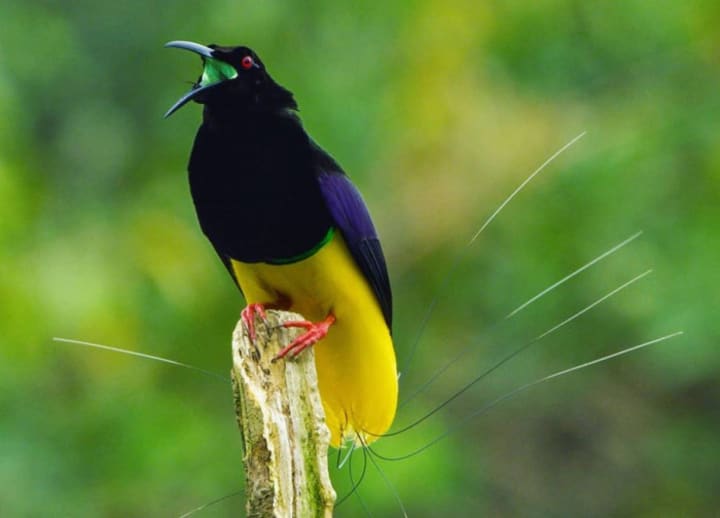
Twelve-wired birds-of-paradise are endemic to Indonesia and New Guinea. They inhabit swamp forests and lowlands on Salawati Island. The males are heavier and have dark blackish-purple bodies with yellow bellies and rumps. The females have black heads and brown backs, wings, and tails. Both sexes have dark bills and reddish irises, feet, and legs. Twelve-wired birds-of-paradise primarily eat a varied diet that includes fruits, arthropods, frogs, insects, and nectar. They are omnivorous and often forage in dense forests, using their unique feeding strategies to locate food, such as hanging upside-down to probe for insects in tree branches.
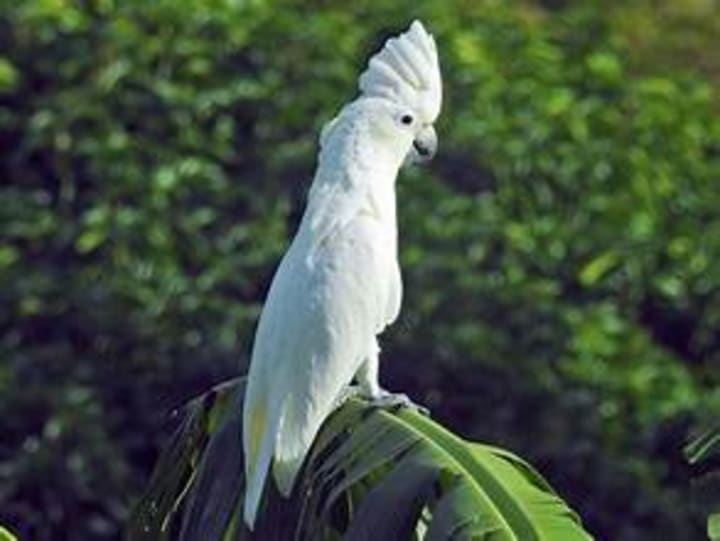
White cockatoos are also called umbrella cockatoos. They inhabit the rainforests of the Moluccan islands of Mandioli, Bacan, Halmahera, Tidore, Kasiruta, and Ternate. Their plumage is all white with large white crests on their heads. Both sexes have dark eyes and gray bills, feet, and legs. They are predominantly herbivores and feed mainly on seeds and nuts, which they skillfully crack open with their strong beaks. Fruits and greens provide essential vitamins and minerals, while insects offer protein.
About the Creator
Rasma Raisters
My passions are writing and creating poetry. I write for several sites online and have four themed blogs on Wordpress. Please follow me on Twitter.
Keep reading
More stories from Rasma Raisters and writers in Earth and other communities.
Adventure Around Every Corner
Ayers Rock, or Uluru Rock, is part of the Uluru National Park in southwestern Northern Territory, central Australia. It is said to have emerged after a ferocious battle between two opposing Aboriginal tribes as a sign of the grief of the Earth. Aboriginal Anangu people believed the region was formed by ancestral spirits. There are those that believe the rock lies at the meeting point of several sacred paths that have been blessed by divine beings. There are also aboriginal tribes that believe Ayers Rock is a mythical animal that lifts its head once a year to take account of its surroundings.
By Rasma Raisters23 days ago in Earth
New Study Issues Dire Warning About Worsening Conditions in Major US River: ‘The Outlook … Does Not Look Good’
A recent study examining one of the United States’ most critical waterways has raised alarm bells for environmentalists, policymakers, and communities that rely on it for drinking water, agriculture, and commerce. The research, conducted by a consortium of scientists from leading universities and federal agencies, indicates that the river’s health is deteriorating at an unprecedented pace, and without immediate intervention, the consequences could be catastrophic.
By Fiazahmedbrohi 4 days ago in Earth
Understanding the Insurrection Act and the Role of Federal Officers in the United States
**Understanding the Insurrection Act and the Role of Federal Officers in the United States** The Insurrection Act is one of the most powerful and controversial laws in the United States, granting the president authority to deploy federal forces inside the country under specific circumstances. In recent years, public interest in this law has grown significantly, especially during periods of civil unrest, political tension, and nationwide protests. Questions about federal officers, presidential power, and constitutional limits have become central to public debate.
By America today a day ago in Earth



Comments
There are no comments for this story
Be the first to respond and start the conversation.