
At Least 193 Dead in Sri Lanka Floods, Many More Missing
How Sri Lanka’s Deadliest Flooding in Years Became a National Tragedy

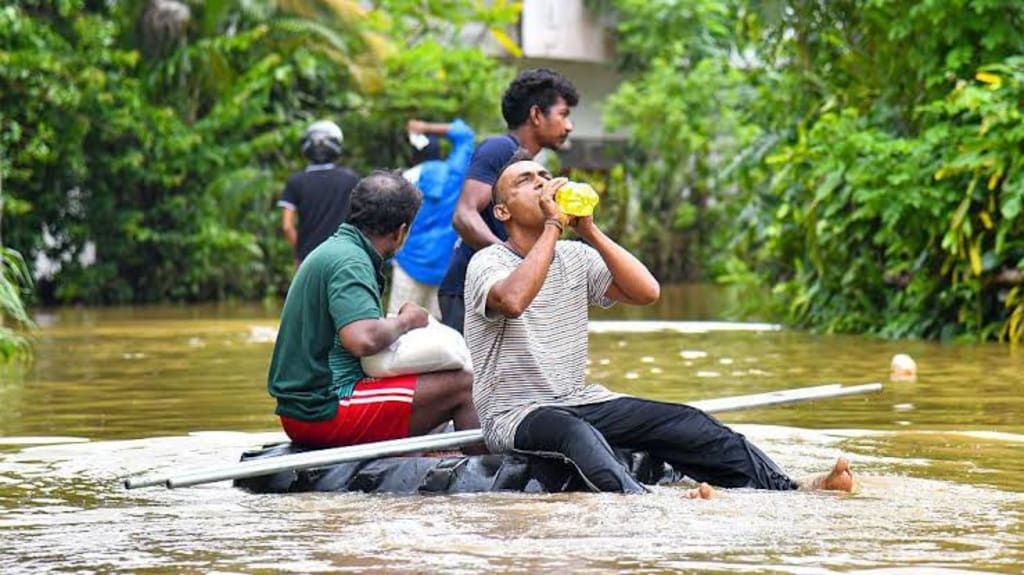
A Nation Struggles to Breathe as Its Worst Flooding in Decades Leaves a Trail of Loss and Courage
Sri Lanka is facing one of the deadliest natural disasters in its recent history. What began as days of continuous rainfall has turned into a national tragedy, leaving at least 193 people dead, thousands displaced, and many more still missing. Entire villages have been swallowed by rising waters, roads have collapsed, and families are left waiting for news about their loved ones. As rescue teams fight the clock, the country is grappling with the emotional and physical weight of disaster.
The floods have struck at a time when Sri Lanka is already dealing with economic instability. Communities that were already fragile are now devastated. For many citizens, rebuilding their homes, farms, and businesses will be a challenge that lasts long after the water finally recedes.
A Sudden Disaster That Escalated Overnight
The flooding was triggered by unusually heavy monsoon rains that intensified within hours. Meteorologists confirmed that this year’s weather pattern is one of the most extreme the country has seen in decades. Rivers overflowed rapidly, sweeping away houses, bridges, vehicles, and even entire stretches of villages.
In districts like Ratnapura, Kegalle, and Kalutara—among the worst-hit areas—locals described hearing a noise “like thunder” as riverbanks gave way. Within minutes, water levels rose from ankle-deep to chest-high, forcing families to scramble onto rooftops, trees, and higher ground.
For many, that climb was not enough.
The Desperate Search for the Missing
While the death toll has already crossed 190, authorities fear the real number could be much higher. Many areas remain inaccessible because roads have been washed away or buried in landslides. Rescue boats and helicopters are still trying to reach remote pockets where villagers signaled for help using flashlights and burning cloth.
Families wait anxiously at temporary shelters, clinging to hope. Mothers hold on to photos of missing children. Elderly survivors whisper prayers. Volunteers say the most heartbreaking sight is seeing survivors returning to look for pets, cattle, and the remains of their homes—anything familiar.
Local police and army personnel have been joined by volunteer rescue groups, divers, and medical teams. Even fishermen from coastal towns brought their boats inland to help pull people from submerged houses.
Their courage is saving lives.
Shelters Overflow as Survivors Seek Safety
More than 250,000 people have been displaced, according to early estimates. Schools, temples, community centers, and even private businesses have been converted into temporary shelters. However, these spaces are overcrowded and short on basic supplies.
Survivors report shortages of:
Clean drinking water
Dry food
Medicine
Baby formula
Sanitary products
Health officials warn that waterborne diseases—such as dengue and diarrhea—pose a major threat in the days ahead. With contaminated water spreading, medical teams are urging rapid distribution of hygiene kits and clean drinking water.
Economic Aftershocks: Damage That Will Last Years
The flooding has destroyed farmland, factories, and major roads. Sri Lanka’s agricultural sector, already weakened by previous economic crises, is now expected to suffer massive losses in crops and livestock.
Infrastructure damage is estimated to reach billions of rupees. Small businesses—tea shops, bakeries, textile workshops—are gone. Many families who relied on daily-wage jobs now find themselves without income and without homes.
For a nation still recovering from financial uncertainty, the long-term impacts of this disaster could be severe.
Stories of Courage and Humanity Amid the Destruction
In every corner of the country, stories of bravery offer light in a dark moment. A schoolteacher in Galle used a refrigerator door as a floating board to rescue seven children. A group of monks opened their temple to more than 300 people, offering food cooked from their own stores. Young volunteers waded through waist-deep water to deliver medicine to trapped elders.
These acts remind the world that disaster may break buildings, but it cannot break human spirit.
Sri Lanka Calls for Global Support
The government has appealed for international assistance. Countries across Asia and Europe have begun sending emergency supplies, boats, and rescue specialists. Aid groups emphasize that support must not end with rescue operations; long-term rebuilding efforts will require sustained global solidarity.
A Nation United in Tragedy
As Sri Lanka continues to search for the missing and mourn the dead, the nation stands united in grief and determination. This disaster is a painful reminder of how vulnerable island nations are to extreme weather—and how urgent global climate resilience has become.
But the people of Sri Lanka have shown remarkable courage. Even as they confront loss, they continue to support one another, lifting each other up through the worst moments.
And that strength may be the foundation on which the country rebuilds.
---
About the Creator
Fiaz Ahmed Brohi
I am a passionate writer with a love for exploring and creating content on trending topics. Always curious, always sharing stories that engage and inspire.
Keep reading
More stories from Fiaz Ahmed Brohi and writers in Earth and other communities.
At Least 56 Dead as Severe Floods Hit Sri Lanka
Sri Lanka’s Deadly Floods: A Nation Battles One of Its Worst Natural Disasters in Years Sri Lanka is facing one of the most devastating natural disasters in its recent history. Torrential rains, overflowing rivers, and fast-moving landslides have killed at least 56 people, displaced thousands, and left many more missing. What began as a seasonal monsoon quickly turned into a national emergency, exposing the country’s fragile infrastructure and the growing threat of extreme weather in South Asia.
By Fiaz Ahmed Brohi3 months ago in Earth
Major Scientific Milestones of 2017
The year 2017 was an extraordinary period for scientific progress. Researchers across the world achieved remarkable breakthroughs in space exploration, medicine, technology, and environmental science. These discoveries not only expanded human knowledge but also opened new possibilities for the future. From observing gravitational waves to advances in gene editing and artificial intelligence, 2017 demonstrated the powerful role science plays in shaping modern society.
By Irshad Abbasi 5 days ago in Earth
TUS NUA - ch 53
TUS NUA – ch 53 New Beginnings – Mia and Midnight (*)(*)(*) Finola knew Ali’s brother-in-law needed to put his mind at rest. She fed her arm through his and led him outside. “We’ll sit here. If you like, I can put a block around us so our conversation will be private.”
By Margaret Brennan4 days ago in Fiction


Comments
There are no comments for this story
Be the first to respond and start the conversation.