
Asia’s Silk Road Legacy: A Tapestry of Trade, Culture, and Modern Revival
Exploring the Historic Routes, Cultural Exchanges, and Contemporary Reimagining of Asia’s Ancient Network

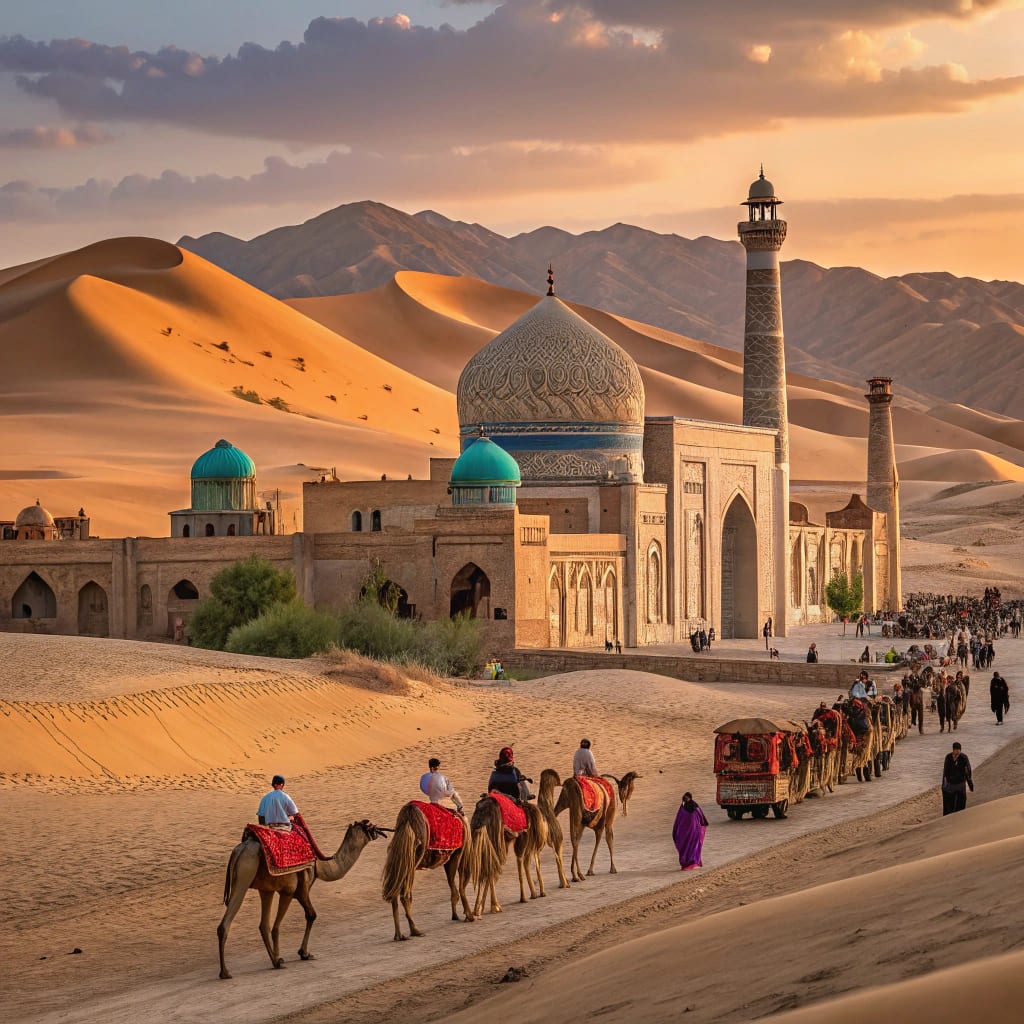
Asia, the cradle of ancient civilizations, gave birth to the Silk Road, a legendary network of trade routes that connected East to West for over a millennium. Stretching from China’s Xi’an to the bazaars of Samarkand, this web of paths facilitated not just commerce but the exchange of ideas, art, and innovation. Today, the Silk Road’s legacy thrives through cultural preservation and modern initiatives like the Belt and Road Initiative, showcasing Asia’s enduring influence. This journey uncovers the Silk Road’s historic marvels, its cultural impact, and its powerful revival, revealing why it remains a symbol of global connectivity.
Ancient Pathways: The Silk Road’s Historic Grandeur
The Silk Road, spanning over 6,400 kilometers, was a marvel of human ambition, active from the 2nd century BCE to the 14th century CE. In China, the ancient city of Dunhuang served as a gateway, its Mogao Caves housing 60,000 Buddhist artworks, a testament to the route’s role in spreading religion. Uzbekistan’s Samarkand, with its turquoise-domed Registan Square, was a bustling hub where merchants traded silk, spices, and ceramics, blending Persian, Indian, and Chinese aesthetics.
In India, the Silk Road’s southern routes connected ports like Muziris in Kerala to Roman traders, exchanging pepper and gems for gold. Kyrgyzstan’s Tash Rabat, a 15th-century caravanserai, offered refuge to travelers crossing the Tian Shan mountains. These sites, many UNESCO-protected, highlight the Silk Road’s role as a conduit for goods and cultures, shaping Asia’s diverse identity.
Cultural Confluence: A Melting Pot of Ideas
The Silk Road was a cultural bridge, fostering exchanges that resonate today. Buddhism spread from India to China via these routes, with monasteries like those in Bamiyan, Afghanistan, housing colossal Buddha statues (sadly destroyed but now digitally preserved). The Persian Sogdians, master traders, introduced Zoroastrianism and calligraphy to Central Asia, influencing Chinese art.
In Turkiye, the Silk Road city of Bursa thrived as a silk-weaving center, its textiles adorning Ottoman palaces. The route also carried culinary legacies—noodles from China evolved into Central Asian laghman, while Indian spices flavored dishes across the Middle East. These exchanges created a shared heritage, with over 40% of Asia’s UNESCO cultural sites tied to the Silk Road.
Modern Revival: The Belt and Road Vision
The Silk Road’s spirit lives on through China’s Belt and Road Initiative (BRI), launched in 2013, connecting over 140 countries with infrastructure and trade. The BRI has built high-speed railways, like the Jakarta-Bandung line in Indonesia, and ports, such as Gwadar in Pakistan, boosting economies. Kazakhstan’s Khorgos Gateway, a modern Silk Road hub, handles 500,000 containers annually, linking Asia to Europe.
Cultural revival accompanies this economic ambition. Uzbekistan’s restoration of Bukhara’s ancient mosques draws global tourists, while China’s Silk Road International Film Festival promotes cross-cultural storytelling. These efforts blend tradition with innovation, echoing the route’s historic role as a global connector.
Global Impact: Asia’s Enduring Legacy
The Silk Road’s influence transcends time. Its legacy inspired global trade frameworks, with modern free-trade zones in Singapore and Dubai echoing its open markets. The route’s multicultural ethos informs Asia’s soft power, from K-pop’s global reach to Bollywood’s diaspora appeal. Conservation efforts, like Kyrgyzstan’s community-led preservation of ancient petroglyphs, ensure the Silk Road’s story endures.
Asia’s Silk Road legacy is a powerful testament to human ingenuity, uniting diverse cultures through trade and ideas. From ancient caravans to modern megaprojects, this network continues to weave Asia’s past into a vibrant future, inspiring global connectivity and cultural pride.
About the Creator
Arjun. S. Gaikwad
Truth Writing unveils reality beyond illusion, power, and propaganda words that awaken conscience and challenge comfort. Fearless, honest, and thought-provoking, it explores politics, humanity, and spirit to inspire awareness and change.
Keep reading
More stories from Arjun. S. Gaikwad and writers in Earth and other communities.
Asia’s Wildlife Wonders: A Journey Through Biodiversity and Conservation Triumphs
Asia, a continent of staggering ecological diversity, is home to some of the planet’s most extraordinary wildlife and landscapes. From the dense rainforests of Borneo to the icy slopes of the Himalayas, Asia’s ecosystems teem with iconic species and innovative conservation efforts that inspire global action. This journey uncovers the continent’s most captivating wildlife havens, their unique inhabitants, and the powerful initiatives safeguarding their future, revealing why Asia remains a vital heartbeat of global biodiversity.
By Arjun. S. Gaikwad6 months ago in Earth
Chinese Planetary Engineering: The Great Green Wall and the Reclamation of Climate
There are junctures in history where a civilization no longer chooses between comfort and progress, but between adaptation and extinction. At the dawn of the new millennium, China hit one of those silent thresholds where geography ceases to be a backdrop and becomes an adversary. The desert was advancing, not as a metaphor for decay, but as a physical, methodical, and relentless force. Sand was devouring the horizon, winds grew heavy with dust, and the soil lost its fertile memory, taking with it the promise of social stability.
By Laurenceau Porte6 days ago in Earth
US Warns Airlines About Military Activity in Parts of Latin America
Commercial aviation is built on predictability—clearly defined airspace, coordinated air traffic control, and shared international rules. When that predictability is disrupted, even subtly, the ripple effects can stretch far beyond the cockpit. That is exactly why a recent warning from the United States has caught the attention of airlines, governments, and travelers alike. In early 2026, US aviation authorities issued an advisory warning airlines about military activity in parts of Latin America, urging pilots to exercise heightened caution when flying over certain regions. While no immediate restrictions or flight bans were imposed, the message itself was clear: something in the skies has changed, and the risks—however limited—can no longer be ignored. This development is not just about aviation safety. It reflects a growing intersection between geopolitics, military operations, and civilian infrastructure in a region that has long balanced cooperation with tension. What Exactly Did the US Warn About? The advisory, released through official aviation safety channels, highlighted concerns over potential military activity affecting airspace across parts of Mexico, Central America, South America, and nearby oceanic regions. Airlines were advised to remain vigilant during all phases of flight, including cruising at high altitudes, takeoff, and landing. Unlike routine notices related to weather systems or airport congestion, this warning explicitly referenced security-related risks. These include the possibility of unexpected military movements, temporary airspace disruptions, and interference with navigation systems that modern aircraft rely on for safe operations. Importantly, the warning did not accuse any specific country of wrongdoing, nor did it suggest an immediate danger to passengers. Instead, it served as a precaution—one designed to ensure airlines adjust flight planning, monitoring, and communication protocols accordingly. Why Military Activity Matters to Civil Aviation To the average traveler, military exercises or operations may seem distant from the experience of flying on a commercial jet. In reality, the two worlds often share the same skies. Civilian aircraft depend heavily on satellite navigation, coordinated air traffic control, and stable airspace rules. Military operations—especially those involving fast-moving aircraft, surveillance systems, or electronic equipment—can introduce uncertainty into that environment. Some of the key risks aviation authorities monitor include: Unplanned military aircraft movements that may not follow civilian flight patterns Temporary airspace closures or restrictions that require last-minute rerouting Navigation signal disruptions, whether accidental or intentional Increased congestion in strategic corridors used by both civilian and military flights While these risks are typically managed through coordination and communication, heightened military activity raises the stakes. The FAA’s advisory suggests that such activity has reached a level where additional caution is warranted. The Geopolitical Context Behind the Warning The timing of the advisory is not accidental. Latin America has seen a noticeable rise in security operations and military coordination involving the United States over the past year. These efforts are largely focused on counter-narcotics missions, maritime security, and regional stability, particularly in areas with strategic shipping routes or ongoing political tension. At the same time, broader global dynamics—ranging from great-power competition to shifting alliances—have increased the strategic importance of air and sea routes across the Western Hemisphere. From Washington’s perspective, issuing an aviation warning is not about alarmism. It is about acknowledging that military and security activities in the region may temporarily affect civilian systems, including aviation. How Airlines Are Responding For airlines, advisories like this are not unusual—but they are taken seriously. Most major carriers already operate with layered safety systems that allow them to respond quickly to changing conditions. In practical terms, this warning may lead to: Slight route adjustments to avoid specific airspace Enhanced pilot briefings before flights Increased coordination with air traffic controllers Closer monitoring of navigation and communication systems So far, there have been no widespread flight cancellations or suspensions linked directly to the warning. That suggests airlines view the risk as manageable, provided proper precautions are followed. Reactions from Latin American Governments Some governments in the region have been quick to reassure the public. Officials have emphasized that their national airspace remains safe and fully operational, and that civilian flights continue without disruption. This response highlights an important tension: while the US warning is precautionary, it can still affect public perception. Tourism, business travel, and investor confidence are all sensitive to suggestions of instability—even when no immediate danger exists. As a result, many countries are walking a careful line between cooperating on aviation safety and defending their reputation for stability. What This Means for Passengers For travelers, the key takeaway is simple: commercial aviation remains safe. Warnings like this are designed to prevent incidents, not predict them. Passengers flying through or over affected regions may experience slightly longer flight times or minor schedule adjustments, but there is no indication of increased danger to civilian aircraft. In fact, the existence of such advisories demonstrates how seriously aviation authorities take even low-probability risks. A Sign of a More Complex World The US warning to airlines is a reminder that modern air travel does not exist in a vacuum. As military operations, security concerns, and geopolitical rivalries evolve, civilian systems—from shipping lanes to flight paths—are increasingly affected. This moment underscores a broader reality: the skies are becoming more crowded, more contested, and more interconnected with global politics. Managing that complexity will require continued transparency, cooperation, and vigilance from governments, regulators, and airlines alike. For now, planes continue to fly, passengers continue to travel, and the system continues to work. But behind the scenes, aviation authorities are quietly adjusting to a world where safety is shaped not just by weather and mechanics—but by geopolitics as well.
By Muhammad Hassan3 days ago in Earth
So You Decided To Become a Nurse Practitioner:
So you decided to become an "Advanced Practice" nurse. Congratulations!... is what I would say if this was a good idea. Grad school? In this economy? What were you thinking? Likely it was something along the lines of either 1) “I've seen these other chucklefucks do it— Why can't I?” or even 2) “I've got a nice career, I should shake it up. I miss feeling like I have no clue what I'm doing.”
By Sandor Szabo3 days ago in Fiction



Comments
There are no comments for this story
Be the first to respond and start the conversation.