
Aquarium Snail Eggs: Identification, Care, and Do You Need to Remove Them?
Why Are There Suddenly Eggs in My Aquarium?


You're maintaining your tank like usual when you spot something unexpected: tiny pink clusters above the waterline, clear jelly blobs on the glass, or white dots scattered across decorations. If you're a beginner aquarist, finding aquarium snail eggs for the first time can trigger immediate panic. Will they take over your tank? Should you remove them immediately? Are they even snail eggs at all?
Here's the truth: snail eggs appear in even the cleanest, most well-maintained aquariums. They're a natural part of the aquatic ecosystem, and not all of them will hatch. The outcome depends entirely on the snail species, water conditions, and whether the eggs were fertilized in the first place.
This guide walks you through everything you need to know about aquarium snail eggs from accurate identification to practical removal methods, hatching instructions, and prevention strategies. By the end, you'll know exactly what those mysterious blobs are and whether you should keep them or remove them from your tank.
How to Identify Aquarium Snail Eggs
Different snail species lay distinctly different eggs, and knowing which type you're dealing with determines your next steps. Visual identification is straightforward once you understand what to look for.
Mystery Snail Eggs

Mystery snails produce the most recognizable egg clutches. They lay bright pink, salmon, or cream-colored clusters above the waterline, usually attached to the aquarium lid, glass, or filter equipment. Each clutch contains 50-200 individual eggs packed tightly together in a calcified mass. The clutch feels hard to the touch and measures roughly the size of a grape or larger.
Ramshorn Snail Eggs

Ramshorn snails deposit clear, jelly-like capsules on solid surfaces underwater. Each capsule is about the size of a sesame seed and contains 10-20 tiny eggs. These egg sacs attach to aquarium glass, plant leaves, driftwood, and decorations. Under bright light, you can see the developing snails inside as dark specks within the transparent jelly.
Nerite Snail Eggs
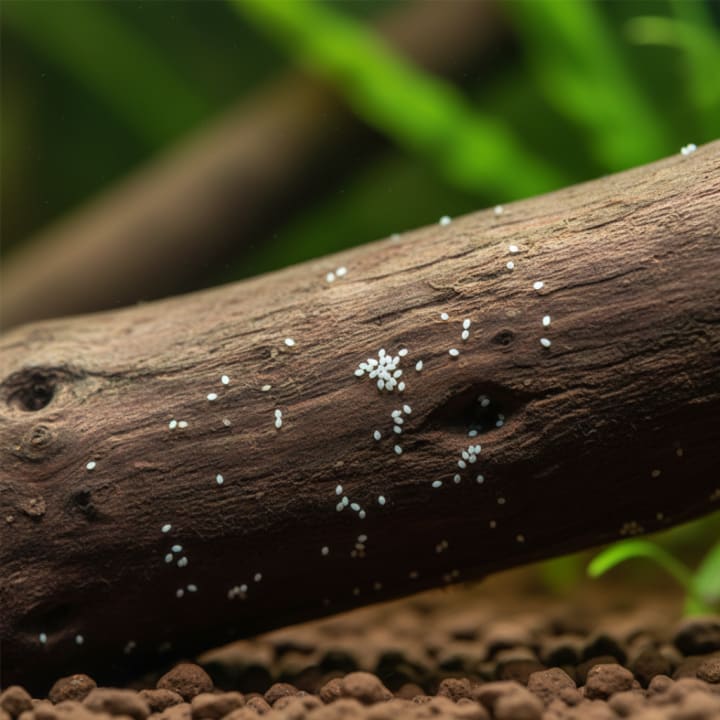
Nerite snails lay small, white, sesame seed-shaped eggs that stubbornly attach to hard surfaces. They appear as individual dots rather than clusters and are notoriously difficult to remove. The good news: nerite eggs rarely hatch in freshwater aquariums because the larvae require brackish water to survive.
Malaysian Trumpet Snails
Malaysian trumpet snails are livebearers, meaning they give birth to fully formed baby snails instead of laying eggs. If you have MTS in your tank, you won't find any eggs, you'll simply discover tiny snails burrowing in the substrate one day.
How to Inspect Safely
Use a flashlight to examine eggs closely without disturbing them. Fertile eggs typically show darker coloration or visible movement inside after a few days. Unfertile eggs turn white, develop fuzzy mold, or collapse within the first week—weak or thin shells often indicate calcium deficiency, which you can address with an 1 aquarium calcium supplement for snails to support future breeding health. Never touch mystery snail clutches with wet hands, as moisture can cause premature hatching or drowning.
Why Your Tank Has Snail Eggs (5 Common Reasons)
Understanding why snails breed in your aquarium helps you manage populations effectively before they become overwhelming.
1. Overfeeding Creates a Population Boom
Excess fish food settles to the bottom and becomes snail food. When snails have unlimited nutrition, they reproduce rapidly. A single overfeeding incident won't cause problems, but consistent overfeeding creates perfect breeding conditions.
What this means for you: Feed only what your fish consume in 2-3 minutes, and remove uneaten food promptly.
2. High Calcium Levels Encourage Breeding
Snails require calcium to build shells and reproduce successfully. Hard water with elevated calcium naturally supports snail reproduction. If you're adding crushed coral, cuttlebone, or calcium supplements for other tank inhabitants, you're also creating ideal breeding conditions for snails.
What this means for you: Test your water's GH (general hardness) and consider whether calcium supplementation is necessary for your specific setup.
3. Stable Water Parameters Signal Safety
Snails breed most actively in stable, well-maintained aquariums. Consistent temperature, pH, and low ammonia levels tell snails the environment is safe for offspring. Ironically, keeping excellent water quality can lead to snail breeding.
What this means for you: Population management requires more than just clean water you need a comprehensive strategy.
4. Hitchhiker Snails Arrived on Plants
The most common way 2 aquarium snail eggs enter tanks is through new plants. Ramshorn and pond snail eggs attach to plant leaves and are nearly invisible to the naked eye. Within weeks of adding "snail-free" plants, you might discover dozens of baby snails.
What this means for you: Quarantine and inspect all new plants before adding them to your main tank, or use a plant dip solution.
5. You Purchased a Fertilized Female
Mystery snails and other species can store sperm for months after mating. Even if you bought a single female snail, she might lay fertile eggs weeks or months later. This explains sudden egg clutches in tanks with only one visible snail.
What this means for you: Any snail purchase can potentially lead to breeding, even if you only buy one individual.
Should You Remove Snail Eggs?
The decision to remove aquarium snail eggs depends on your tank's ecosystem, your goals, and the snail species involved.
When You SHOULD Remove Eggs
Remove snail eggs if you're dealing with pest species like bladder snails or pond snails that reproduce explosively. In nano tanks (under 10 gallons), even a small snail population can overwhelm the bioload. If your tank is already overpopulated with snails, removing eggs prevents the problem from worsening. Finally, remove eggs if you simply don't want any additional snails there's nothing wrong with maintaining your preferred tank balance.
When You SHOULD Keep Eggs
Keep eggs if you're intentionally breeding snails for sale, trade, or as feeder snails for pufferfish. In shrimp tanks, a small snail population contributes to ecosystem balance by consuming excess biofilm and detritus. Some aquarists maintain stable snail populations deliberately because they help with algae control and substrate aeration.
Safe Removal Methods
For mystery snail eggs above the waterline, use a plastic scraper or old credit card to gently remove the clutch. Place it in a sealed bag and dispose of it in the trash never flush it down drains or toss it outdoors where it might contaminate local waterways.
For ramshorn eggs on glass or decorations, scrape them off with an algae scraper or credit card. You can also remove eggs from plant leaves by dipping plants in a 5% bleach solution for 30 seconds, then rinsing thoroughly in dechlorinated water.
Physical removal works best for nerite eggs, though they're extremely stubborn. A razor blade works on glass, but be careful with acrylic tanks to avoid scratching.
Never use chemical treatments. Copper-based snail killers harm shrimp, some fish species, and beneficial bacteria. Stick to manual removal methods exclusively.
How to Hatch Mystery Snail Eggs Successfully
If you want to hatch mystery snail eggs intentionally, proper incubation is essential for healthy baby snails.
Moving the Clutch Safely
Wait 24-48 hours after the eggs are laid before moving the clutch—this allows the calcified exterior to harden. Use a plastic scraper to gently detach the clutch from the glass or lid. Handle it carefully by the edges to avoid crushing the delicate eggs inside. Place the clutch in a small floating breeding box or humid container that maintains high moisture without submersion.
Optimal Incubation Conditions
Mystery snail eggs require 70-80% humidity to develop properly. Temperature should remain between 75-82°F for optimal hatching rates. The incubation period lasts 2-4 weeks depending on temperature warmer conditions accelerate hatching while cooler temps slow development.
Preventing Common Problems
The clutch must stay moist but never submerged. If eggs sit underwater, developing snails will drown. If the clutch dries out completely, embryos die inside the hardened shell. Position the clutch so air can circulate around it while maintaining humidity. Lightly mist the clutch once daily with dechlorinated water if the humidity drops too low.
Recognizing Fertile Eggs
Fertile mystery snail eggs darken from pink to brown or gray as embryos develop. You might see movement inside individual eggs as hatching approaches. Unfertile eggs turn pure white, develop fuzzy mold, or collapse entirely. If the entire clutch turns white within the first week, it wasn't fertilized.
Hatching Day
Baby mystery snails emerge gradually over 1-3 days. They're extremely small (2-3mm) and vulnerable to predation. Provide calcium sources immediately—blanched vegetables, algae wafers, or specialized snail food work well. Remove any collapsed or moldy eggs to prevent water quality issues.
Common Mistakes Beginners Make
Never place the clutch directly in water this drowns the developing embryos. Don't handle the clutch too frequently, as oils from your skin can coat the porous shell and suffocate babies. Avoid placing clutches near direct heat sources like lamps, which dry them out rapidly.
How to Prevent Unwanted Snail Eggs
Preventing snail reproduction is easier than dealing with population explosions after they occur.
Strategic Feeding Reduction
Cut back feeding by 20-30% if you notice excessive snail activity. Snails won't breed prolifically when food is scarce. Target feeding fish directly reduces leftovers that sink to the substrate where snails access them. Use feeding rings to contain floating food and remove any uneaten portions after five minutes.
Light and Algae Management
Excess algae growth provides unlimited food for herbivorous snails. Reduce lighting duration to 6-8 hours daily if algae is problematic. Keep the glass clean, and maintain fast-growing plants that outcompete algae for nutrients. When snails have less to eat, reproduction slows naturally.
Plant Quarantine Protocol
Inspect all new plants thoroughly under bright light before adding them to your main tank. Soak plants in a light alum solution (1 tablespoon per gallon) for 24 hours, or use a 5% bleach dip for 30 seconds followed by thorough rinsing. Quarantine plants in a separate container for 1-2 weeks to identify and remove any hitchhiker eggs or baby snails.
Adding Natural Predators
Certain fish species eat snail eggs, but choose carefully based on tank compatibility. Assassin snails consume other snail species but won't overpopulate because they breed slowly. Some loaches like yoyo or clown loaches eat snails and eggs, but they require larger tanks (55+ gallons) and specific water parameters. Never add predators without researching compatibility with your existing livestock.
Why Prevention Beats Removal
Controlling snail populations through prevention requires less work than manually removing eggs every week. Once a breeding population establishes itself, you'll spend hours scraping eggs and catching baby snails. Proactive management saves time and maintains your desired tank balance effortlessly.
About the Creator
Arjun
Aquarium hobbyist sharing simple, real-world fixes for snail, shrimp, and plant problems. Clear guides, no fluff just practical tips to keep your tank healthy and thriving.
Amazon sailfin catfish found in Sindh waters, experts warn of invasive spread
Foreign aquarium species reaches Karachi Fish Harbour, threatening aquatic biodiversity KARACHI: An unusual fish brought from a dhund, or shallow pond, near Sukkur to the Karachi Fish Harbour on January 4, 2026, has been identified as an Amazon sailfin catfish, officials and experts said.
By Dena Falken Esq5 days ago in Earth
Filipino Rescuers Detect “Signs of Life” in Garbage Avalanche That Killed 4 and Left Dozens Missing
In the early hours following a devastating garbage avalanche in the Philippines, rescuers reported detecting “signs of life” beneath tons of waste, igniting a fragile sense of hope amid widespread grief and uncertainty. The deadly incident, which claimed at least four lives and left dozens missing, has drawn national attention to the dangers faced by communities living near massive waste disposal sites.
By Aqib Hussaina day ago in Earth




Comments
There are no comments for this story
Be the first to respond and start the conversation.