
Animals That Don’t Sleep – Yes, They Exist!
While we struggle to wake up every morning, these creatures never truly sleep.

When you think of sleep, you probably imagine lying down, closing your eyes, and drifting into dreams. For humans, sleep is essential.
But what if I told you there are animals out there that don’t sleep at all — or at least not the way we understand it?
In the wild, sleep can be dangerous. If you’re too relaxed, you might get eaten. So, some animals have developed mind-blowing ways to stay alert — or skip sleep entirely.
Let’s dive into the strange world of creatures that have hacked nature’s bedtime.

1. Jellyfish – No Brain, No Sleep?
The Cassiopea, also known as the upside-down jellyfish, has no brain or central nervous system. So how does it sleep?
A study in 2017 revealed that this jellyfish enters a state of reduced activity at night.
It moves slower, reacts less, and pulses more gently — like a lazy heartbeat. But scientists debate whether this counts as “sleep,” since jellyfish don’t have brains.
So technically… do they ever sleep?
Maybe not. Maybe they just chill forever.

2. Bullfrogs – Always Alert
You’d think frogs enjoy a nap under a lily pad.
Not bullfrogs. Studies have shown that they never enter deep sleep.
Even when resting, bullfrogs remain responsive to stimuli — like a light tap or a noise. That means they’re always aware of their surroundings.
This weird trait might be why bullfrogs are so hard to catch — they’re basically insomniacs with muscles.

3. Dolphins – One Eye Open
Dolphins are social, playful, and extremely intelligent — but they never fully sleep.
Why? Because if they do, they’d drown.
So, dolphins sleep with one half of their brain at a time.
Literally. One hemisphere rests while the other stays alert, allowing them to breathe consciously and keep swimming.
Sometimes, they’ll even swim in slow circles while “half asleep” — the ultimate multitaskers of the ocean.

4. Elephants – The Power Nappers
Elephants are the lightest sleepers in the animal kingdom.
In the wild, they only sleep about 2 hours per day, usually while standing.
And sometimes, they go 2 to 3 days without sleep at all — especially when migrating or facing threats.
Scientists believe elephants prioritize survival and movement over rest.
They don’t waste time dreaming — they’ve got places to go and herds to protect.

5. Sharks – Sleeping While Swimming
Not all sharks sleep the same way.
Some must keep swimming to push oxygen over their gills — or they’ll die.
So how do they rest?
Certain sharks, like the great white, enter a resting state while still moving. Their brains slow down, but their bodies keep going — like walking while half-asleep.
Others, like nurse sharks, can actually lie on the ocean floor and “nap.”
But the ones that can’t stop swimming? They’ve mastered sleep on the move.

6. Ants – Micro-Nappers
Ants don’t sleep like us — but they do take micro-naps.
A study found that worker ants nap about 250 times a day, for just over a minute each. That’s around 4 hours of sleep in total — broken into tiny pauses between tasks.
Meanwhile, the queen ant sleeps longer, often in 6-minute bursts.
No wonder she lives longer than everyone else!
Final Thought
Sleep is something we take for granted.
We need it. We chase it. We crave it.
But in the animal kingdom, sleep is a luxury, not a right.
For many species, staying half-awake means staying alive. Some gave up deep sleep entirely just to survive another night.
What’s even more fascinating is that nature doesn’t follow one rulebook.
Where some animals sleep like humans, others have developed wildly unique ways to rest — or avoid resting altogether.
It makes you wonder — is sleep truly essential for life?
Or is it just a feature our species evolved because we could afford to shut our eyes?
Bullfrogs prove you don’t need deep rest to function.
Dolphins show that you can sleep and still stay alert.
And jellyfish? Well, they float through life without a brain — and still manage just fine.
In a way, these creatures challenge everything we thought we knew about biology.
They force scientists to rethink what it really means to “sleep.” Is it just stillness? Is it brain activity? Or is it a state of survival?
One thing’s for sure — nature doesn’t nap the same way twice.
So the next time you’re staring at the ceiling at 3 a.m., remember this:
You’re not alone. Somewhere out there, an elephant’s pulling an all-nighter…
and a shark is dreaming while swimming in circles.
Kind of makes your insomnia feel a little less lonely, doesn’t it?
About the Creator
UK must double down on renewables as wars drive up energy costs, experts say
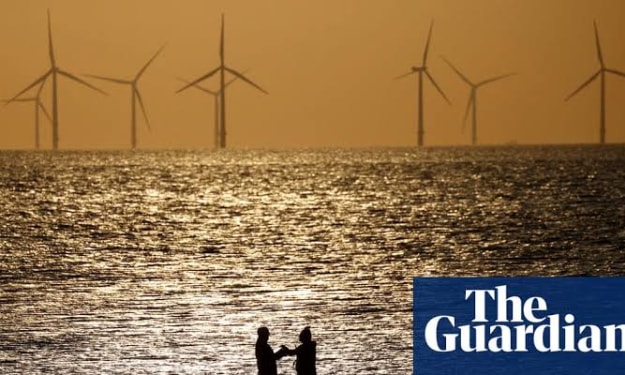
Britain must accelerate its transition toward renewable energy sources as geopolitical conflicts continue to drive global energy prices higher, according to leading energy analysts and climate policy experts. The warning comes as wars and political tensions across key energy-producing regions expose the vulnerability of countries still heavily reliant on imported fossil fuels. In recent years, the United Kingdom has made significant progress expanding renewable energy capacity, particularly in offshore wind and solar power. However, experts argue that the pace of the transition remains insufficient to shield the country from the volatility of international energy markets. Conflicts in the Middle East and Eastern Europe have demonstrated how quickly supply disruptions can translate into rising costs for households and businesses. Energy economists say the lesson from recent global crises is clear: the more dependent a country is on imported oil and gas, the more exposed it becomes to geopolitical shocks. Britain imports a substantial portion of its natural gas and refined fuel products, meaning instability in global supply chains can quickly affect domestic energy bills. During periods of international conflict, oil prices often spike due to fears that shipping routes or production facilities could be disrupted. Even rumors of attacks near key energy chokepoints — such as major pipelines or shipping lanes — can cause markets to react sharply. These fluctuations, analysts say, ultimately filter down to consumers through higher electricity and heating costs. Renewable energy sources offer a potential solution to this problem because they rely on domestic resources such as wind and sunlight rather than imported fuels. Once renewable infrastructure is built, operating costs remain relatively stable because there is no need to purchase fuel on global markets. The United Kingdom already operates some of the world’s largest offshore wind farms, and renewable energy now accounts for a significant share of the country’s electricity generation. Government data indicates that wind power alone has become one of the largest sources of electricity in Britain, particularly during periods of strong weather conditions. Despite this progress, energy specialists argue that further investment is essential. Expanding renewable generation capacity requires not only building more wind and solar farms but also upgrading the national electricity grid. A modernized grid would allow energy produced in remote offshore locations to be transmitted efficiently to cities and industrial centers. Energy storage is another critical piece of the puzzle. Because renewable sources like wind and solar are intermittent, large-scale battery systems or alternative storage technologies are needed to ensure a stable supply of electricity during periods when generation drops. Developing these systems will require both technological innovation and sustained financial investment. Some experts also emphasize the importance of diversifying the country’s renewable portfolio. While offshore wind remains a cornerstone of Britain’s energy strategy, solar power, tidal energy, and green hydrogen could also play important roles in the future energy mix. The government has already announced plans to increase renewable capacity dramatically over the next decade. Officials argue that reducing reliance on fossil fuels will not only strengthen national energy security but also help the country meet its climate targets. However, critics say policy uncertainty and slow planning approvals have sometimes delayed renewable projects. Industry leaders have urged authorities to streamline regulatory processes and provide clearer long-term incentives for investors. For many analysts, the link between energy security and climate policy has never been more obvious. Wars and geopolitical tensions have shown that fossil fuel dependence can create economic vulnerability, while domestically produced renewable energy offers greater stability. “The global energy system is changing,” said one energy policy researcher. “Countries that invest early in renewable infrastructure will be better protected from geopolitical shocks and price spikes.” As international conflicts continue to reshape global energy markets, the debate over Britain’s energy future is likely to intensify. For supporters of renewable power, the current moment represents both a warning and an opportunity — a chance to accelerate the transition toward a more secure and sustainable energy system.
By Fiaz Ahmed 4 days ago in Earth
Early March 2026: 4 Goals Accomplished
It's early March and I've now accomplished my 4th writing goal for the year of 2026. Before diving into the behind-the-scenes of it... why not tell you up front what that accomplishment was? I was published in a 2nd publication for this year. Published in Helix Literary Magazine out of Central Connecticut State University. You can read it for free right now!
By Stephen Kramer Avitabile4 days ago in Writers



Comments
There are no comments for this story
Be the first to respond and start the conversation.