

Uganda is a landlocked country and home to the largest lake in Africa and the largest tropical lake on Earth, Lake Victoria.
Official National Bird
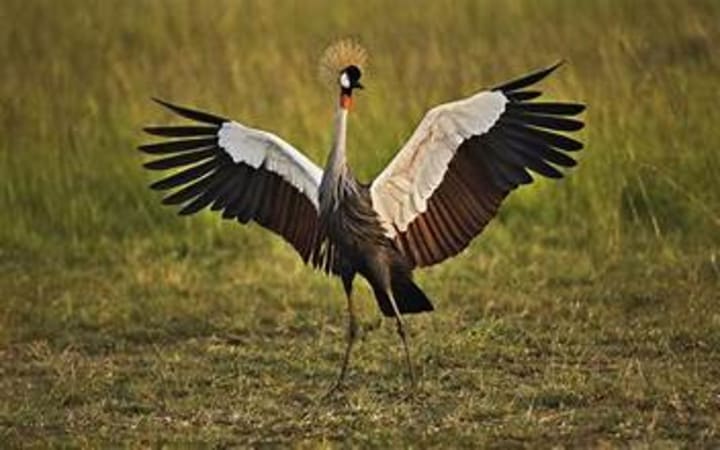
Crested crane
The bird appears on the country’s flag and on the coat of arms.
Native Animals
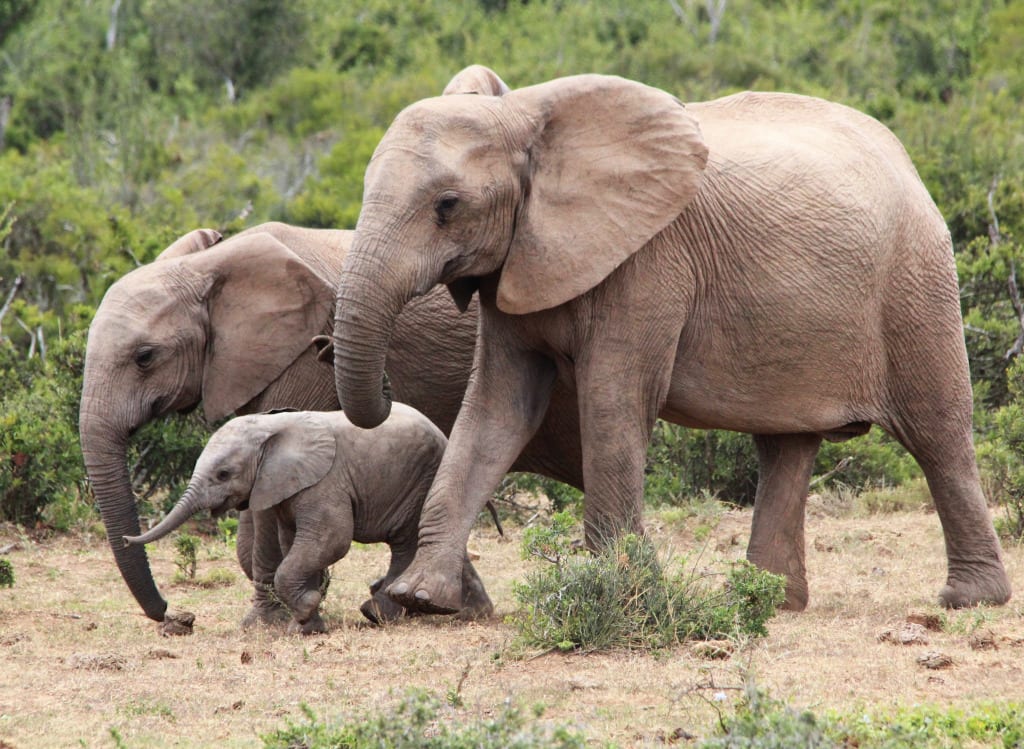
African bush elephants count as part of the “Big Five.” These are the most dangerous animals to hunt on foot. They are the largest terrestrial animals on Earth. They are also the most iconic animals from the African continent. They inhabit seasonally flooded grasslands, wetlands, woodlands, temperate and subtropical forests, and agricultural land. African bush elephants are herbivores, eating grasses, barks, leaves, roots, and fruit.
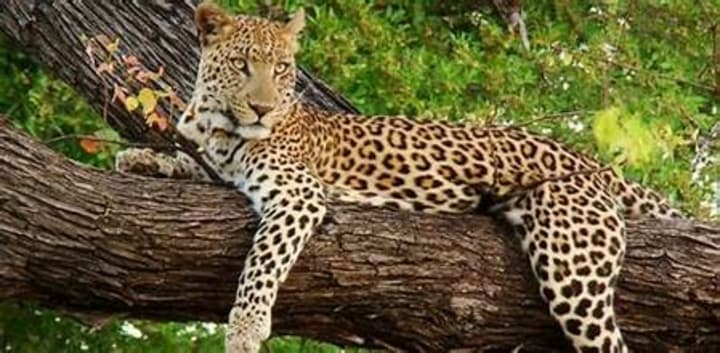
African leopards are the most widespread and common subspecies of the leopard, being found across sub-Saharan Africa. They inhabit a wide range of habitats within Africa, from mountainous forests to grasslands and savannas, excluding only extremely sandy deserts. Leopards are carnivores and have an exceptional ability to adapt to changes in prey availability. They have a very broad diet ranging from dung beetles to adult elands. In sub-Saharan Africa, at least 92 prey species have been documented in leopard scat, including rodents, birds, small and large antelopes, hyraxes, hares, and arthropods.
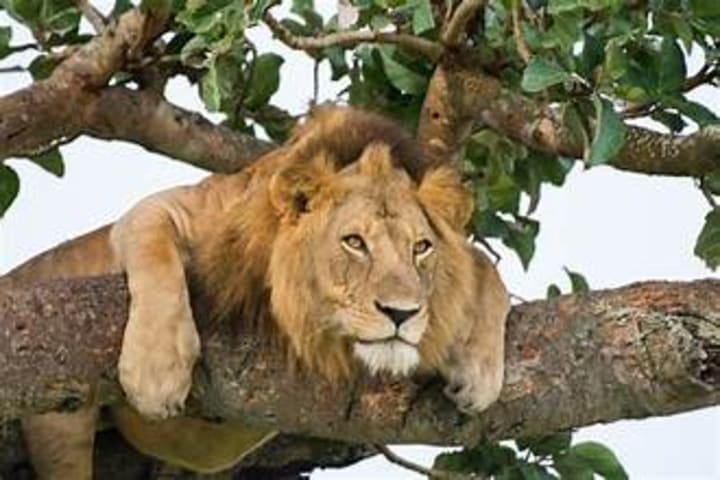
African lions are also part of the Big Five. They are social big cats living in family groups called prides. Lionesses do the hunting, targeting big game such as giraffes or buffalo. The male lion protects the pride from enemies.
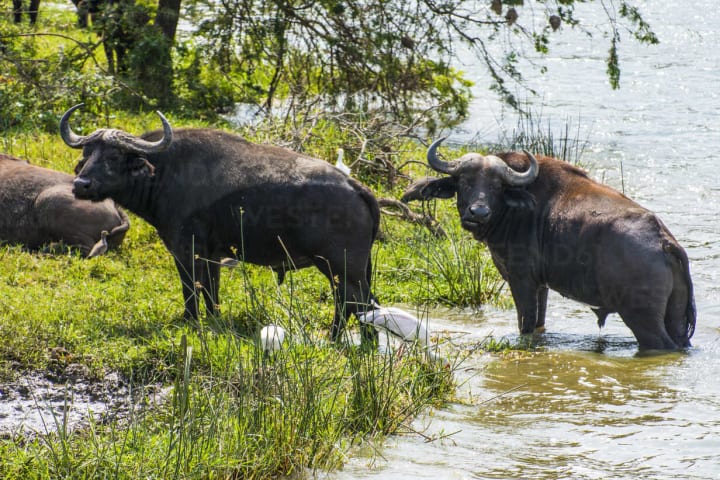
Cape buffaloes are also members of the Big Five. They are a subspecies of the African buffalo, the only bovine in Africa. Both the females and males have horns. They are aggressive animals living in herds that can have from 100 to 1000 members. Cape buffalos are strictly herbivores and consume a wide variety of grasses, leaves, sedges, and other plant matter.
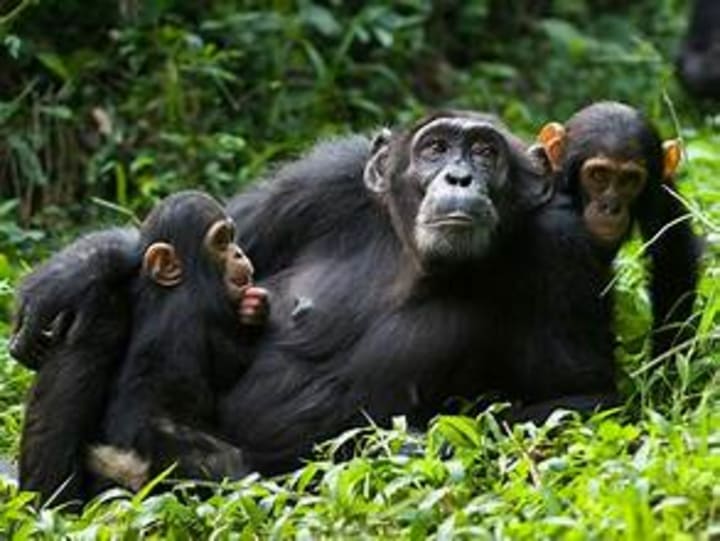
Eastern chimpanzees are native to central and eastern Africa. They spend time both in trees and on the ground but usually sleep in trees, where they build a nest for the night. Chimpanzees live in communities of typically 20 to over 150 members but usually travel in small parties of just a few individuals. They are omnivores, eating seeds, fruits, honey, leaves, bark, fungi, and insects such as termites and ants, and small prey such as birds and monkeys. They often use a twig as a tool to reach termites or ants in nests and have been seen using sticks to hunt other small mammals.
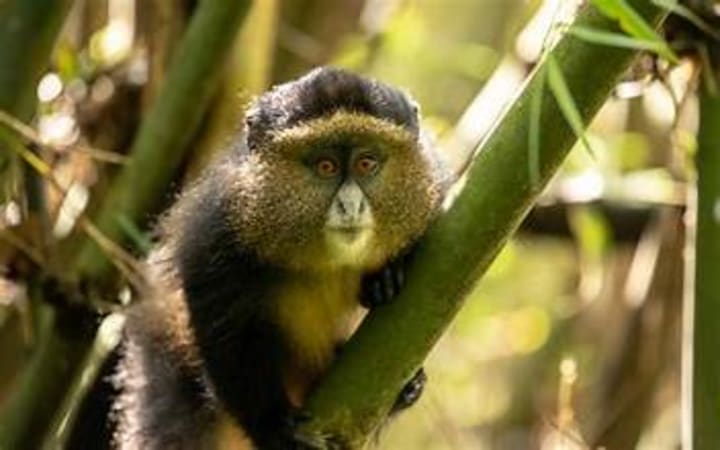
Golden monkeys have golden fur on their bodies, tails, and cheeks, but their limbs are black. Uganda is home to a dozen primate species. Golden monkeys are primarily herbivores, which means that they primarily eat plants. Their diet consists of a variety of fruits, leaves, seeds, and flowers.
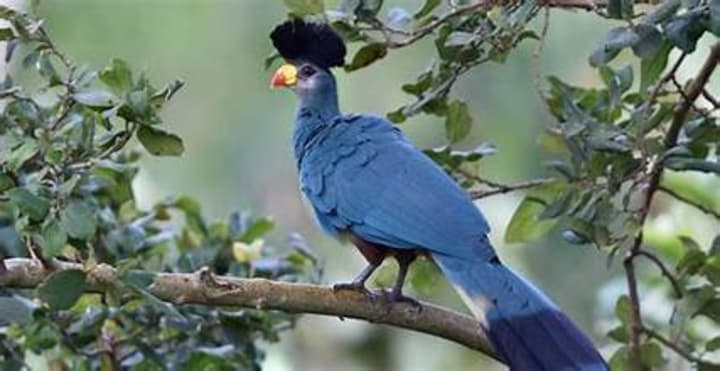
Great blue turacos are very endangered birds. They are teal-colored with a black crest and red and yellow beaks. These birds primarily eat fruits, leaves, and flowers. They are known for their preference for soft fruits, particularly those from trees like figs and berries. In addition to fruits, they may consume seeds and occasionally insects, but their diet is predominantly plant-based.
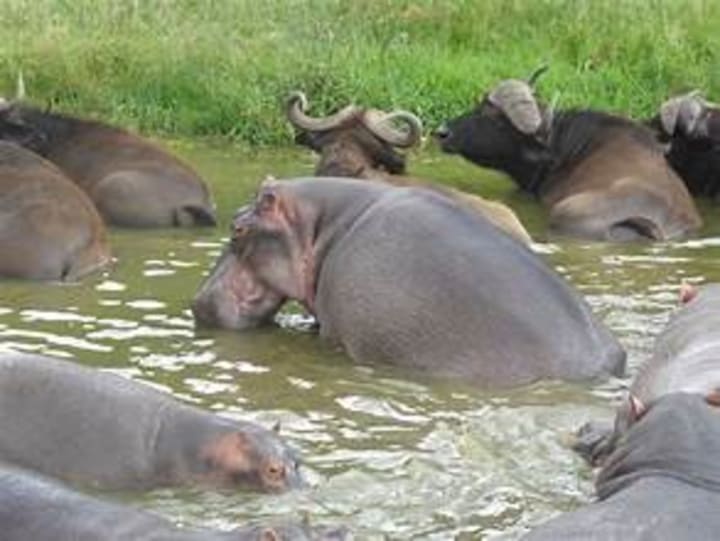
The hippopotamus, also known as the common hippopotamus or the river hippopotamus, is a large species of semi-aquatic ungulate native to much of sub-Saharan Africa. They are recognizable for their barrel-shaped torsos, wide-opening mouths with large canine tusks, nearly hairless bodies, pillar-like legs, and large size. The eyes, ears, and nostrils of hippos are placed high on the top of their skulls. As semiaquatic creatures, they prefer living in shallow water bodies such as lakes, rivers, or swamps. These hippos are highly social, nocturnal, and sedentary animals. They usually form groups of 20-100 individuals. Common hippos are herbivores and feed almost entirely on grass, with only minimal consumption of aquatic plants.
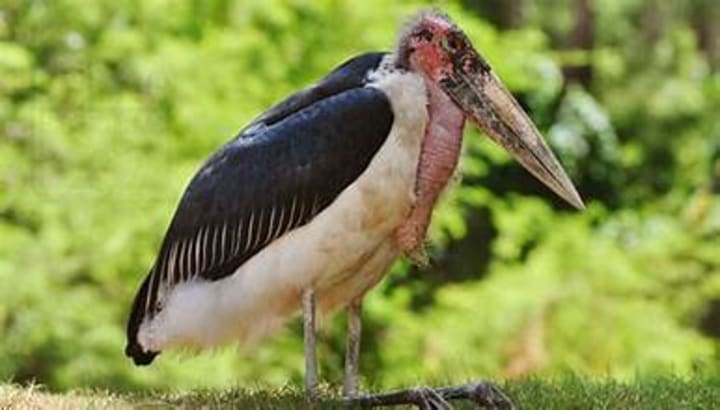
Marabou storks are wading birds and often described as the ugliest birds in Africa. They have naked pink necks with a pair of air sacs, one on the back at the base of the neck and a bigger one hanging from the front. They are scavengers.
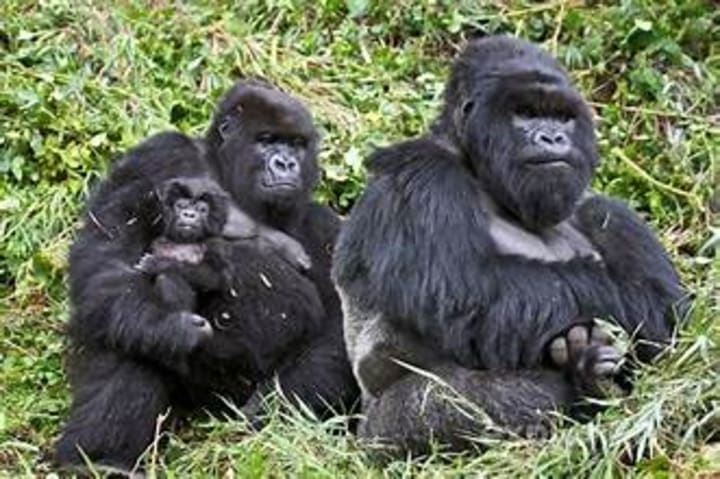
Mountain gorillas inhabit the forests of Uganda. They live in family groups. These gorillas have silvery hair that forms a large saddle-like mark on their backs. They are very intelligent and known to use tools when needed. Mountain gorillas primarily eat a herbivorous diet consisting of leaves, stems, and fruits.
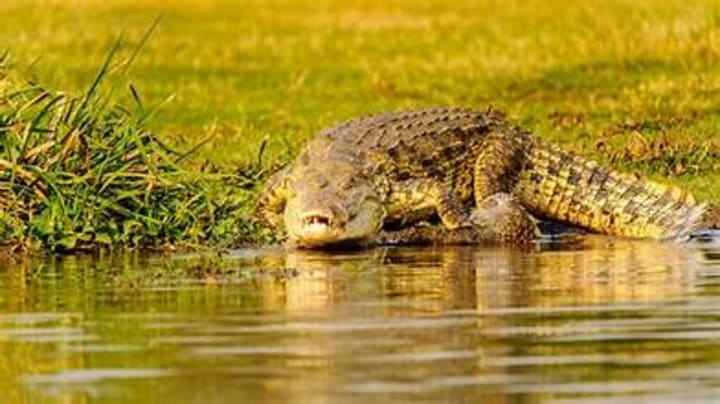
Nile crocodiles are one of the three crocodile species in Africa. They are the second-largest crocodiles on Earth. They stay near or in water, inhabiting swamps, estuaries, rivers, and lakes. They feed on both fish and large land animals.
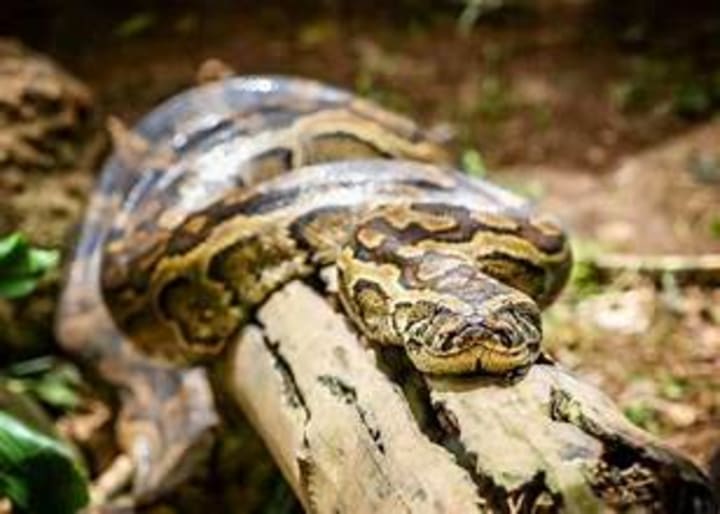
Rock pythons are not venomous and kill by constriction. They usually feed on large rodents or small antelopes. They can be seen at the bat cave in Queen Elizabeth National Park’s Maramagambo Forest.
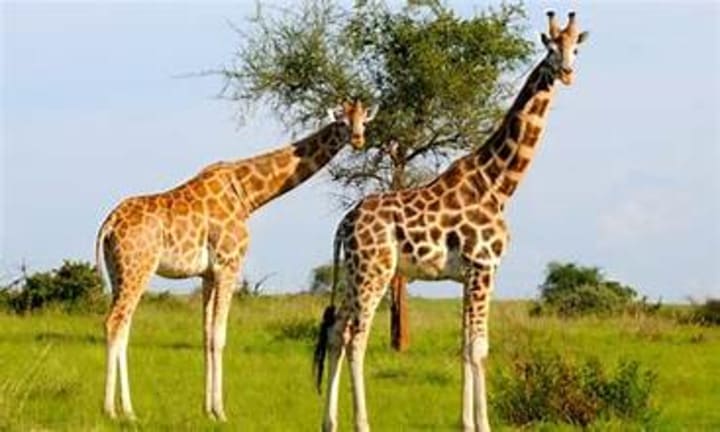
Rothschild’s giraffes are also called Uganda giraffes and are the one type of giraffe found in the country. They are the tallest giraffes and can reach a height of 19 feet. They are found in the savannahs, grasslands, open woodlands, wooded plains, shrubs, and thickets. These giraffes are herbivores and primarily feed on thorny acacia trees and other similar plants and trees.
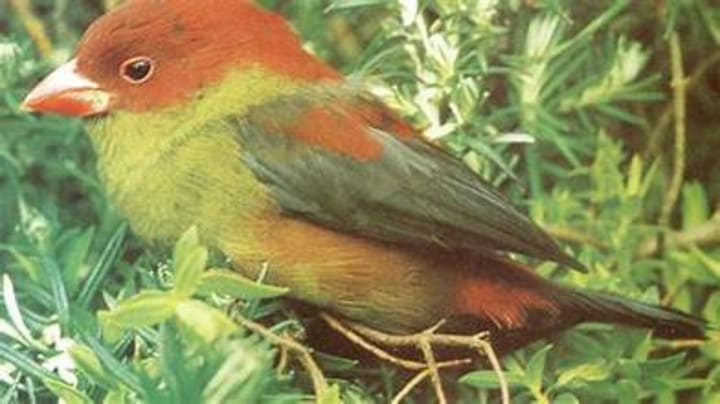
The Shelley’s crimsonwing is a member of the finch family. They are among the rarest birds in the world. These birds can only be found in the Albertine Rift that borders Uganda, the Democratic Republic of the Congo, and Rwanda.
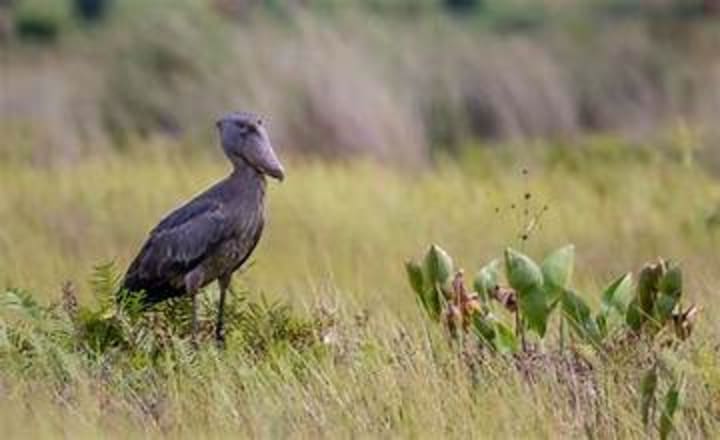
Shoebill storks are the most elusive birds in Uganda. They stand about five feet tall, with massive bills. These birds inhabit swamps and feed on lungfish but will also enjoy frogs, other fish, snakes, and baby crocodiles.
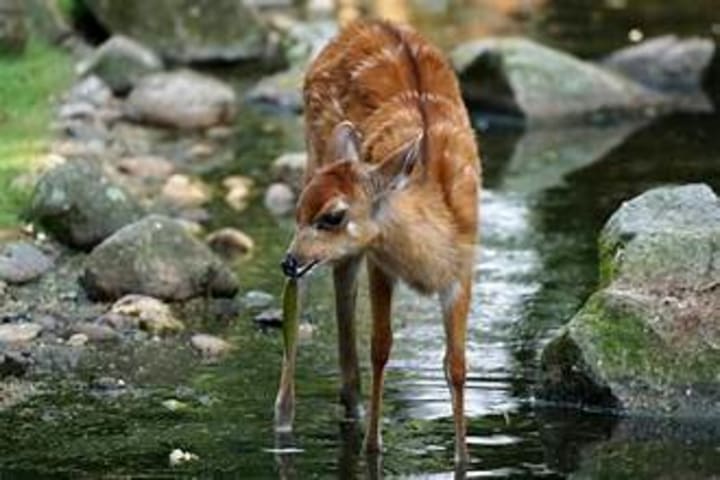
Sitatungas are semi-aquatic antelope. They inhabit swamps and have splayed feet that help them swim. They are active mainly during the early hours after dawn, the last one or two hours before dusk, and at night. They spend most of this time feeding. Sitatungas are herbivorous animals. They feed mainly on new foliage, fresh and aquatic grasses, sedges, flowers, buds, and seeds.
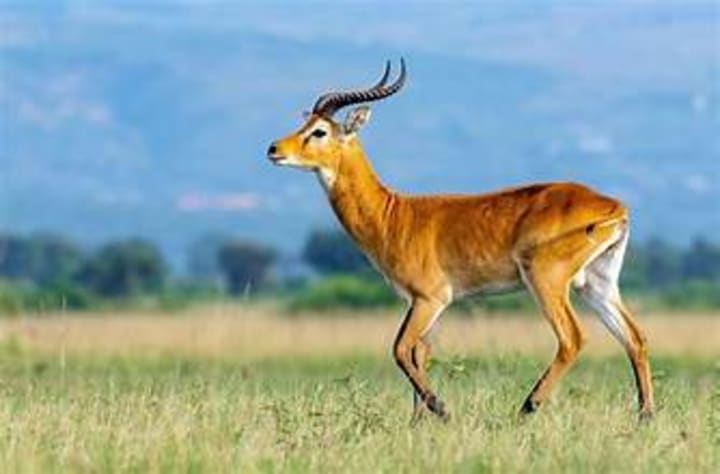
Uganda kobs are medium-sized antelope that are depicted on the country’s coat of arms. They primarily eat grasses and herbs. They are grazers and prefer open savanna and grassland habitats.
About the Creator
Rasma Raisters
My passions are writing and creating poetry. I write for several sites online and have four themed blogs on Wordpress. Please follow me on Twitter.
Keep reading
More stories from Rasma Raisters and writers in Earth and other communities.
Incredible Arctic Ocean Animals
In the Water The sea angel is a pelagic sea slug that can be found on the surface of the water to a depth that is greater than 500 meters. These snails flap their delicate “wings” to get around in the water at a speed of up to 100 mm/s. Sea angels are tiny, and adults feed on their relatives, the sea butterflies. The sea angel then grasps the prey with its chitinous hooks and extracts the body of the sea butterfly out of its shell and swallows it whole.
By Rasma Raisters3 months ago in Earth
Greenland: New Shipping Routes, Hidden Minerals – and a Frontline Between the US and Russia?
Once seen as a remote and largely isolated Arctic territory, Greenland is rapidly emerging as a focal point of global geopolitics. Climate change, melting ice, and technological advances are transforming the island into a strategic hub defined by new shipping routes, vast mineral resources, and growing rivalry between major powers, particularly the United States and Russia. As the Arctic opens up, Greenland’s geographic position and untapped potential are pushing it to the center of international attention, raising questions about security, sovereignty, and sustainable development. Melting Ice and the Opening of New Shipping Routes One of the most visible impacts of climate change in the Arctic is the reduction of sea ice, which is making previously inaccessible waters navigable for longer periods each year. New Arctic shipping routes, including passages near Greenland, promise shorter travel times between Europe, Asia, and North America. Compared to traditional routes like the Suez Canal, Arctic pathways can reduce shipping distances by thousands of kilometers, cutting fuel costs and emissions. For global trade, this could be transformative. Greenland’s coastal waters are increasingly important as potential transit corridors and support hubs for these routes. However, the expansion of Arctic shipping also raises concerns about environmental risks, maritime safety, and the lack of robust emergency infrastructure in the region. Hidden Mineral Wealth Beneath the Ice Beyond shipping, Greenland holds significant reserves of critical minerals, many of which are essential for modern technologies and the global energy transition. These include rare earth elements, lithium, graphite, uranium, and other strategic resources used in electric vehicles, wind turbines, batteries, and defense systems. As demand for these materials grows, Greenland is being viewed as a potential alternative to existing supply chains dominated by a small number of countries. This has increased interest from Western governments seeking to diversify mineral sourcing and reduce strategic dependencies. However, mining in Greenland is controversial. Local communities and policymakers must balance economic opportunities with environmental protection and cultural preservation. Greenland’s harsh climate and fragile ecosystems make resource extraction both technically challenging and politically sensitive. The United States’ Strategic Interest in Greenland The United States has long considered Greenland strategically vital, largely due to its location between North America and Europe. The US already maintains a military presence at Pituffik Space Base (formerly Thule Air Base), which plays a key role in missile warning systems and space surveillance. In recent years, Washington has renewed its focus on Greenland, emphasizing Arctic security, infrastructure investment, and cooperation with Denmark, which oversees Greenland’s foreign and defense policy. US interest is driven by several factors: protecting transatlantic security routes, countering rival powers in the Arctic, and ensuring access to critical minerals. Greenland is increasingly viewed as a frontline in maintaining Western influence in the High North. Russia’s Arctic Ambitions Russia, meanwhile, sees the Arctic as central to its economic and military strategy. It has invested heavily in Arctic military bases, icebreaker fleets, and energy projects, particularly along its northern coastline. Although Greenland is geographically distant from Russia’s main Arctic territories, Moscow closely monitors developments there. The island’s proximity to key Arctic sea lanes and North Atlantic routes makes it strategically relevant in any broader confrontation between Russia and NATO. As tensions between Russia and the West remain high, Greenland’s location places it near the intersection of competing security interests, increasing its geopolitical significance. Greenland Between Global Powers The growing attention from major powers puts Greenland in a delicate position. While the island seeks greater economic independence and development, it must navigate complex relationships with Denmark, the United States, and other international actors. Greenland’s government has emphasized the importance of maintaining control over its resources and ensuring that development benefits local populations. At the same time, geopolitical competition risks turning Greenland into a strategic chessboard rather than a partner in decision-making. This balancing act is becoming more difficult as Arctic competition intensifies. Environmental and Social Challenges Greenland is on the front lines of climate change. Melting ice sheets contribute to global sea-level rise, while local communities face changes to traditional livelihoods such as fishing and hunting. The expansion of shipping and mining could bring jobs and infrastructure, but it also threatens fragile ecosystems and raises concerns about pollution, habitat disruption, and long-term sustainability. Any future development in Greenland will require careful regulation, international cooperation, and meaningful engagement
By Aarif Lashari4 days ago in Earth
Top Australian Writers’ Festival Cancelled After Palestinian Author Barred
One of Australia’s most respected literary festivals has been cancelled following a fierce backlash over the decision to bar a Palestinian author from participating. What began as a programming dispute quickly escalated into a national debate about free speech, cultural inclusion, and political pressure in the arts. The cancellation has sent shockwaves through Australia’s literary community, raising urgent questions about whose voices are allowed on public platforms and at what cost.
By Aarif Lashari6 days ago in Earth
The Devil's Cut
“Comrade, finally you’re awake.” The voice was smooth, sensual. A flickering incandescent bar was all that lit the white, sterile room. All Vladimir remembered was everything going black. He tried to move his arms and found them strapped to the gurney.
By Matthew J. Fromm5 days ago in Fiction




Comments
There are no comments for this story
Be the first to respond and start the conversation.