
Amazing Animals Madagascar
Wildlife of East Africa


The island of Madagascar has one of the most unique ecosystems on Earth. It is located off the east coast of Africa and is the fourth-largest island in the world. The island is home to rainforests, dry forests, deserts, and coastal reefs.

Madagascar is home to six of the world’s nine baobab subspecies and the Madagascan periwinkle, which is also used to treat cancer.

It is also home to the traveler’s palm, recognizable by its beautiful fan-like foliage, its ability to hold rainwater, and its habit of growing on an east-west axis.

The two national animals of Madagascar are the zebu and the ring-tailed lemur.
Most Dangerous Animals

Black widow spiders have venom that causes muscle pain, cramping, and at times seizures and might bring death.

Golden frogs are a genus of around 16 brightly colored poisonous frog species. They are dangerous if anyone tries to eat one, producing a toxin causing nausea and sickness.

Nile crocodiles are found all over sub-Saharan Africa. They are also the largest animals on Madagascar.

Scorpions are found in southwest Madagascar and are a genus of large scorpions with painful stings.
Rarest Animal

Aye-ayes are known for their trademark stares and their habit of using their long digits to get out nourishing grubs from out of wood. They are arboreal omnivores located on the island’s east coast. They search for food by night and spend the daylight hours in spherical nests woven from twigs and leaves placed in the fork of tree branches. Aye-ayes also enjoy eating coconut and other fruit as well as honey.
However, this primate with a rather disconcerting scarlet-eyed stare and a wide triangular face and an untidy dark coat has a few strikes against it, survival-wise. One is the belief in its being a harbinger of evil in certain customs; another is deforestation. It has adjusted to the latter challenge by making itself at home in cultivated areas. The former challenge has become a thing of the past since they are legally protected.
Endangered Animals

Ring-tailed lemurs are the most well-known species native to Madagascar. They spend much of their time navigating trees, as their tails provide balance and communication. Only about 2000 remain in the wild.

Indris are native to the island’s eastern rainforests. These are among the largest lemurs in the world. They have short, rudimentary tails, big fuzzy ears, and black and white fur. The indris congregate together in complex societies. Their group vocalizations travel for over a mile through the air and sound like air horns.

As mentioned before, aye-ayes are unusual lemurs with unique arboreal hunting strategies to search for food at night. They patiently tap on the barks of trees, and once finding a hollow space, they gnaw a hole in the wood using their forward-facing incisors and then pull out the grubs with their long, spindly middle fingers.

Silky sifakas are referred to as angels of the forest due to their white, silky fur. These lemurs are among the rarest mammals on Earth, with less than a thousand remaining in the wild.

Ploughshare tortoises are identifiable by their unique growth rings projecting from their shells. Only about a thousand remain in the wild.

Humblot’s herons were named after the French naturalist Leon Humblot. These are a species of long-legged waterbirds that are found along the north and west coasts of Madagascar. Their numbers have declined due to loss of wetlands.
Fish

Madagascar is known for its orange-backed angel fish in hues of orange and deep blue.

The white-spotted bamboo shark. This is a slender carpet shark with alternating bands of black and white spots and gray.

The melon butterfly fish is covered with blue bands that fade to yellow alternating with pale blue as well as slashes of black, yellow, and orange.
About the Creator
Rasma Raisters
My passions are writing and creating poetry. I write for several sites online and have four themed blogs on Wordpress. Please follow me on Twitter.
Keep reading
More stories from Rasma Raisters and writers in Earth and other communities.
Living By the Lakeside
Two species of alligators live in lakes. The American alligators that are native to the Southeastern US and the Chinese alligators living in China. American alligators are mostly found in swamps and marshes. These animals prey upon bullfrogs, crabs, turtles, and large fish. Chinese alligators live in fresh water at the base of mountains and hide in tall grasses and shrubs. They feed on river snails but can also eat insects, aquatic birds, and clams.
By Rasma Raisters4 months ago in Earth
Trump Calls UK’s Chagos Islands Sovereignty Decision an Act of ‘Great Stupidity’
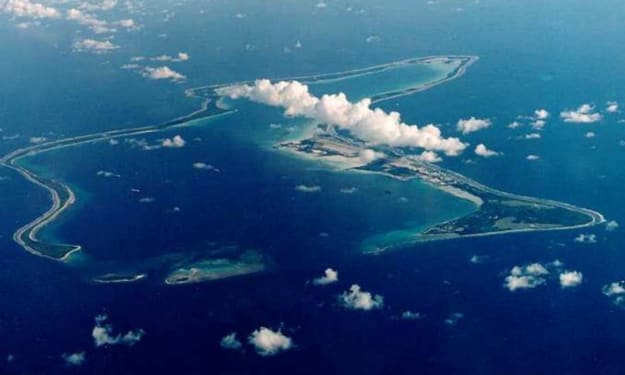
Former U.S. President Donald Trump has criticized the United Kingdom’s decision to hand over sovereignty of the Chagos Islands to Mauritius, calling it an act of “great stupidity.” This high-profile statement has reignited debates over colonial legacies, geopolitical alliances, and the rights of local communities. While the issue may seem distant to many, it carries significant implications for global politics, regional stability, and the affected communities. The Chagos Islands, a strategically located archipelago in the Indian Ocean, have long been a point of contention between the UK, Mauritius, and the United States, which maintains a military base on Diego Garcia, one of the largest islands. The latest political statements have highlighted not only international disagreements but also how decisions by governments can affect local populations and global perceptions. Why the UK Is Handing Over the Chagos Islands The UK’s decision to transfer sovereignty to Mauritius comes after years of legal challenges and international pressure. The United Nations has repeatedly called for the return of the islands to Mauritius, stating that the previous detachment in 1965 was illegal. The move aims to: Resolve a longstanding international dispute Acknowledge the rights of the Chagossian people, many of whom were forcibly removed from the islands decades ago Comply with international law and UN recommendations For many in Mauritius and the Chagossian diaspora, the transfer represents justice and recognition of their historical grievances. Trump’s Criticism and Its Context Trump described the UK’s decision as “an act of great stupidity,” emphasizing strategic and military concerns. The United States relies on Diego Garcia for one of its key military bases, crucial for operations in the Indian Ocean region and beyond. From Trump’s perspective, the sovereignty transfer could: Complicate U.S. military logistics Create uncertainty over strategic agreements Signal weakness in alliances with close partners like the UK However, critics argue that such statements overlook the rights of the displaced Chagossian communities and the importance of resolving colonial-era injustices. Impact on Local Communities The Chagos Islands have a unique human story. In the 1960s and 1970s, the indigenous Chagossian population was forcibly removed to make way for a U.S. military base. Families were relocated to Mauritius, the Seychelles, and other areas, often under harsh conditions. The sovereignty transfer could: Support efforts for Chagossians to return home Enable compensation and recognition of historical wrongs Promote cultural and community restoration Community advocates argue that international legal decisions should prioritize the welfare and rights of displaced populations, not just geopolitical or strategic interests. Geopolitical Implications The dispute is more than a bilateral issue between the UK and Mauritius. It has global political ramifications, including: U.S.-UK relations: While the UK maintains a strategic alliance with the U.S., the sovereignty decision may raise tensions over military operations. Indian Ocean stability: The islands are located in a key maritime region, affecting naval operations, trade routes, and regional security. International law precedent: Recognizing Mauritius’ claim reinforces UN rulings on decolonization and territorial sovereignty. For communities that follow global politics, these dynamics highlight how high-level political decisions impact both strategy and society. Media and Public Reaction Trump’s comments have dominated media coverage, sparking debate in international communities and online forums. Public opinion is divided: Supporters of Trump’s viewpoint cite national security concerns and strategic importance. Critics highlight colonial injustices and the need to respect the rights of indigenous populations. Social media discussions reveal growing interest in the balance between military strategy and human rights, showing that global decisions resonate with everyday communities. Legal and Ethical Considerations The transfer of the Chagos Islands raises several legal and ethical issues: Sovereignty and Self-Determination: The Chagossian people’s right to return and their cultural identity must be respected. Colonial History: Addressing past injustices is an ethical obligation for governments involved in colonial-era displacement. Military Agreements: Ensuring strategic stability while honoring international law is a complex balancing act. Legal scholars note that this case could set a precedent for other disputed territories, influencing how communities worldwide perceive justice, sovereignty, and rights. Why This Matters to Communities Even though the Chagos Islands are remote, the controversy touches on community awareness and engagement: Diaspora Communities: Chagossians and Mauritians see this as a historic moment affecting their families and heritage. Global Citizens: People interested in human rights and international law follow such cases to understand justice and accountability. Policy Advocates: NGOs and advocacy groups use this dispute to promote awareness of displacement, sovereignty, and ethical governance. In short, political decisions at the top level ripple down to real people, influencing lives, cultural identity, and community cohesion. Looking Ahead The future of the Chagos Islands will depend on: Implementation of sovereignty transfer: Ensuring legal and diplomatic arrangements are respected. U.S.-UK negotiations: Maintaining strategic interests while addressing human rights. Chagossian return programs: Supporting the restoration of communities affected by displacement. The controversy is a reminder that politics and community welfare are intertwined, and decisions made in boardrooms or government offices can have lasting effects on populations far from the center of power. The Takeaway Trump’s statement about the Chagos Islands sovereignty highlights the tension between geopolitical strategy and community justice. While international relations and military interests are important, the voices of the displaced Chagossian community cannot be ignored. For communities following global politics, the case demonstrates how: International decisions affect local populations Human rights and sovereignty are key considerations Awareness and advocacy by communities can influence global policy As debates continue, the story of the Chagos Islands serves as a reminder that political and strategic choices have human consequences, and that protecting community rights is as vital as maintaining alliances.
By Muhammad Hassan2 days ago in Earth
From Seal Meat to Ice Sheets: A Century of Reporting From Antarctica
Antarctica—the frozen southernmost continent—has long fascinated scientists, explorers, and journalists alike. From the earliest expeditions in the late 19th and early 20th centuries to modern climate research missions, journalists have chronicled Antarctica’s extremes, documenting both its human stories and its environmental mysteries. Over the past century, reporting from this remote and forbidding landscape has evolved dramatically, reflecting changing societal interests, technological advances, and growing concerns about climate change.
By Muhammad Hassanabout 7 hours ago in Earth



Comments
There are no comments for this story
Be the first to respond and start the conversation.