
Amazing Animals Djibouti
Wildlife of East Africa


This African country is on the eastern Horn of Africa and is almost entirely desert. There are two large lakes where wetland species can survive.

Abyssinian genets are a species of genets native to Africa. They inhabit coastal plains and mountain moorlands. These animals have long tails, short faces, and short legs.

Beiras are small, poorly known species of antelope that inhabit the arid regions of the Horn of Africa. They have coarse coats and bushy tails and are perfectly adapted to harsh desert environments.

Desert warthogs are native to the Horn of Africa. They live in social groups that consist of females and their offspring. Males prefer to live solitary or in all-male groups. Desert warthogs are known to forage on the ground, using their tusks to dig for food. They enjoy grasses, roots and tubers, and leaves and fruit.
Hamadryas baboons (pictured above) are a species of Old World monkeys native to the Horn of Africa. They are highly intelligent animals. Hamadryas baboons lead a diurnal lifestyle, being active by day and sleeping by night. Although they are generally terrestrial, they prefer sleeping in trees or cliffs. These monkeys are omnivores and consume food of both animal and plant origin, such as fruits, tree gums, acacia seeds, acacia flowers, seeds, grass, rhizomes, corms, roots, and tubers, as well as small vertebrates, insects, and small mammals, including antelope.

Northeast African cheetahs are among the most iconic animals of Africa. These animals live in wide open lands, grasslands, semi-arid areas, and other open habitats where prey is abundant, such as in the East Sudanian Savanna.They are carnivores and mostly feed on herbivorous animals, such as Grant's gazelles, Cape hares, guineafowl, and large animals like hartebeests.
Birds

Common buzzards are a medium-sized species of birds of prey. They are found in parts of Africa and western Asia since they migrate and breed there. They live between open grounds and woodlands. Common buzzards will dine on anything, from mammals and birds to fish, invertebrates, reptiles, and amphibians.

Egyptian vultures are widely distributed from the Iberian Peninsula to western Asia, the Indian subcontinent, and sub-Saharan Africa. These vultures live solitary lives or in pairs. They are known to use tools like stones to crack large eggs.

Steppe eagles are among the most common raptors in Djibouti. They are an unusual species of eagle, specializing in hunting for ground squirrels. They are the only eagles that nest on the ground. Steppe eagles dine on insects, carrion, and landfill in the winter.
Aquatic Animals

Blue whales are mammals and baleen whales. They have huge, long, slim, narrow bodies. Their skin is hairless and smooth and grayish blue, lighter on the underside, with a series of grooves on the throat. Their large tails are straight, splitting at the end into two rubbery flukes.They have two blowholes that expel stale air and seawater out of the top of their heads when they come up to the surface to breathe. Blue whales are generally solitary creatures that may spend some time in pairs and occasionally come together in casual groups to feed. They are carnivores and feed on krill and small crustaceans.

Dugongs are a species of marine mammals and inhabit the coastal waters of East Africa, western India, and southeastern Asia. They have no hind limbs or dorsal fins.

Hawksbill sea turtles are among the most famous species of sea turtles. They have a worldwide distribution but like to nest in tropical beaches such as the ones of Djibouti.

Mallards are dabbling ducks. They breed throughout the temperate and subtropical Americas, Eurasia, and North Africa. They live in wetlands, eat water plants and small animals, and prefer to congregate in flocks of varying sizes.
About the Creator
Rasma Raisters
My passions are writing and creating poetry. I write for several sites online and have four themed blogs on Wordpress. Please follow me on Twitter.
Keep reading
More stories from Rasma Raisters and writers in Earth and other communities.
Beauty is in the Eye of the Beholder
Known as “clowns of the sea,” Atlantic puffins are charming birds. They have plumage that is black and white, bright orange beaks, and colorful facial markings. These birds inhabit the North Atlantic, spending most of their time at sea, coming ashore to breed. The male’s bright beak and facial markings help attract a mate. Puffins are also excellent swimmers and divers, using their wings to “fly” underwater in pursuit of fish.
By Rasma Raisters5 months ago in Earth
15 Years After Fukushima, Japan Prepares to Restart the World’s Biggest Nuclear Plant
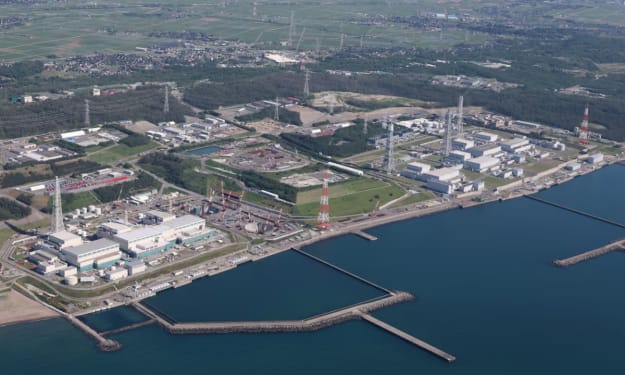
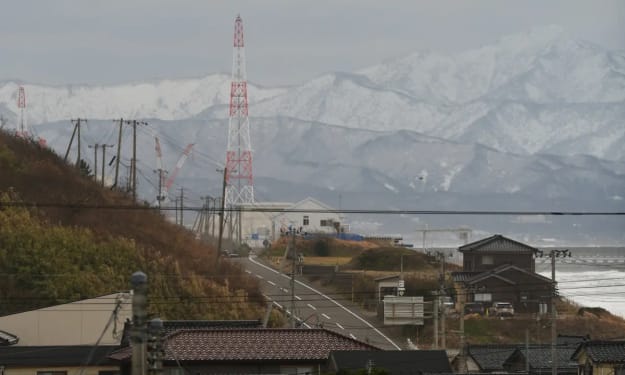
Fifteen years after the catastrophic Fukushima disaster, Japan is preparing to restart the world’s largest nuclear power plant. The decision marks a significant turning point in the country’s energy policy, reflecting both the urgent need for stable energy sources and the ongoing concerns about safety, environmental impact, and public trust. The move underscores Japan’s complex relationship with nuclear energy—a technology that has fueled the nation’s economic growth but also caused one of the worst nuclear disasters in history. The Fukushima Legacy In March 2011, a massive earthquake and tsunami triggered a meltdown at the Fukushima Daiichi Nuclear Power Plant, releasing radioactive material and forcing the evacuation of tens of thousands of residents. The disaster exposed flaws in safety regulations and emergency preparedness, reshaping public perception of nuclear energy in Japan and around the world. Following the incident, Japan shut down nearly all its nuclear reactors, relying heavily on imported fossil fuels to meet energy demand. The decision led to increased energy costs and heightened greenhouse gas emissions, creating pressure to diversify energy sources. Why Japan is Restarting Nuclear Reactors The restart of nuclear plants, including the world’s largest facility, is driven by several factors: Energy Security: Japan imports over 90% of its energy needs. Restarting nuclear plants reduces dependence on foreign fossil fuels and helps stabilize electricity supply. Climate Goals: Nuclear power generates electricity with minimal carbon emissions. As Japan commits to reducing greenhouse gases, nuclear energy offers a low-carbon alternative to coal and natural gas. Economic Considerations: Importing fossil fuels is expensive. Nuclear energy provides a relatively cheaper source of electricity in the long term, helping households and industries manage costs. The government emphasizes that advanced safety measures and rigorous inspections are in place, aiming to restore public confidence and prevent another disaster. Safety Measures and Upgrades Since 2011, Japan has invested heavily in upgrading nuclear infrastructure. Lessons from Fukushima have led to stricter regulations and improved disaster preparedness: Reinforced Reactor Buildings: Structures are now designed to withstand larger earthquakes and tsunamis. Advanced Cooling Systems: Redundant and automated cooling systems reduce the risk of overheating. Emergency Response Planning: Local governments and plant operators coordinate evacuation drills and disaster simulations. Regulatory Oversight: Japan’s Nuclear Regulation Authority (NRA) conducts independent inspections to ensure compliance with safety standards. Despite these measures, skepticism remains. Many citizens fear that no system can fully eliminate the risks associated with nuclear power, especially given the unpredictable nature of natural disasters in Japan. Public Opinion and Controversy The decision to restart the world’s biggest nuclear plant has sparked debate across Japanese society. Supporters argue that nuclear energy is essential for economic stability, energy security, and climate goals. They point out that without nuclear power, Japan would struggle to meet rising electricity demand and climate commitments. Opponents, however, raise concerns about safety, environmental impact, and long-term waste management. Memories of Fukushima remain vivid, and surveys indicate that a significant portion of the population is uneasy about returning to nuclear energy. Local communities near nuclear plants have voiced particular concern, fearing potential accidents and contamination. Economic and Energy Implications Restarting nuclear plants could have broad economic benefits. Stable electricity supply reduces the risk of blackouts, supports industrial activity, and helps control electricity prices for households. From an energy policy perspective, nuclear power allows Japan to balance its energy mix more sustainably. It complements renewable sources like solar and wind, which can fluctuate depending on weather conditions. Nuclear plants provide a steady “baseload” supply that renewables alone cannot guarantee. However, challenges remain: the disposal of radioactive waste, decommissioning older plants, and ensuring consistent regulatory oversight are all long-term concerns that Japan must address to maintain credibility and safety. Global Perspective Japan’s decision is being watched closely worldwide. The Fukushima disaster reshaped global nuclear policy, leading countries like Germany to phase out nuclear energy while others, including China and South Korea, continue to invest in it. Restarting the world’s largest nuclear plant sends a signal about Japan’s commitment to energy self-sufficiency and low-carbon power. It also raises questions about how other nations handle the balance between energy security and safety, especially as climate change increases the urgency for reliable, low-emission energy sources. Lessons Learned Fifteen years after Fukushima, Japan’s experience provides key lessons for the global community: Preparedness is Crucial: Robust safety standards and disaster response systems are essential for operating nuclear plants in seismically active regions. Public Trust Matters: Long-term energy policy must consider public perception and involve communities in decision-making. Diversified Energy Strategy: Nuclear power should be part of a broader energy mix, complemented by renewables to reduce risk and emissions. Continuous Oversight: Independent regulatory bodies and transparent operations are critical for maintaining safety and credibility. These lessons are not only relevant for Japan but also for any country considering nuclear power as part of its energy transition strategy. Conclusion The restart of Japan’s largest nuclear plant, fifteen years after the Fukushima disaster, represents both hope and caution. It promises more stable energy, lower carbon emissions, and economic benefits. At the same time, it reminds the world of the inherent risks of nuclear power and the need for rigorous safety, transparent governance, and public engagement. Japan’s journey reflects a broader challenge faced by many nations: how to meet growing energy demand and climate goals while ensuring safety, sustainability, and public trust. The coming years will reveal whether this bold step strengthens Japan’s energy future or reignites debate over the role of nuclear power in a post-Fukushima era.
By Muhammad Hassan4 days ago in Earth
Malfunction Forces Japan to Take Restarted Nuclear Plant Offline: What It Means for Energy Security and the Future of Nuclear Power
Japan's efforts to revive its nuclear energy sector suffered a significant setback recently when a malfunction forced a restarted nuclear plant offline, highlighting the challenges the country faces as it works to balance energy security, environmental goals, and safety standards. This development has raised questions about the reliability of nuclear power in the post-Fukushima era and the nation’s ambitious plans to reduce its dependence on fossil fuels.
By Muhammad Hassana day ago in Earth
Autonomy Is The Real Privilege
Good morning, freedom-seekers! Today we’re gonna be looking at autonomy. A strange word, I know; one many would probably look at blankly and run away from on sight. We’re gonna figure out what it actually means, consider how it’s achieved, and decipher just how deeply most of us are tangled up in dependence without realising it.
By That ‘Freedom’ Guy3 days ago in Humans


Comments
There are no comments for this story
Be the first to respond and start the conversation.