
Alarming pollution levels in Lahore: a crisis that reaches millions
The Lahore air quality crisis

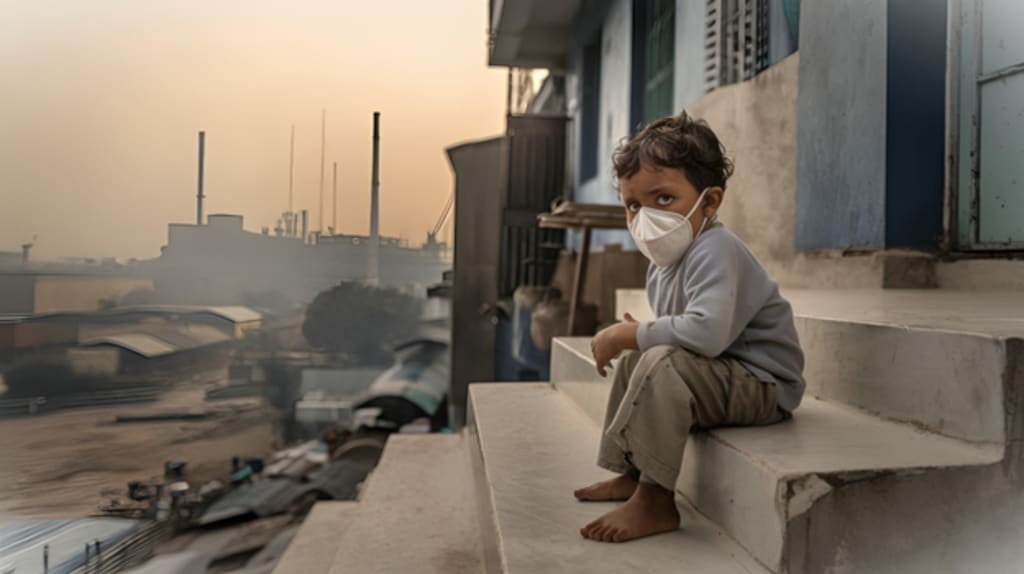
Alarming pollution levels in Lahore: a crisis that reaches millions
Introduction: The Lahore air quality crisis
Lahore, Pakistan—a city famous for the upbeat rhythm of its cultural heartbeat and historic monuments—has emerged with a dubious distinction, which places it amongst the most polluted cities in the world. Normally, Lahore's Air Quality Index often crosses thresholds into dangerous zones, especially for the exposed populations. This is a crisis of pollution levels impacts life, health, and their environment for the 11 million people who live here. Solutions to this emergency are as intricate as they are multifaceted—industrial emissions, vehicle exhaust, seasonal burning of crops. Understanding Lahore's pollution levels plays a prime role in finding sustainable solutions to address the public health emergency.
Understanding Air Quality and the AQI
The AQI is standardized air pollution that gives an idea about how pure or polluted air is at that moment. AQI above 100 is unhealthy and dangerous above 300. By November 2023, the AQI in Lahore met all expectations, with some areas reaching readings of above 500. It roughly gives an idea of the dangerous level of air pollution levels which even healthy people are affected by it, not to mention those suffering from respiratory problems.
Root causes of Lahore's pollution problem
Lahore's pollution levels are mainly the product of many converging sources. Here are the primary causes:
• Industrial Emissions
• Vehicle Emissions
• Crop Burning in Punjab
• Construction Dust and Waste Burning
1. Industrial Emissions
Lahore has industrialized very fast, and manufacturing units have multiplied in its aftermath around the city. Most of the units are operating with cleared environment clearances that have not been upgraded; hence, colossal particulate matters besides other lethal pollutants they release directly into the atmosphere.
2. Vehicle Emissions
Along with the population growth, Lahore's vehicle number is also growing at a corresponding rate. Most of these vehicles emit more NOx and SO₂ as they use such fuel and have less modern emission control fitted. Together, high-density settled traffic covers the entire city. Vehicle emissions worsen the air quality issues in Lahore.
3. Crop Burning in Punjab
Another seasonal activity that raises pollution levels in the city of Lahore is crop stubble burning by farmers of Punjab. It releases highly polluting particulate matter and gases, which are carried to Lahore and other cities by winds. Crop burning has been prohibited by governments but the activity has not been exercised stringently.
4. Construction Dust and Waste Burning
Construction activities, besides open burning of waste material, are contributing to the pollution levels of the city's air. Both of them are generating high amounts of both PM 2.5 and PM 10 that are as small as traveling deep inside the lungs and causing diseases after a significant period.
Health Effects of Lahore's Pollution Emergency
Health-wise, the pollution in the air of Lahore is highly damaging to children, older groups of people, and patients suffering from a previous disease, which is breathing or cardiac-related. In such extreme conditions of exposure to hazardous air pollutants such as PM 2.5 and PM 10.
health hazards include:
• Respiratory Disorder:
• Cardiovascular diseases
• Lung Development Problems in Children
• Increased Mortality
Respiratory Disorder: The poor quality of air may worsen the situation of asthma and bronchitis, along with other chronic respiratory disorders. Major hospitals in Lahore during peak pollution levels report a huge rise in the admission of patients suffering from respiratory disorders.
Cardiovascular diseases: It has been proven that particulate matter and toxic pollutants can cause such cardiovascular diseases as heart attacks and hypertension.
Lung Development Problems in Children: Exposure of children to air pollutants for long periods would affect lung development, thereby causing lifelong health problems.
Increased Mortality: Scientists have established an immediate association of rising death from respiratory and cardiovascular diseases with the concentration levels of air pollutants.
Economic Consequences of Pollution in Lahore
The economic implications of the pollution levels crisis cut widely across the economy. According to health and labor experts, productivity among laborers is reduced when people suffer from health conditions frequently. This leads to absenteeism. The cost to individuals arising from healthcare upon treatment for pollution-related illnesses is equally burdensome economically on both individuals and the health care system.
This is why even commercial organizations in Lahore also suffer, mainly those covered under the tourism industry. People are becoming reluctant to visit cities that are reportedly highly polluted, thereby earning relatively less income for accommodation, hotels, and other tourism-related services. Air pollution can even destroy crops, thereby affecting the agriculture sector in and around Lahore.
Government initiatives and public awareness campaigns
The Pakistani government has also initiated steps to take care of the crisis by reducing air pollution levels in Lahore through a number of initiatives that include:
• Stringent Emission Standards on Factories and Motor Vehicles
• Tree Plantation Programmed
• Public awareness campaigns
Stringent Emission Standards on Factories and Motor Vehicles: The government has applied stringent emission standards to industrial setups and motorized vehicles but still has problems enforcing them.
Tree Plantation Programmed: In order to improve green cover and subsequently trap pollutants, afforestation activities have been initiated at different places nearby in Lahore.
Public awareness campaigns: The public is sensitized through education programs on issues related to health hazards associated with air pollution. Programmed by the public come out with needs for greater carpooling and lesser waste burning.
Though encouraging enough, much more needs to be done continually in larger numbers for any change in Lahore air.
Solutions and preventive measures to control pollution
What Lahore needs is a multi-pronged approach to its pollution levels crisis. Some of the strategies that would make a difference are enumerated below:
1. Strict enforcement of environmental regulations
2. Promotion of Public Transport and Carpooling
3. Alternatives for Crop Burning
4. Implementations of Green Urban Planning
5. Involving the Community
1. Strict enforcement of environmental regulations
Enforce Existing Laws
The government must enforce the existing laws about emissions from industrial places and vehicles. Routine checks and imposing fines can in fact force numerous establishments into cleaner production.
2. Promotion of Public Transport and Carpooling
There is a lesser number of vehicles, which can be one of the steps for emissions cuts. The transport system to be built and more contemporary in the city of Lahore has to be constructed. It has to be promoted to carpool.
3. Alternatives for Crop Burning
For instance, educating the farmers to opt for other alternatives in place of crop burning, such as no-till farming or even the use of stubble as biofuel, could reduce the seasonal peak in pollution levels, and also subsidized equipment for eco-friendly farming would encourage them to adopt the above-mentioned methods.
4. Implementations of Green Urban Planning
This will make the city absorb all the pollutants due to the addition of green space in cities. Green walls, rooftop gardens, and parks should be given priority in the outline of the policy of Lahore to reduce the pollution levels.
5. Involving the Community
Community awareness is the only way to expect sustainable success. Neighborhood tree-planting drives, advocacy groups, and other community-led initiatives can better enable people to participate and bring about the change themselves while putting pressure on the local administration.
Conclusion: A Call for Action on the Filth Poisoning Lahore
Lahore is fighting an adamant battle with air pollution levels that is affecting millions as a matter of health, welfare, and prosperity. Indeed, the government, industry leaders, and the citizenry in general need to act fast. Regulation, solution innovations, and collective intent toward reducing injurious emissions would be needed to bring some relief to this extreme brewing crisis in the case of Lahore. Increased awareness and collective action will eventually help them visualize a future where Lahoris can breathe fresh, healthy, and clean air.
About the Creator
Shariq Mehmood Khan
My Name is Shariq Mehmood Khan Content writer specializes in developing efficient, well-researched, and reader-friendly content, Shariq has a knack for creating high-quality content that fits the needs of diverse clients.
Keep reading
More stories from Shariq Mehmood Khan and writers in Earth and other communities.
Balancing Plant Disease Management with Pollinator Conservation
Balancing Plant Disease Management with Pollinator Conservation Plant disease management and pollinator conservation are long overdue to advance sustainable agriculture and healthy ecosystems. While protecting crops from pathogens is essential for a reliable food supply, conserving bees, butterflies, birds, and bats enhances pollination and yields healthier crops and biodiversity. The management of these complex relationships is of the essence in both ecosystem health and agriculture.
By Shariq Mehmood Khanabout a year ago in Earth
US Warns Airlines About Military Activity in Parts of Latin America
Commercial aviation is built on predictability—clearly defined airspace, coordinated air traffic control, and shared international rules. When that predictability is disrupted, even subtly, the ripple effects can stretch far beyond the cockpit. That is exactly why a recent warning from the United States has caught the attention of airlines, governments, and travelers alike. In early 2026, US aviation authorities issued an advisory warning airlines about military activity in parts of Latin America, urging pilots to exercise heightened caution when flying over certain regions. While no immediate restrictions or flight bans were imposed, the message itself was clear: something in the skies has changed, and the risks—however limited—can no longer be ignored. This development is not just about aviation safety. It reflects a growing intersection between geopolitics, military operations, and civilian infrastructure in a region that has long balanced cooperation with tension. What Exactly Did the US Warn About? The advisory, released through official aviation safety channels, highlighted concerns over potential military activity affecting airspace across parts of Mexico, Central America, South America, and nearby oceanic regions. Airlines were advised to remain vigilant during all phases of flight, including cruising at high altitudes, takeoff, and landing. Unlike routine notices related to weather systems or airport congestion, this warning explicitly referenced security-related risks. These include the possibility of unexpected military movements, temporary airspace disruptions, and interference with navigation systems that modern aircraft rely on for safe operations. Importantly, the warning did not accuse any specific country of wrongdoing, nor did it suggest an immediate danger to passengers. Instead, it served as a precaution—one designed to ensure airlines adjust flight planning, monitoring, and communication protocols accordingly. Why Military Activity Matters to Civil Aviation To the average traveler, military exercises or operations may seem distant from the experience of flying on a commercial jet. In reality, the two worlds often share the same skies. Civilian aircraft depend heavily on satellite navigation, coordinated air traffic control, and stable airspace rules. Military operations—especially those involving fast-moving aircraft, surveillance systems, or electronic equipment—can introduce uncertainty into that environment. Some of the key risks aviation authorities monitor include: Unplanned military aircraft movements that may not follow civilian flight patterns Temporary airspace closures or restrictions that require last-minute rerouting Navigation signal disruptions, whether accidental or intentional Increased congestion in strategic corridors used by both civilian and military flights While these risks are typically managed through coordination and communication, heightened military activity raises the stakes. The FAA’s advisory suggests that such activity has reached a level where additional caution is warranted. The Geopolitical Context Behind the Warning The timing of the advisory is not accidental. Latin America has seen a noticeable rise in security operations and military coordination involving the United States over the past year. These efforts are largely focused on counter-narcotics missions, maritime security, and regional stability, particularly in areas with strategic shipping routes or ongoing political tension. At the same time, broader global dynamics—ranging from great-power competition to shifting alliances—have increased the strategic importance of air and sea routes across the Western Hemisphere. From Washington’s perspective, issuing an aviation warning is not about alarmism. It is about acknowledging that military and security activities in the region may temporarily affect civilian systems, including aviation. How Airlines Are Responding For airlines, advisories like this are not unusual—but they are taken seriously. Most major carriers already operate with layered safety systems that allow them to respond quickly to changing conditions. In practical terms, this warning may lead to: Slight route adjustments to avoid specific airspace Enhanced pilot briefings before flights Increased coordination with air traffic controllers Closer monitoring of navigation and communication systems So far, there have been no widespread flight cancellations or suspensions linked directly to the warning. That suggests airlines view the risk as manageable, provided proper precautions are followed. Reactions from Latin American Governments Some governments in the region have been quick to reassure the public. Officials have emphasized that their national airspace remains safe and fully operational, and that civilian flights continue without disruption. This response highlights an important tension: while the US warning is precautionary, it can still affect public perception. Tourism, business travel, and investor confidence are all sensitive to suggestions of instability—even when no immediate danger exists. As a result, many countries are walking a careful line between cooperating on aviation safety and defending their reputation for stability. What This Means for Passengers For travelers, the key takeaway is simple: commercial aviation remains safe. Warnings like this are designed to prevent incidents, not predict them. Passengers flying through or over affected regions may experience slightly longer flight times or minor schedule adjustments, but there is no indication of increased danger to civilian aircraft. In fact, the existence of such advisories demonstrates how seriously aviation authorities take even low-probability risks. A Sign of a More Complex World The US warning to airlines is a reminder that modern air travel does not exist in a vacuum. As military operations, security concerns, and geopolitical rivalries evolve, civilian systems—from shipping lanes to flight paths—are increasingly affected. This moment underscores a broader reality: the skies are becoming more crowded, more contested, and more interconnected with global politics. Managing that complexity will require continued transparency, cooperation, and vigilance from governments, regulators, and airlines alike. For now, planes continue to fly, passengers continue to travel, and the system continues to work. But behind the scenes, aviation authorities are quietly adjusting to a world where safety is shaped not just by weather and mechanics—but by geopolitics as well.
By Muhammad Hassana day ago in Earth
Without Democracy, Donald Trump’s Venezuelan Oil Quest Will Fail
Donald Trump’s renewed interest in Venezuelan oil may seem, on the surface, like a hard-nosed geopolitical calculation. Venezuela holds the world’s largest proven oil reserves, and amid global energy uncertainty, access to those resources is undeniably tempting. But history, economics, and politics all point to the same conclusion: without democratic reform in Venezuela, any attempt by a Trump-led US administration to secure reliable Venezuelan oil will ultimately fail.
By Aarif Lashari5 days ago in Earth



Comments
There are no comments for this story
Be the first to respond and start the conversation.