
Africa’s Real Lion King
The lion whose scar became his crown.

Opening Line:
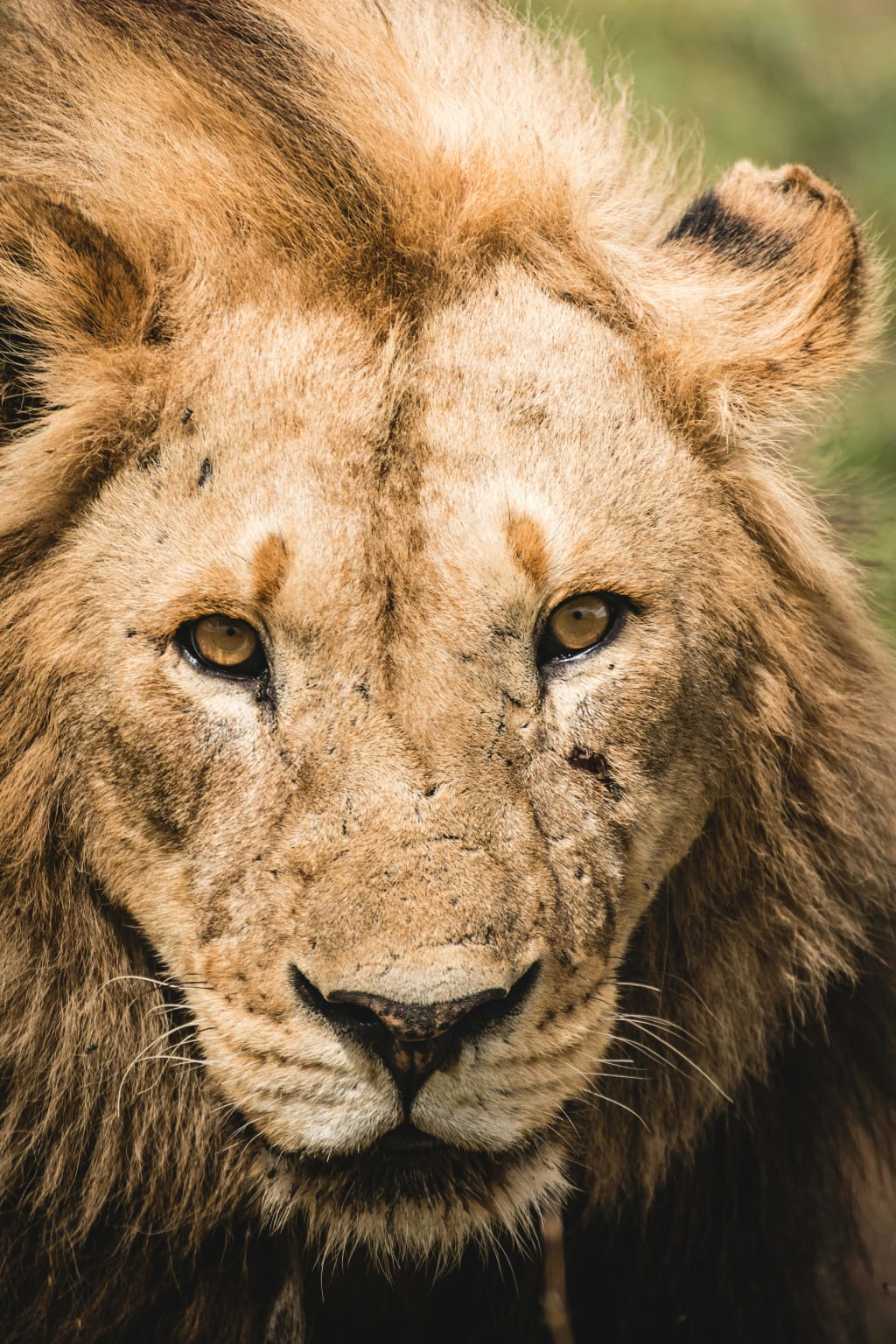
When the African sun blazed over the vast savannah, one roar echoed louder than all — Scarface, the lion whose scar made him immortal, and whose reign turned into legend.
---
The Birth of a Legend
Scarface was born in the Maasai Mara National Reserve in Kenya around 2007–2008. Among his brothers — Morani, Sikio, and Hunter — he would go on to become the most famous. Together, they were known as The Four Musketeers.
In 2012, during a territorial fight, Scarface received a deep injury just above his right eye. The wound never fully healed, and from then on, his drooping eyelid and visible scar gave him the name that would travel across the world: Scarface.
---
Rise to Power
With his brothers, Scarface fought ferocious battles to claim dominance over prides. They eventually took control of the Marsh Pride and later expanded into territories like the Paradise Pride.
Unlike most male lions, who typically hold power for only 2–3 years before being challenged, Scarface remained dominant for nearly 8–9 years. His rule stretched across 400 square kilometers of territory — an enormous empire for a wild lion.
He became a symbol of power not only because of his size and dark, magnificent mane but also because of his endurance. Despite multiple injuries, including losing part of his nose later in life, he continued to fight and survive.
---
Battles and Survival
Scarface’s life was anything but peaceful. He survived countless territorial wars, injuries from rival lions, and even a spear wound from Maasai herders defending their cattle.
Some reports and wildlife observers recall him chasing rivals into rivers, even intimidating crocodiles when protecting his pride near the Mara River. While not every dramatic tale can be fully confirmed, his reputation as a fearless warrior spread widely.
What set him apart was not just his strength, but his resilience. Time after time, when others thought his reign would end, Scarface returned — scarred, battered, but undefeated.
---
Fame Beyond the Savannah
Scarface became a global icon. Wildlife photographers, tourists, and filmmakers traveled from all over the world to Maasai Mara just to catch a glimpse of him. His image appeared in documentaries, magazines, and conservation campaigns, making him one of the most photographed lions in history.
His rugged appearance, with a face marked by scars and a heavy black mane, embodied the raw spirit of the wild. To many, Scarface was not just a lion — he was the real Lion King.
---
The Final Chapter
As with all kings, Scarface’s reign eventually came to an end. By 2020, his health began to decline. He grew weaker, lost weight, and could no longer keep up with rival males or the demands of leading a pride.
On June 11, 2021, at the age of 14 (a remarkable age for a wild lion), Scarface died peacefully of natural causes in the Maasai Mara. His passing was mourned by conservationists, photographers, and wildlife lovers across the globe.
Unlike many lions who die in brutal fights, Scarface’s end was calm, under the same African skies he once ruled.
---
The Legacy of Scarface
Scarface’s story is more than just that of a lion; it’s a lesson about strength, resilience, and legacy.
The Scar Became His Crown: What others might see as weakness became the very mark of his greatness. His scar made him unforgettable.
The King Who Never Quit: Even when his body failed him, Scarface’s spirit of dominance and courage kept him at the top for years beyond the average.
Immortality in Memory: Though he is gone, Scarface continues to live on through stories, documentaries, and the hearts of those who admired him.
---
Conclusion
Scarface was more than an animal; he was a symbol of the wild itself — raw, untamed, and eternal. His roar may have faded, but his story will echo for generations.
To this day, when people think of Africa’s great lions, one name comes to mind before all others: Scarface, the King of Maasai Mara.
About the Creator
Keep reading
More stories from Shahab Khan and writers in Earth and other communities.
The Day the Ocean Took Over: How One Island Is Disappearing Forever
Imagine a country where progress is not defined by skyscrapers, luxury cars, or billion-dollar industries. Instead, its entire identity is tied to the rhythm of waves, the strength of fishing nets, and the stories passed down by elders under the starlit sky. This is life on a small island nation in the Pacific, where people have lived in harmony with nature for centuries. But today, that harmony is breaking—and the reason is climate change.
By Shahab Khan6 months ago in Earth
Australia Horticulture Market 2026: Climate-Smart Farming, Export Demand & Agri-Tech Innovation
Australia Horticulture Market Overview Australia’s horticulture market plays a crucial role in the country’s agricultural economy, supplying fresh fruits, vegetables, nuts, flowers and nursery products to both domestic and international markets. The sector is widely recognized for high-quality produce, strong biosecurity standards and advanced farming practices. Growing consumer demand for nutritious foods, expanding export opportunities and continuous technological innovation in agriculture are driving sustained development across Australia’s horticulture industry.
By Amyra Singh5 days ago in Earth



Comments
There are no comments for this story
Be the first to respond and start the conversation.