
Adverse Effects of Excessively High or Low Temperatures in Biochar Pyrolysis Equipment and How to Avoid Them
Temperatures Impact on Biochar Pyrolysis

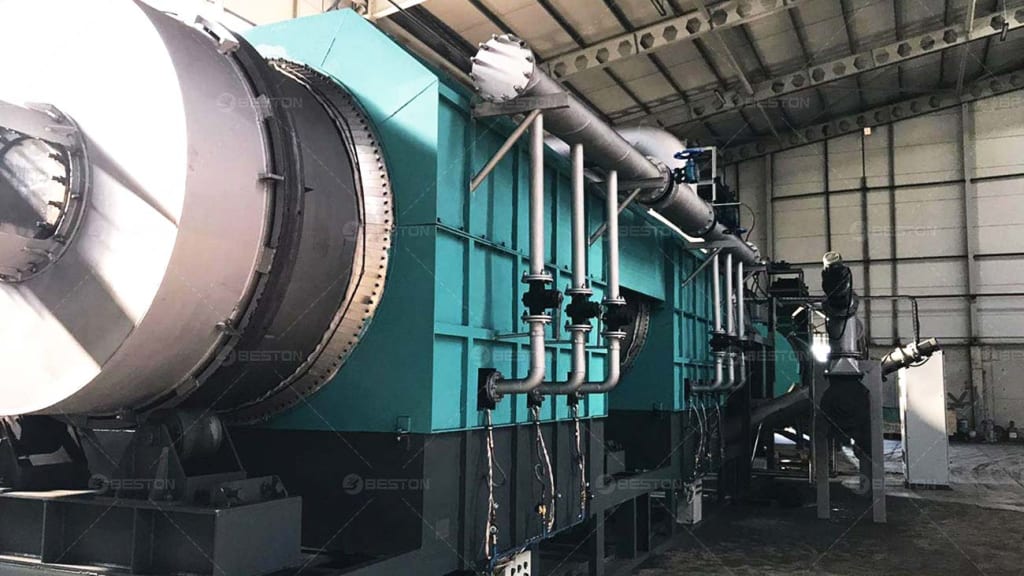
Temperature plays a crucial role in the efficiency and quality of biomass pyrolysis when using biochar pyrolysis equipment. Deviations, whether too high or too low, can lead to significant drawbacks. This article examines the adverse effects of temperature imbalances during pyrolysis and provides practical solutions to address them.
Effects of Excessively High Temperatures
Operating biochar pyrolysis equipment at excessively high temperatures can result in the following issues:
- Decreased Biochar Quality
Overheating accelerates the decomposition of raw materials, producing more gaseous and liquid byproducts and reducing biochar yield. Additionally, the pore structure of the biochar may collapse under extreme heat, diminishing its adsorption capacity and activity.
- Increased Equipment Wear and Tear
High temperatures accelerate the aging and corrosion of internal components, raising maintenance costs and shortening the equipment’s lifespan.
- Higher Energy Consumption
Maintaining extremely high temperatures requires more fuel or electricity, increasing operational costs and reducing economic efficiency.
Effects of Insufficient Temperatures
Operating biochar pyrolysis equipment at temperatures that are too low also presents notable challenges:
- Incomplete Carbonization
Insufficient heat prevents complete decomposition of the raw material, resulting in biochar with higher moisture content or impurities, thereby reducing its market value and effectiveness.
- Excess Byproducts
At lower temperatures, the release of volatile components is limited, producing higher quantities of tar and combustible gases, which complicates waste management.
- Reduced Production Efficiency
Low temperatures extend the pyrolysis time, reducing overall production efficiency and impacting economic returns.
How to Avoid Temperature Imbalances
To ensure that biochar pyrolysis equipment operates efficiently and stably, the following measures are recommended:
- Precision Temperature Control Systems
Install high-precision temperature monitoring and control devices to adjust the heating system in real time, maintaining optimal temperatures (typically 400-600°C, depending on the material).
- Regular Equipment Maintenance
Perform routine inspections of heating elements, insulation layers, and sensors. Replace aging or damaged parts promptly to ensure the equipment operates at peak performance.
- Optimized Raw Material Preparation
The moisture content and particle size of raw materials significantly affect temperature stability. Before pyrolysis, reduce the material's moisture content to 10%-15% and ensure uniform grinding.
- Operator Training
Train operators to understand the principles of the equipment and temperature control requirements so they can quickly identify and rectify abnormalities.
Conclusion
Temperature plays a crucial role in the biochar production process, as it directly influences both the quality of the final product and the performance of the pyrolysis equipment. Maintaining the optimal temperature range is essential for ensuring the efficient conversion of biomass into high-quality biochar, while also preventing any adverse effects on the equipment and overall process.
Excessively high temperatures can lead to over-carbonization, which reduces the yield of biochar and results in a product with lower porosity and fewer beneficial properties, such as its ability to enhance soil fertility or sequester carbon. In contrast, insufficient temperatures may result in incomplete pyrolysis, producing a lower-quality biochar that contains more volatile matter and moisture, which can affect its stability and combustion efficiency.
To maximize the benefits of biochar production, implementing effective temperature control strategies is essential. Advanced temperature monitoring and regulation systems within the pyrolysis equipment ensure that the temperature remains within the ideal range for efficient carbonization. By maintaining the correct temperature, operators can optimize energy consumption, reduce unnecessary wear and tear on equipment, and achieve a higher yield of biochar with better properties.
Incorporating precise temperature management into biochar pyrolysis systems not only improves product quality but also contributes to the sustainability of the overall process. By enhancing resource efficiency and minimizing waste, it supports the principles of circular economy and sustainable development, where biomass waste is transformed into valuable byproducts like biochar that have a wide range of environmental and agricultural benefits.
Ultimately, temperature regulation in biochar production is a key factor in unlocking the full potential of pyrolysis equipment, enabling businesses and industries to adopt more sustainable practices, recycle organic materials, and reduce their carbon footprint.
About the Creator
Bestonpyrolysis
Engaged in waste plastic/tyre/rubber recycling, oil sludge treatment, biomass recycling, sewage sludge management and paper recycling…
https://bestonpyrolysisplant.com/
Keep reading
More stories from Bestonpyrolysis and writers in Earth and other communities.
Torrefaction: A Semi-Carbonization Process for Biomass Optimization
In the quest for renewable energy solutions and sustainable waste management, torrefaction has emerged as a valuable process for improving biomass utilization. Often discussed in the context of bioenergy, torrefaction is sometimes referred to as "semi-carbonization." But what exactly does this mean, and how does it contribute to more efficient biomass processing?
By Bestonpyrolysisabout a year ago in Earth
Do Not Touch the Roses
There is a quiet power in the phrase “Do Not Touch the Roses.” It sounds like a warning, but it feels like an invitation — one that asks us to pause, admire, and respect something without claiming it. Roses have long symbolized love, beauty, and passion, yet they are also guarded by thorns. That contradiction makes them the perfect metaphor for many of life’s most meaningful things.
By Aarif Lashariabout 4 hours ago in Earth
Honey, I Shrunk the Datacentres: Is Small the New Big?
When most people think of datacentres, they picture sprawling warehouses full of servers, humming fans, and mountains of cabling. These massive facilities power everything from Netflix streams to artificial intelligence, but they also consume enormous amounts of energy and space. Now, a new trend is emerging: micro-datacentres. Tiny, modular, and often portable, these “datacentre in a box” solutions are challenging the old assumption that bigger is always better. Could small really be the new big in the world of computing? What Are Micro-Datacentres? Micro-datacentres are compact computing hubs designed to perform the same essential functions as traditional datacentres but in a fraction of the space. Think of them as miniaturized cloud factories — smaller, energy-efficient, and often placed closer to the users they serve. Key characteristics include: Compact size: Often no larger than a shipping container or even a cabinet. Energy efficiency: Use less power by focusing on localized computing needs. Modularity: Can be scaled horizontally by adding more units rather than expanding a single huge facility. Edge computing readiness: Positioned closer to where data is generated, reducing latency for IoT devices, AI applications, and streaming services. In short, micro-datacentres take the power of traditional computing and shrink it to fit modern, flexible infrastructure demands. Why Companies Are Embracing Smaller Datacentres There are several reasons the tech world is warming up to smaller datacentres: Energy and Cost Savings – Traditional datacentres consume massive amounts of electricity, sometimes as much as a small town. Micro-datacentres use less power and generate less heat, reducing both energy bills and cooling costs. Local Speed and Low Latency – For applications like AI, gaming, and streaming, milliseconds matter. By placing computing resources closer to users, micro-datacentres reduce latency and improve performance. Flexibility and Rapid Deployment – Big datacentres take years to build. Micro-datacentres can be deployed in weeks, allowing companies to respond quickly to spikes in demand or to expand into new regions. Resilience and Redundancy – Smaller, distributed units reduce the risk of a single point of failure. If one micro-datacentre goes down, others can pick up the load. Sustainability Goals – With energy efficiency at their core, micro-datacentres are often paired with renewable energy, making them an attractive option for companies seeking greener operations. From Data Warehouses to Data Cabinets Historically, the datacentre arms race has been about size. Companies like Amazon, Google, and Microsoft built massive facilities housing hundreds of thousands of servers. These centers achieved economies of scale but came with high energy use, long construction timelines, and heavy regulatory scrutiny. Micro-datacentres, on the other hand, flip the script: instead of one mega-facility, you deploy many smaller units closer to users. This is sometimes called edge computing, and it’s particularly useful for AI applications, smart cities, and the Internet of Things (IoT). Imagine self-driving cars, smart traffic lights, or factory robots. These devices generate enormous amounts of data that can’t be efficiently sent to a distant datacentre for processing. A nearby micro-datacentre solves the problem in real-time, enabling faster decisions and smoother operations. Real-World Examples Several companies are already experimenting with smaller datacentres: Google’s Edge Nodes: Google has deployed compact datacentres in regional locations to speed up cloud services. Microsoft Azure Stack Edge: A modular datacentre solution that brings cloud computing capabilities closer to businesses. Amazon Web Services (AWS) Snowcone: A portable computing and storage unit that can operate in remote or temporary locations. Even municipalities and hospitals are exploring micro-datacentres for localized applications like traffic management, healthcare data storage, and emergency services. Challenges of Going Small While micro-datacentres have many advantages, they’re not without challenges: Limited capacity: They can’t match the raw scale of traditional datacentres, so some large-scale AI training tasks still require mega-facilities. Security concerns: Smaller units distributed across many locations require robust cybersecurity protocols. Maintenance and monitoring: Managing multiple small units can be more complex than running a centralized datacentre. Energy trade-offs: If not designed efficiently, multiple micro-datacentres can sometimes use more energy than a single optimized large facility. Despite these challenges, many experts argue that the benefits — speed, flexibility, and reduced environmental impact — outweigh the downsides for many applications. Why “Small” Could Be the Future The rise of micro-datacentres signals a broader shift in how we think about computing infrastructure. Instead of centralized, monolithic powerhouses, the future may look like a network of small, smart, and sustainable units. This trend aligns with several larger tech movements: Edge computing – Computing closer to the user or device. Green technology – Reducing energy consumption and carbon footprints. AI proliferation – Handling massive data loads locally to enable faster processing. For companies, governments, and communities, the message is clear: smaller doesn’t mean weaker — it can mean smarter, faster, and more adaptable. Conclusion: Small but Mighty Micro-datacentres may not replace all mega-facilities, but they are carving out an essential niche in the computing ecosystem. They offer speed, flexibility, and sustainability that large datacentres can’t always provide, particularly for localized applications and edge computing. As technology evolves and energy concerns intensify, these “datacentres in a box” could become a core component of how we process, store, and access data in the 21st century. So the next time someone asks if small is the new big, the answer might just be yes — at least when it comes to datacentres.
By Muhammad Hassan5 days ago in Earth
Wild Card Weekend Recap: What Happens Now?
I think I figured out why I love Wild Card Weekend so much. It's because it's the first playoff anything of the calendar year. The NFL season starts in the fall, and once upon a time, the champion was crowned either on or slightly before New Year's. The evolution of the NFL schedule has resulted in the playoffs starting just into the New Year, and currently, the final week of the season falls on the first weekend of the New Year, with Wild Card Weekend coming a week after that. So yes, chronologically, the NFL's Wild Card Weekend serves as the first playoff anything of the calendar year.
By Clyde E. Dawkins6 days ago in Unbalanced




Comments
There are no comments for this story
Be the first to respond and start the conversation.