
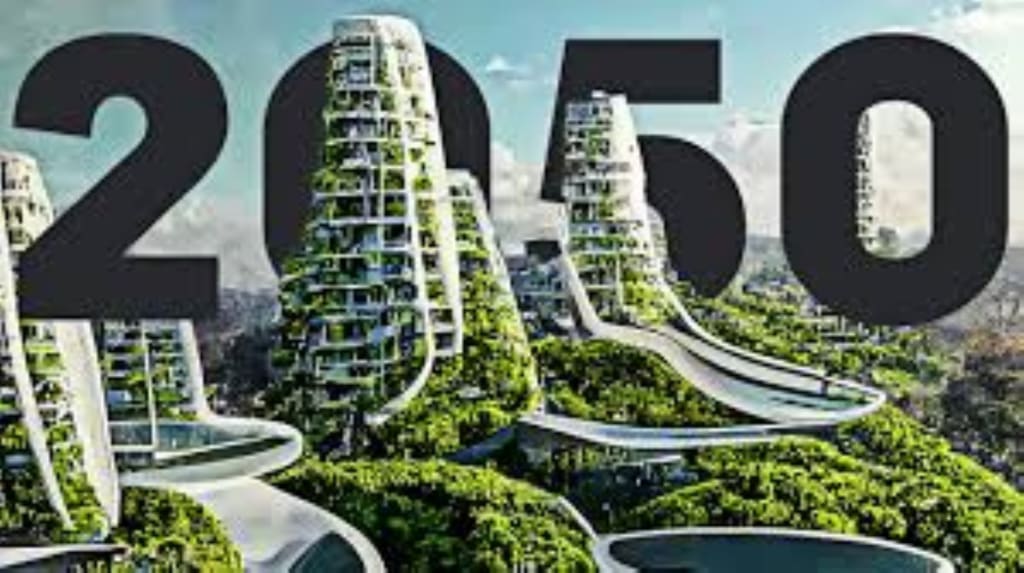
Since the beginning of the 21st century, technology has advanced at an unprecedented pace, transforming our reality into a landscape filled with innovations that were once considered mere fantasies. Reflecting on the developments of the past, I became intrigued by what life might resemble in the next 30 years. Consequently, I conducted some research into the potential future of 2050. Let us first examine nanotechnology. Over the years, scientists have achieved remarkable breakthroughs and identified numerous innovative applications for this field. Currently, nanotechnology holds the promise of fundamentally altering our existence. Experts predict that in the future, nanobots may be integrated into our brains, facilitating a more seamless and rapid connection to the virtual world through brain-computer interface technology. This integration would create a synergy between the mind and computers, empowering individuals with immediate access to vast amounts of information and solutions to complex problems that the human mind alone may struggle to address. Should nanotechnology advance to this level, traditional devices such as smartphones and calculators may become obsolete. This prospect is particularly thrilling for future students, as mathematical challenges may soon become significantly less daunting.
The forthcoming technological advancement anticipated in the future is the evolution of 3D printing technology. While 3D printing has already made significant strides, it is expected to reach even greater heights by the year 2050. Currently, we have the capability to produce 3D printed tools and homes; however, in the future, we may be able to manufacture a wider array of tools and potentially even modes of transportation, contingent upon the development of larger machines. This technology is also projected to become increasingly accessible to individuals interested in owning a 3D printer, thereby expanding the range of printable possibilities. If the trend of open-source 3D printable files persists, it is likely that individuals will soon be able to print substantial items such as furniture and even weapons. Furthermore, consider the potential of creating an affordable 3D printer specifically for food production, which could significantly contribute to alleviating world hunger.
As we look ahead to 2050, the concept of mortality may undergo a transformation. With the integration of brain-computer interface (BCI) technology, it may become feasible to transfer the information stored in our brains to a computer, akin to saving files on a hard disk. This would allow for the retrieval and uploading of data, including memories, into another entity, possibly a more sophisticated humanoid robot. Thus, the notion of death as we understand it could potentially be redefined.
In various sectors, intellectual contributions will be preserved, allowing for ongoing advancements in innovation. A significant improvement anticipated in the medical domain is the potential cure for serious illnesses such as cancer. However, a notable drawback of this progress is the high initial cost associated with new technologies, which may limit access to these life-saving innovations for a considerable period. Regarding transportation, significant changes are expected by 2050. Current experiments with self-driving vehicles, particularly by manufacturers like Tesla, suggest that fully automated vehicles may become a reality by that time. The advantages of such technology include a substantial decrease in traffic-related fatalities, as these vehicles will interact seamlessly with traffic control systems. Additionally, the advent of self-driving cars will transform lifestyles, granting individuals the freedom to either relax or engage in productive activities during their commutes, thereby reclaiming valuable time lost in traffic. Another noteworthy development is Elon Musk's Hyperloop One project, which aims to revolutionize public transportation by utilizing electromagnetic levitation to achieve speeds of up to 310 kilometers per hour. This initiative promises a faster, more economical, and environmentally friendly transportation option. If widely adopted, it could lead to a significant reduction in traffic-related incidents. Furthermore, the future of transportation will rely on renewable energy sources. With the ongoing challenges of global warming and the depletion of natural resources, it is imperative to transition to sustainable energy solutions. Hyperloop One is investigating electromagnetic levitation, while the automotive industry is actively seeking methods to minimize harmful emissions. These initiatives are part of a broader effort to combat environmental degradation.
One notable solution that has been proposed to address our current environmental issues is the advancement of space exploration. Companies such as SpaceX and Blue Origin are poised to transform space technology, aiming for extensive exploration and the eventual establishment of human colonies on other planets. By 2050, the progress made in this field is expected to make space tourism a reality for those with the financial means, allowing for vacation destinations that include Mars and the Moon. However, the cost of orbital travel is likely to remain prohibitively high, limiting access primarily to the affluent, at least initially. In contrast, artificial intelligence presents a more universally accessible innovation. AI is already more sophisticated than many of the technologies previously discussed, and its development is anticipated to improve significantly over the years. Experts predict that AI may eventually exceed the processing capabilities of the human brain, raising concerns about potential risks, including the prospect of a "robo-apocalypse." Fortunately, researchers still need to ensure that essential human values are integrated into AI systems before they can be seamlessly incorporated into daily life. The emergence of AI will undoubtedly transform the workforce, leading to substantial shifts in the job market. Projections indicate that by 2050, approximately half of the existing jobs may be rendered obsolete, replaced by machines and robots. The world will become increasingly interconnected and data-driven, prompting many individuals to contemplate career transitions. As the job landscape evolves, the education sector will also undergo significant transformations, with a notable rise in digital learning, particularly accelerated by the recent pandemic.
By the year 2050, fully digital schools are expected to be prevalent. Even for those who have attended traditional schools, the reliance on physical textbooks will diminish, as tablets and laptops will take their place. In the realm of higher education, experts predict that over 70 percent of students will pursue online degrees, thereby enhancing the globalization of education—a significant advancement towards making quality education accessible to everyone. It is conceivable that by this time, AI-powered robots may take on the role of educators, capable of preparing course materials, delivering lectures, and grading assignments. Unfortunately, students may find it challenging to negotiate deadline extensions with these robotic instructors. Turning to the metaverse, since the announcement by Facebook CEO Mark Zuckerberg, virtual reality and artificial intelligence have become integrated into our daily lives through this social media platform. For those who find the concept of the metaverse perplexing, it is essentially a computer-generated virtual reality environment that allows users to interact with one another via AI-enabled software. This involves simulations where avatars represent users. As the metaverse continues to evolve by 2050, it is anticipated to provide a comprehensive virtual experience, encompassing activities such as shopping and travel, all from the comfort of one’s home. Individuals will have the opportunity to share their virtual experiences globally. Imagine being able to take a vacation with your family to your favorite destination without physically being there; this is the promise of the metaverse. However, it appears that as our connections deepen, we may paradoxically find ourselves more isolated. Regarding currency, while money will still be in use, cash is expected to become increasingly obsolete. Following the trend of recent years, it is likely that by 2050, cash transactions will be virtually nonexistent.
All financial transactions will be conducted online, and new methods of financial exchanges will arise due to artificial intelligence and decentralized finance. As the global community gradually embraces these technologies, it is conceivable that we may no longer need to engage in grocery shopping ourselves. This shift could render traditional paper and plastic currency even less relevant. Similar to Tesla's model of ordering car parts as needed, our automated pantries and refrigerators may autonomously procure our groceries, eliminating the chances of selecting the wrong type of milk or running out of essential items. In terms of real estate, the automation of home appliances will lead to the emergence of fully automated smart homes by 2050. While smart homes already exist, the advancements anticipated in the coming decades will significantly enhance current capabilities. By 2050, smart homes will feature comprehensive AI functionalities, enabling them to perceive our moods and needs without requiring explicit commands. Furthermore, interactive holographic televisions will be available, allowing users to summon their holographic TV verbally, which will materialize before them. The most remarkable aspect is that the need for a remote control will be eliminated, as users will be able to operate the television through mental commands, facilitated by nanotechnology. In conclusion, this exploration of life in 2050 serves as a thought experiment. While it is acknowledged that not all concepts presented may materialize, it is also recognized that these ideas are not entirely implausible, given that humanity has already laid the groundwork for many of these technologies. One certainty remains: with the rapid advancement of technology, the world is poised to undergo significant transformation by 2050. It is my hope that our existing societal frameworks will be equipped to adapt to these forthcoming innovations.
About the Creator
Adam Kilalo
I am a writer. I am mostly interested in Nature and Science.
Keep reading
More stories from Adam Kilalo and writers in Earth and other communities.
The Mysterious Island
A mysterious island has been reported to appear and disappear as if by magic, reminiscent of Schrödinger's cat. This enigmatic location, known officially as Sandy Island, has been documented on maps yet has never existed in reality. In an effort to resolve this conundrum, Australian scientists embarked on an expedition to locate this elusive archipelago. However, upon reaching the designated coordinates, they encountered only vast expanses of blue waves, as if the island were engaged in a game of hide and seek.
By Adam Kilaloabout a year ago in Earth
Europe Is About to Sign a Long-Awaited Free-Trade Deal With India
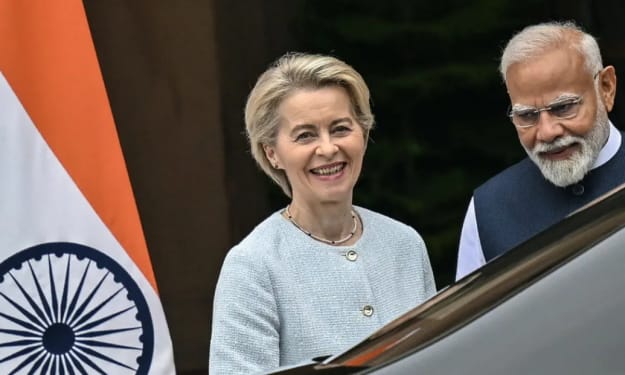
After years of negotiations, pauses, and political recalculations, Europe and India are finally on the brink of signing a long-awaited free-trade agreement. What once seemed like an overly ambitious diplomatic project is now becoming a reality—one that could redefine trade relations between two of the world’s most influential economic regions. This deal is not just about tariffs and exports. It’s about shifting global power, strengthening supply chains, and creating new opportunities for communities on both sides. Why This Deal Took So Long Talks between the European Union and India began well over a decade ago, but progress was slow. Differences over labor standards, environmental rules, market access, and intellectual property rights repeatedly stalled negotiations. Both sides had strong priorities—and neither wanted to compromise too much. However, the global landscape has changed dramatically in recent years. Supply chain disruptions, geopolitical tensions, and a growing desire to reduce over-reliance on single markets have pushed both Europe and India to rethink their strategies. Suddenly, cooperation feels less optional and more necessary. What the Agreement Is Expected to Cover At its core, the free-trade deal aims to reduce tariffs, ease regulations, and open markets between Europe and India. European companies are seeking better access to India’s vast consumer market, while India wants smoother entry into European industries such as technology, pharmaceuticals, and manufacturing. The agreement is also expected to include provisions related to: Digital trade Sustainable development Labor rights Investment protection These elements reflect modern trade priorities, where economic growth is increasingly linked with social and environmental responsibility. Why Europe Needs India Right Now For Europe, the deal is part of a broader strategy to diversify trade relationships. Recent global events have highlighted the risks of economic dependency. India, with its rapidly growing economy and young workforce, represents both stability and potential. European policymakers see India as a long-term partner capable of balancing global trade dynamics. Strengthening ties with India could also help Europe remain competitive in a world where economic influence is constantly shifting. Why India Is Saying Yes India, too, stands to gain significantly. A free-trade agreement with Europe could boost exports, attract investment, and accelerate economic modernization. It also positions India as a major global player willing to engage on equal terms with powerful blocs. For Indian businesses—especially small and medium enterprises—easier access to European markets could mean growth, innovation, and international exposure. For workers, it could translate into job creation and skills development. Impact on Everyday Communities While trade deals often sound abstract, their effects are deeply local. Lower tariffs can reduce prices for consumers. New investments can revitalize industries and create employment. Improved cooperation can strengthen educational, cultural, and technological exchanges. Communities in Europe may see new products, partnerships, and opportunities tied to Indian innovation. Indian communities, meanwhile, could benefit from European expertise in sustainability, infrastructure, and advanced manufacturing. This is why the agreement matters beyond boardrooms and government offices—it touches real lives. Concerns and Criticism Still Exist Despite the optimism, critics on both sides have raised concerns. Some European groups worry about labor standards and environmental protections, while some Indian voices fear that local industries could struggle against European competition. These concerns highlight the importance of transparency and fair implementation. A successful agreement will require ongoing dialogue, monitoring, and cooperation to ensure that economic growth does not come at the expense of workers or the environment. A Strategic Signal to the World Beyond economics, the deal sends a strong political message. It signals that multilateral cooperation is still possible, even in an era of rising protectionism. Europe and India are showing that large, diverse democracies can find common ground through negotiation rather than confrontation. This partnership could also influence future global trade standards, especially in areas like digital regulation and sustainable development. What Happens Next Once signed, the agreement will still need formal approvals and phased implementation. Businesses, governments, and communities will need time to adapt. But the direction is clear: closer ties, deeper cooperation, and a shared economic future. For both Europe and India, this deal represents more than a trade pact—it’s a strategic investment in resilience and mutual growth. Final Thoughts The long-awaited free-trade deal between Europe and India marks a turning point in global economic relations. It reflects changing priorities, evolving partnerships, and a shared recognition that collaboration is essential in an uncertain world. As the agreement moves forward, its true success will be measured not just in trade volumes, but in how effectively it supports communities, protects values, and builds a more balanced global economy.
By Muhammad Hassan8 days ago in Earth
The Jinn Fled
This short story was narrated by my grandson Taimoor, who is thirteen years old. He heard it from the family of his friend Zain Ali. Zain Ali’s mother, Nusrat Bibi, loves Taimoor like her own son. She is a pious, well-mannered, kind-hearted, and refined woman.
By Sudais Zakwan6 days ago in Earth



Comments
There are no comments for this story
Be the first to respond and start the conversation.