
A Warning to Humanity from Global Warming
Climate change's alarming reality and the urgent need for global action.
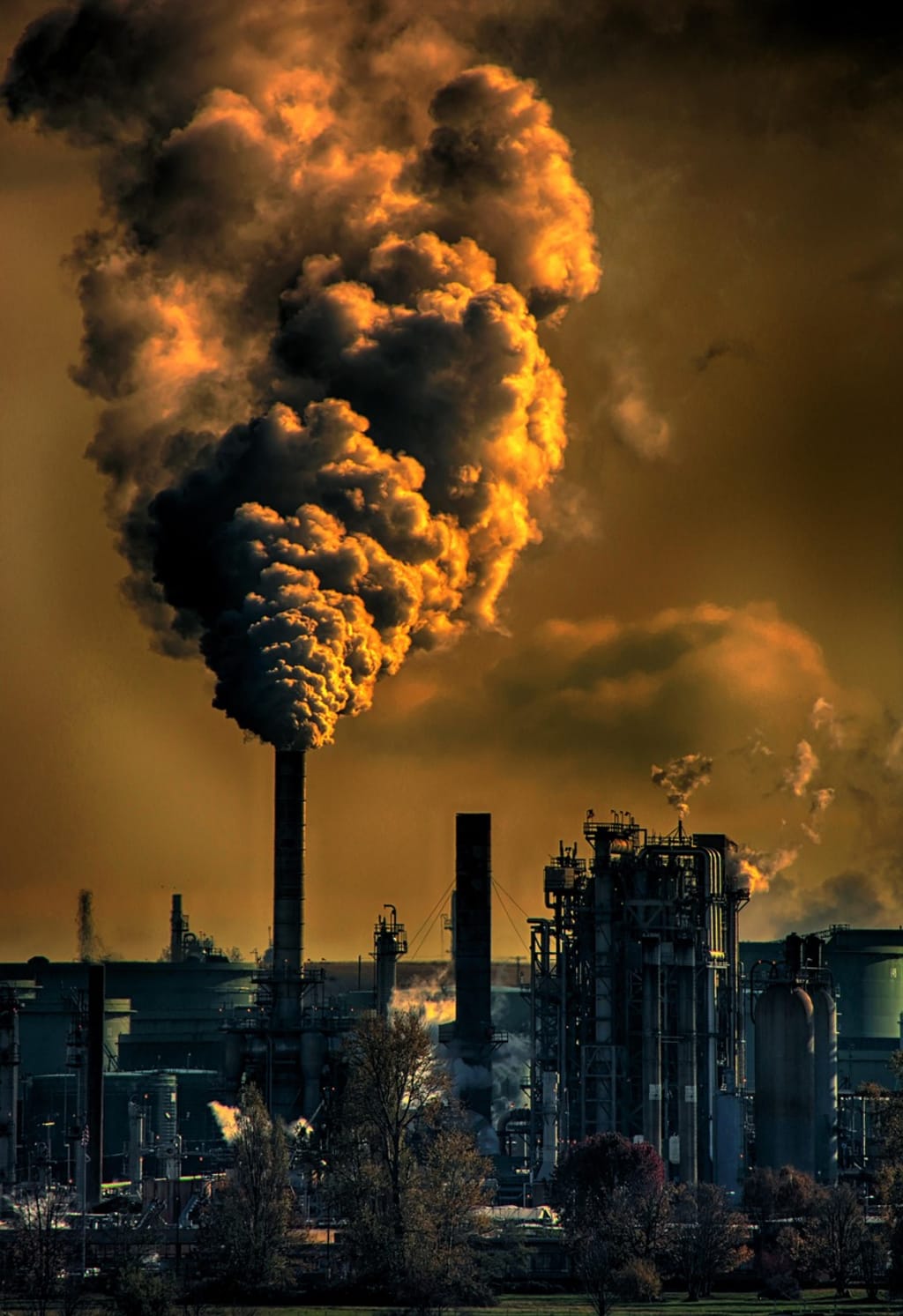
The consequences of global warming are more obvious, more common, and more concerning than ever as 2025 draws near. An unquestionable crisis that is affecting every part of the world has replaced what was formerly thought to be a remote environmental issue. The harsh fact that human activity is mostly to blame for the Earth's climate changing at an unprecedented rate is forcing scientists, governments, and citizens to face this fact.
The Science Behind Global Warming
The term "global warming" describes the gradual increase in Earth's mean surface temperature brought on by higher atmospheric concentrations of greenhouse gases such as carbon dioxide (CO₂), methane (CH₄), and nitrous oxide (N₂O). The globe warms as a result of these gases' blanket-like ability to retain heat. Deforestation, industrial operations, and the combustion of fossil fuels (coal, oil, and natural gas) are the main causes of these emissions.
Earth's temperature has already increased by more than 1.2°C since the pre-industrial era, according to the most recent reports from the Intergovernmental Panel on Climate Change (IPCC). Even while this might not seem like much, the effects are enormous and growing.
Current Impacts in 2025
The world is already experiencing the catastrophic effects of global warming in 2025:
. Extreme Weather Events: Globally, heat waves are setting new records. Temperature above 45°C are occurring in countries in Europe, Asia, and North America, which is increasing the number of heat-related diseases and deaths.
. Rising Seas and Melting Ice: Greenland and Antarctic glaciers are melting more quickly, while Arctic ice is still getting thinner. Sea levels are increasing as a result, endangering island nations and low-lying coastal settlements.
. Water and food insecurity: Water scarcity is hurting millions, with some towns running dangerously low on freshwater, while crop yields in areas of Africa, Asia, and Latin America are declining due to changes in rainfall patterns and extended droughts, resulting in food shortages and higher costs.
. Biodiversity Loss: Many species are in danger of going extinct as a result of habitat destruction and rising temperatures. Warmer ocean temperatures are causing coral reefs, which are essential to marine life, to bleach and die.
Human Response: Developments and Obstacles
There has been advancement. The international community has begun to act more rapidly. By the middle of the century, numerous nations have pledged to achieve net-zero emissions. Solar, wind, and hydroelectric power investments have reached all-time highs. Policies that encourage sustainable practices are being implemented in cities all over the world, and electric vehicles are becoming more prevalent.
But there are still difficulties. The world's energy mix is still dominated by fossil fuels. For political or financial reasons, some countries take their time enforcing environmental laws. Lack of infrastructure and capital impedes the shift to greener alternatives in poorer countries.
Things That Must Be Done
Global cooperation is required to address the climate crisis. Some essential steps include:
Promote the Use of Renewable Energy More Quickly: Clean energy must be used more quickly by governments and businesses.
Restore and safeguard nature: Conservation and reforestation of forests are important for absorbing CO2.
Educate and Involve Citizens: Reduced waste, sustainable products, and leaders who place the environment first must all be part of the solution.
Enhance Climate Policy: Support vulnerable populations and impose more stringent targets for emission reduction.
Conclusion:
Global warming in 2025 is not just a prediction; it is actually happening right now. The planet's future will be determined by our choices now. Even though there are many obstacles, we have the ability to overcome them. Humanity can still steer toward a world that is more sustainable and livable for future generations with innovation, cooperation, and commitment.
About the Creator
Keep reading
More stories from AMIT DHALI and writers in Earth and other communities.
How to Control Cholesterol Levels at Home
How to Control Cholesterol Levels at Home Every cell in the body contains a waxy, fat-like substance called cholesterol. Although the body requires cholesterol for proper function, excessive amounts, particularly "bad" cholesterol, can make it more likely to get heart disease and stroke. The good news is that lifestyle changes, many of which can be implemented at home, can effectively manage cholesterol levels.
By AMIT DHALI10 months ago in Humans
Australia Specialty Gases Market: Industrial Applications, High-Purity Demand & Technology Growth
Australia Specialty Gases Market Overview The Australia specialty gases market is developing steadily as industries increasingly require high-purity and precisely formulated gases for advanced manufacturing, healthcare, environmental monitoring and research applications. Specialty gases include ultra-high-purity gases, calibration gases and gas mixtures designed to meet strict quality and performance specifications. These products are used in applications where consistency, accuracy and contamination control are critical. The Australia specialty gases market growth reached USD 168.4 Million in 2025. Looking forward, IMARC Group expects the market to reach USD 290.2 Million by 2034, exhibiting a growth rate (CAGR) of 6.24% during 2026-2034. This growth reflects gradual expansion of technology-driven industries and rising emphasis on quality standards.
By Amyra Singh11 minutes ago in Earth
Beckhams Spotted Together in Paris After Brooklyn Row
A Family Reunion in the City of Light David and Victoria Beckham were recently spotted together in Paris, drawing attention from fans and media alike. The appearance comes shortly after reports of a disagreement between the famous couple and their eldest son, Brooklyn Beckham, who has been navigating his own professional and personal endeavors.
By Aarif Lashari6 days ago in Earth




Comments
There are no comments for this story
Be the first to respond and start the conversation.