
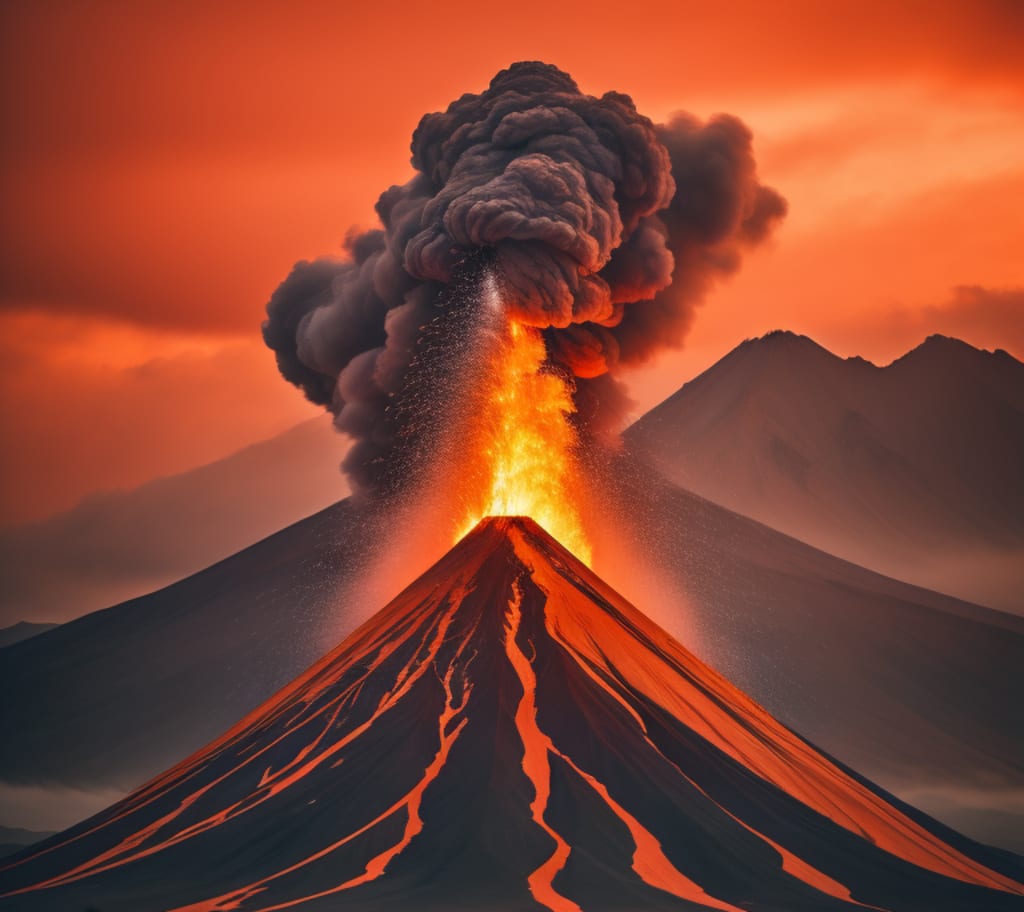
The Ring of Fire, a volcanic belt encircling the Pacific Ocean, is home to 75% of the world's active and dormant volcanoes. In stark contrast, Australia sits devoid of volcanic activity, and Europe, often associated with calmness, harbors its own active giant—Mount Etna in Sicily, Italy. However, the focus of our exploration turns to Iceland, a land where the Earth's fiery forces are particularly vivid, exemplified by the emergence of Europe's youngest volcano in July 2023.
On a peninsula in southwest Iceland, a geological spectacle unfolded on the 10th of July 2023. Three fissures cracked open the earth's surface, signaling the awakening of a volcano named after a local term meaning "little ram." The scientific community, aware of the volcanic potential in the region, had been monitoring seismic activities for weeks leading up to this event. Over 12,000 tremors were recorded, foretelling the eruption that followed, reminiscent of the region's past two summers.
This eruption, occurring after eight centuries of dormancy, marked a significant event in Iceland's geological timeline. The fissures, extending over a mile and a half, spewed molten lava and gas plumes, creating a mesmerizing display. One particular fissure persisted, evolving into an elongated cone—a familiar shape of a volcano. The lava-filled crater rapidly grew, reaching almost 100 feet in height within the first week and continuing to expand.
Local authorities swiftly responded to the volcanic activity, closing off the surrounding area due to toxic gases and the risk of wildfires from burning moss. Firefighters, well-versed in handling such events, soon declared the area safe, paving the way for a unique form of tourism. Iceland, known as the "Land of Fire and Ice," boasts over 130 volcanoes, with approximately 30 of them currently active. Volcano tourism is a thriving industry, drawing visitors from across the globe who seek to witness the birth of Europe's youngest volcano.
The safety of volcano tourism in Iceland is a top priority for the country's authorities. Rigorous research, constant monitoring of hotspots, and a network of seismic stations contribute to accurately predicting and managing potential eruptions. In 2010, Iceland faced international attention when another volcano erupted, causing airspace closures in northern Europe. However, advancements in monitoring and safety protocols have made volcano tourism a relatively secure experience.
For the continent's youngest volcano, a well-established tourist infrastructure exists. Visitors can park at designated lots and embark on a five-hour trek to a viewing deck, offering an up-close encounter with the volcanic spectacle. Safety measures, including hazard maps outlining lava field borders, ensure that tourists adhere to guidelines, minimizing risks.
Iceland's geological story is one of dynamic interplay between tectonic plates. Positioned above the meeting point of the North American and Eurasian plates, the country's formation began around 60 million years ago. The drift of tectonic plates created solid ground, with Iceland's active lava fields being relatively young in geological terms—some under 1,000 years old.
Approximately a third of the basaltic lava ever recorded on Earth's surface originated from Icelandic eruptions. The prevalence of fissure swarms covering over 30% of the country contributes to the sparsely inhabited nature of Iceland. Vikings, the first settlers in Iceland, witnessed monumental volcanic eruptions in the 10th century, setting the tone for the island's volcanic legacy.
Recent scientific discoveries hint at a historical link between volcanic activity in northern Europe and glacial periods during the Earth's ice ages. As Iceland experiences a resurgence in volcanic activity, scientists anticipate decades of more frequent eruptions. The emergence of Europe's youngest volcano near Iceland's capital serves as a reminder that the forces shaping the island are ever-present and continually evolving.
In conclusion, Iceland stands as a testament to the Earth's dynamic processes, where fiery eruptions and glacial retreats intertwine to shape a landscape that mesmerizes and challenges our understanding of geological phenomena. As tourists flock to witness the birth of Europe's youngest volcano, they become part of a narrative that unfolds at the crossroads of fire and ice, contributing to our collective appreciation of the Earth's extraordinary natural wonders.
About the Creator
Joel Barr
Exploring life's distinctive perspectives and unraveling the mysteries of the future through a blend of factual insights and engaging narratives.
Why Pyrolysis Oil Must Carry ISCC PLUS Certification:
As the global economy shifts toward renewable energy and circular solutions, pyrolysis oil—a liquid derived from the thermal decomposition of waste plastics, biomass, or other organic materials—has emerged as a promising alternative to fossil fuels. However, its role in sustainable energy systems comes with regulatory and ethical responsibilities. One of the most critical requirements is that pyrolysis oil must possess ISCC PLUS certification, a standard ensuring its sustainable origin and responsible use in industrial and energy applications.
By Bestonpyrolysis2 days ago in Earth



Comments
There are no comments for this story
Be the first to respond and start the conversation.