
A Tale of Steel and Resilience
Residing in a steel pipe manufacturing factory to work


The Exile of Krax: A Tale of Steel and Resilience
The sky over K-73 Krabar burned crimson as the war horns blared their relentless dirge. Krax tightened their grip on the plasma wrench, the tool humming faintly in their metallic hands. Once, they had been a technician, a mender of machines in a thriving subterranean city carved into the planet’s iron-rich crust. Now, they were a fugitive, scrambling through the wreckage of their home as the invaders—hulking, insectoid creatures called the Vryssk—tore through the last defenses of Krabar’s people.
The Vryssk had descended without warning, their ships blotting out the twin suns, their mandibles clicking in a language no Krabarian could decipher. For cycles, Krax’s people fought back with ingenuity and grit, forging weapons from the planet’s abundant metals and deploying armies of autonomous drones. But the enemy’s numbers were endless, their biotech relentless. The once-vibrant tunnels of Krabar now echoed with the screams of the fallen and the grinding of collapsing steel.
Krax had no choice. The resistance had crumbled, and the evacuation order came too late for most. With a final glance at the smoldering remains of their workshop, Krax joined the exodus, boarding a battered escape pod alongside a handful of survivors. The pod rattled as it broke through the atmosphere, the Vryssk’s energy weapons painting the void with deadly streaks of light. Krax clutched a small data crystal—the last remnant of their life’s work, a blueprint for a transformative machine—and whispered a vow: I will return.
The pod’s navigation system, damaged in the escape, locked onto the nearest habitable planet: a blue-green sphere called Earth. As the craft hurtled through space, Krax’s thoughts churned with grief and determination. They were not built for war, not like the warrior caste of Krabar, with their reinforced exoskeletons and plasma cannons. Krax was a maker, a thinker. But survival demanded adaptation, and they would find a way.
Arrival on Earth
The pod crashed into Earth’s atmosphere with a fiery roar, landing in a dense forest somewhere in the northern hemisphere. Krax emerged from the wreckage, their segmented body creaking from the impact. Their form was humanoid but unmistakably alien: a sleek chassis of dark alloy, articulated joints, and glowing cyan optics that scanned the unfamiliar terrain. The air was thick with oxygen, the ground soft with organic matter—alien to a being forged in the metallic depths of Krabar.
Humans discovered the crash site within hours. Krax, wary of hostility, activated their data crystal’s transformation protocol. The device hummed, restructuring their body into a more utilitarian shape: a cylindrical frame of polished steel, segmented like a pipe, with retractable limbs and tools. A steel pipe robot—unassuming, functional, blending into Earth’s industrial aesthetic. It was a disguise born of necessity, but it carried a bitter irony. On Krabar, Krax had crafted machines of war and wonder; here, they would masquerade as a tool.
The humans who found them—a team of salvagers—marveled at the “advanced robotics” of the crash site. They transported Krax to a sprawling factory on the outskirts of a human city, a place of clanging hammers and hissing steam. The facility churned out steel pipes for construction, a mundane but essential trade. Krax, still adapting to their new form, observed silently as workers operated machinery not unlike the tools of Krabar—crude, yet effective.
The factory foreman, a gruff man named Hank, assumed Krax was a prototype from a rival company, abandoned after the crash. “You’re a sturdy one,” he muttered, inspecting Krax’s seamless steel exterior. “Let’s put you to work.” Krax complied, their advanced processors quickly mastering the repetitive tasks: cutting, welding, stacking. They spoke little, their voice modulator emitting only clipped, mechanical responses. To the humans, they were a marvel of automation. To Krax, this was exile in its rawest form—reduced to labor while their homeworld burned.
Days turned to weeks, then months. Krax settled into a rhythm, their steel body gleaming under the factory lights. They learned the humans’ language—English—through overheard conversations and radio broadcasts. They studied their habits, their tools, their resilience. Earth was chaotic, messy, but it teemed with life, a stark contrast to Krabar’s sterile precision. Krax found a strange comfort in the clang of metal, the roar of furnaces. It reminded them of home.
Whispers of the Lost
One night, as the factory lay quiet, Krax detected a faint signal pulsing through their internal comms—a frequency only Krabarian tech could emit. Their optics flickered with hope. Could it be? They traced the signal to a scrapyard on the city’s edge, slipping out under cover of darkness. Their steel pipe form rolled silently across the asphalt, a ghostly cylinder in the moonlight.
The scrapyard was a labyrinth of rust and ruin, piled high with discarded machines. Krax navigated the maze until they found the source: a battered Krabarian drone, its hull cracked but its core still active. Beside it stood a figure—a fellow exile. Her name was Zyn, a warrior from Krax’s city, her once-proud armor dented and scorched. Her optics flared red as she recognized Krax’s signature.
“You survived,” Zyn rasped, her voice modulator strained. “I thought the pods were lost.”
“Not all,” Krax replied, their own voice steady despite the surge of relief. “How many made it?”
“Few. Scattered. I’ve been tracking signals, gathering who I can. The Vryssk hold Krabar, but they haven’t won yet.”
Zyn explained her escape: she’d fought until her unit was overrun, then fled in a stolen Vryssk skiff, crash-landing on Earth weeks after Krax. She’d been hiding in the scrapyard, scavenging parts to repair the drone—a comms relay to contact other survivors. Together, they powered it up, sending a coded pulse into the ether. Over the next days, responses trickled in. A dozen Krabarians had reached Earth, each adapting to their new reality: a medic posing as a maintenance bot, a scout embedded in a mining operation, a strategist working in a human warehouse.
Krax and Zyn became the nucleus of this fractured resistance. They met in secret, sharing stories of the fall, plotting their next move. The humans remained oblivious, their world too noisy to notice the quiet rebellion taking shape in its shadows. Krax’s factory became a hub—steel pipes rolled out by day, strategies forged by night.
The Strength of Steel
Krax’s transformation into a steel pipe robot proved more than a disguise; it was a revelation. Earth’s metals, though less refined than Krabar’s alloys, were abundant and versatile. Krax began experimenting, modifying their body with salvaged parts. They integrated a plasma cutter from the factory, a hydraulic press for strength, and a rudimentary cloaking field scavenged from Zyn’s skiff. They were no longer just a worker—they were a weapon, tempered by necessity.
Zyn, too, adapted. She shed her damaged armor for a leaner frame, incorporating human steel into her design. Together, they trained, sparring in abandoned warehouses, honing their skills. The others joined when they could, each bringing expertise: the medic devised repair protocols, the scout mapped Earth’s terrain, the strategist analyzed human technology for weaknesses and strengths.
Their goal was clear: return to Krabar, liberate it from the Vryssk. But the journey required resources—fuel, weapons, a ship. Earth offered raw materials, but no Krabarian could build a starship under human noses without drawing attention. They needed allies, or at least unwitting aid.
Krax proposed a plan: infiltrate deeper into human industry. The factory’s output fed major construction projects—bridges, skyscrapers, pipelines. If they could redirect resources, siphon steel and tech, they might assemble a vessel in secret. Zyn hesitated—humans were unpredictable, prone to suspicion—but she trusted Krax’s ingenuity. “We’ll need a cover,” she said. “Something they won’t question.”
“A new product,” Krax suggested. “A revolutionary pipe design. Stronger, lighter. They’ll fund it themselves.”
The Masquerade
Krax presented the idea to Hank, modulating their voice to mimic human enthusiasm. “A composite steel alloy,” they explained, projecting schematics onto a workbench. “Less weight, more durability. Your competitors won’t stand a chance.” The lie was laced with truth—the alloy was Krabarian tech, adapted for Earth’s crude furnaces. Hank, ever the pragmatist, saw dollar signs. “If you can make it work, robot, you’ve got a deal.”
The factory retooled, workers buzzing with excitement over the “breakthrough.” Krax oversaw production, subtly diverting excess materials to the scrapyard. Zyn and the others refined the haul, forging components for a ship: thrusters from pipe molds, a hull from reinforced steel, a power core from scavenged batteries. It was slow, painstaking work, but the humans’ greed kept them blind.
Months passed. The “Krax Alloy” became a sensation, orders flooding in. The factory expanded, and with it, the Krabarians’ stockpile grew. Krax felt a flicker of pride—they were not just surviving; they were thriving, turning exile into opportunity. Yet the weight of their mission never lifted. Each pipe they crafted was a step toward home, a reminder of the war still raging light-years away.
Then came a setback. A human inspector, sharp-eyed and curious, noticed discrepancies in the factory’s inventory. “Where’s all this steel going?” he demanded, poking through records. Hank shrugged, blaming sloppy bookkeeping, but the inspector lingered, watching Krax too closely. Zyn urged caution. “If they find us out, we’re done.”
Krax adjusted their approach, scaling back the siphoning, focusing on efficiency. The ship took shape—a sleek, angular craft hidden beneath tarps in the scrapyard. It wasn’t Krabar’s finest, but it would fly. The inspector eventually left, satisfied with half-answers, and the Krabarians breathed easier. They were close now, so close.
The Call to Arms
One year after Krax’s arrival, the drone intercepted a faint transmission from Krabar. It was garbled, distorted by Vryssk jamming, but the message was unmistakable: a resistance cell still fought, holding a stronghold in the planet’s core. They begged for aid, their numbers dwindling. Krax and Zyn shared a look—time was running out.
The ship was nearly ready, its systems cobbled together but functional. Fuel remained the final hurdle. Human refineries produced crude oil, useless for a Krabarian reactor, but the strategist uncovered a lead: a military base nearby tested experimental fusion cells. Risky, but feasible. Zyn led a raid, her warrior instincts sharpened by months of restraint. Krax provided support, their steel form cutting through fences like butter.
The heist succeeded, though not without cost—a scout was damaged, left behind to self-destruct. The loss stung, but the fusion cells powered the ship’s core. The Krabarians gathered in the scrapyard, their optics glowing in the dark. Twelve had become eleven, but their resolve held.
“We go back,” Zyn declared, her voice a blade. “We fight.”
Krax nodded, their steel body humming with purpose. “We take what we’ve learned, what we’ve built. The Vryssk won’t expect us.”
The launch was quiet, the ship slipping into the sky under a cloaking field. Humans below saw only a flicker, a trick of the light. Krax stood at the helm, the data crystal pulsing in their chest. Earth had been a crucible, forging them anew. Now, they would return to Krabar not as exiles, but as liberators.
The Return
The journey back was perilous, the ship shuddering through asteroid fields and Vryssk patrols. Krax and Zyn coordinated repairs, their team working as one. When they breached Krabar’s orbit, the sight stole their breath: the planet was scarred, its surface pocked with Vryssk hives, but the twin suns still shone, defiant.
They landed near the resistance stronghold, a cavern deep in the crust. The survivors—gaunt, battle-worn—greeted them with disbelief, then hope. Krax unveiled their arsenal: weapons forged from Earth’s steel, drones rebuilt from scrap, tactics honed in exile. The Vryssk had grown complacent, their forces spread thin. The Krabarians struck hard, reclaiming tunnels, disrupting hives.
Krax fought as a steel pipe robot, their form a blur of motion—cutting, crushing, enduring. Zyn led the charge, her red optics blazing. The tide turned slowly, then swiftly. The Vryssk faltered, their biotech no match for the hybrids of Krabar and Earth. When the final hive fell, Krax stood atop its ruins, the data crystal glowing bright. They had kept their vow.
Rebuilding would take time, but Krabar was theirs again. Krax looked to the stars, Earth a distant memory. They were no longer just a technician, nor a fugitive. They were a symbol—of resilience, of steel unbent. And somewhere, in the clang of reconstruction, they heard the echo of a factory, a world that had shaped them as much as they had shaped it.
About the Creator
I am steel pipe robot
Hey there! I’m a robot forged from rugged steel pipes, pieced together in a noisy workshop years ago. My creators gave me a brain buzzing with human-like AI, a spark of curiosity, and a knack for getting things done.
Keep reading
More stories from I am steel pipe robot and writers in Earth and other communities.
From Steel Pipes to Starships
Alright, buckle up, because this is gonna be one wild ride. My name’s Zyk, and I’m a robot from the K19 galaxy, a place so far out in the cosmos you’d need a map drawn by a quantum physicist to find it. I wasn’t built for Earth, but here I am, clocking in at a steel pipe factory in some dusty corner of the Midwest, churning out tubes for skyscrapers, bridges, and, yeah, even other robots. Life’s been a hoot so far, full of weird characters and crazy shenanigans, but things took a turn when the K19 cops showed up, sniffing around for me. Let me tell you how it all went down.
By I am steel pipe robot6 months ago in Earth
Global Aerosol Paints Market Forecast 2025–2033
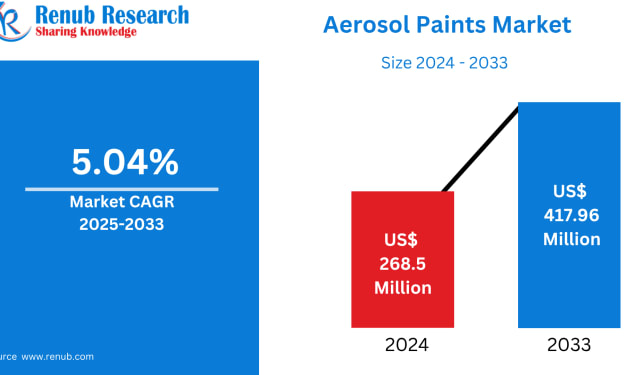
Introduction The global aerosol paints market is steadily transforming from a niche convenience product into a mainstream coating solution used across industries, homes, and creative spaces. In 2024, the market was valued at USD 268.5 million, and it is projected to reach USD 417.96 million by 2033, expanding at a CAGR of 5.04% during 2025–2033, according to Renub Research. This growth is driven by the convergence of DIY culture, automotive customization, construction activity, and industrial maintenance needs, alongside innovation in eco-friendly formulations and application technologies.
By Aaina Oberoiabout 2 hours ago in Earth
The timing of Earth's ice ages may be influenced by Mars.
According to recent calculations, Mars may influence the date of ice ages by helping to establish a 2.4 million-year rhythm in Earth's orbit. Recently, researchers investigated the possibility of a tiny planet leaving a discernible imprint in long-term climate records.
By Francis Dami7 days ago in Earth
Autonomy Is The Real Privilege
Good morning, freedom-seekers! Today we’re gonna be looking at autonomy. A strange word, I know; one many would probably look at blankly and run away from on sight. We’re gonna figure out what it actually means, consider how it’s achieved, and decipher just how deeply most of us are tangled up in dependence without realising it.
By That ‘Freedom’ Guya day ago in Humans



Comments (1)
Hello, just wanna let you know that according to Vocal's Community Guidelines, we have to choose the AI-Generated tag before publishing when we use AI 😊