
A Paradigm Shift in Urban Architecture
From Skyscrapers to Earthscrapers
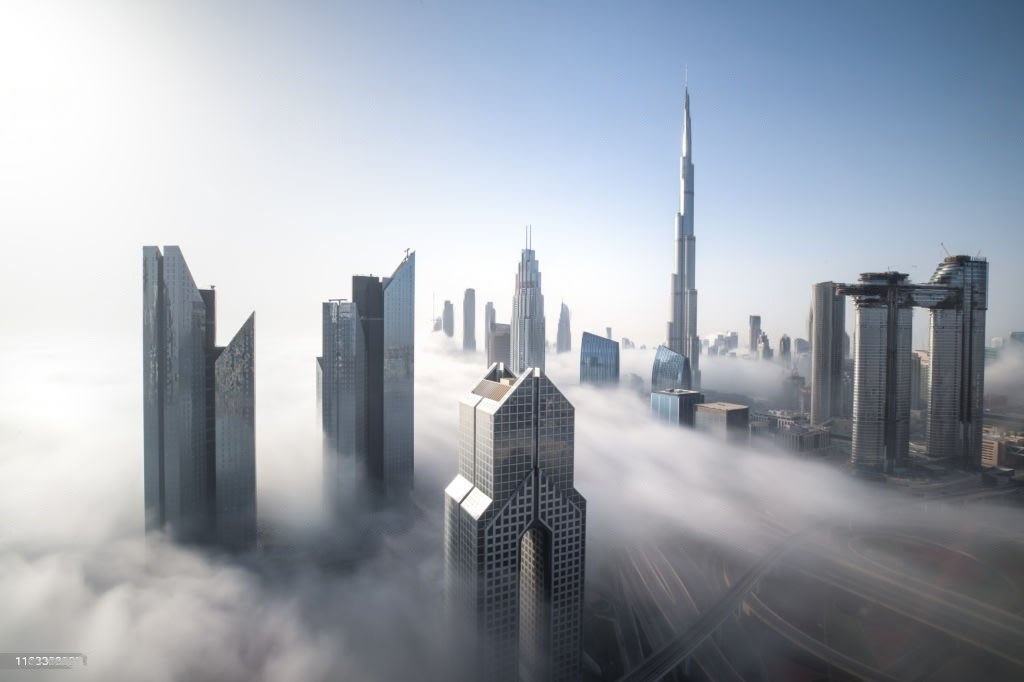
Urban sprawl and the uncontrolled expansion of cities have led to a host of negative consequences for both people and the planet. As we battle traffic and witness the demolition of precious ecosystems, it becomes evident that we need to rethink how we build our cities. In this blog, we explore the concept of Earthscrapers, subterranean megastructures that offer a novel solution to urban sprawl. We delve into the advantages, challenges, and potential of Earthscrapers, as well as their impact on various industries and the future of urban living.
The rapid growth of cities has resulted in the destruction of pristine wilderness and the loss of biodiversity. According to the World Wildlife Fund, habitat loss is the primary peril for 85 percent of all threatened species. Additionally, cities demand more resources, leading to higher pollution levels. However, there has been a gradual decrease in urban air pollution over the past decade in European cities. Nonetheless, urban sprawl continues to contribute to longer commutes, traffic congestion, and a decline in the overall quality of life.
Skyscrapers were once hailed as a remedy to urban sprawl, but they come with their own set of challenges. They are expensive to maintain and consume a significant amount of energy. Skyscrapers also cast long shadows, reducing natural light and creating wind tunnel effects in adjacent streets. To address these issues, architects are exploring alternative solutions, including Earthscrapers. These subterranean structures draw inspiration from the depths of the Earth, offering a unique approach to urban architecture.
Earthscrapers, although not a new concept, present a fascinating way to utilize the space below ground. Ancient underground cities like darinkuyu in Turkey demonstrate the feasibility of living beneath the surface. With modern technologies, architects and engineers can drill even deeper and create subterranean spaces for various purposes. However, constructing Earthscrapers presents unique challenges, such as ensuring structural integrity and addressing lighting and ventilation needs.
To overcome these challenges, engineers employ techniques like reinforced concrete, soil nailing, and deep soil mixing. Light Wells, mirrors, and fiber optic cables are used to bring natural light deep into the structures. Green spaces and indoor gardens are incorporated to enhance aesthetics and air quality. Energy efficiency is prioritized by tapping into geothermal power and utilizing heat tubes. Water management systems and advanced drainage systems are implemented to handle potential flooding and groundwater seepage.
While the concept of Earthscrapers is still in its early stages, visionary architects and firms have proposed ambitious projects. Mexico City, with its limited space due to height restrictions, has seen a proposal for a 300-meter deep Earthscraper below its central square. The design envisions multiple levels accommodating residential, office, retail, and cultural spaces. However, financial feasibility and engineering concerns must be addressed for such projects to come to fruition.
Although the large-scale implementation of Earthscrapers may be some time away, smaller projects like Montreal's underground city (rezo) demonstrate their potential. With over 20 miles of commercial spaces, rezo has become a major tourist attraction and a practical solution for extreme weather conditions. Other projects, such as New York's low line, aim to repurpose abandoned underground spaces for public use. Earthscrapers offer possibilities for agriculture, data centers, and even future extraterrestrial habitats.
As we ponder the future of urban living, it is essential to explore innovative approaches like Earthscrapers. These subterranean structures have the potential to reshape our cities, address urban sprawl, and provide sustainable solutions for various industries. While challenges remain, continued research and development in this field can lead to a more efficient and environmentally friendly urban landscape. By looking beneath our feet, we may find the key to unlocking a better future for urban living.
About the Creator
Keep reading
More stories from Myke & Amy and writers in Earth and other communities.
The Untold Story of Sir Isaac Newton
Let's delve into the fascinating life of Sir Isaac Newton, universally recognized as one of the greatest minds in history. In his 84 years on Earth, Newton revolutionized our understanding of the universe like no one before or since. While his achievements as a scientist and mathematician are well-known, there's a lesser-known side to this iconic figure. In this blog, we'll explore the untold story of Sir Isaac Newton—the genius, the heretic, and the alchemist.
By Myke & Amy3 years ago in Earth
The Zo ne of Silence: America’s Enigmatic Corner Where Laws and Logic Vanish
Deep within the rugged, breathtaking wilderness of Yellowstone National Park lies a geographical oddity so unsettling that it sounds like the plot of a legal thriller. Known to scholars and conspiracy theorists alike as the **"Zone of Death,"** this 50-mile stretch of land represents a terrifying glitch in the American judicial system—a place where, theoretically, a person could commit a major crime and walk away a free man.
By Irshad Abbasi 3 days ago in Earth




Comments
There are no comments for this story
Be the first to respond and start the conversation.