
A Massive Asteroid Might Slam Into the Moon in 2032. That’s Actually Pretty Exciting
Astronomers Predict a Rare Lunar Encounter That Could Reveal New Insights About Our Solar System

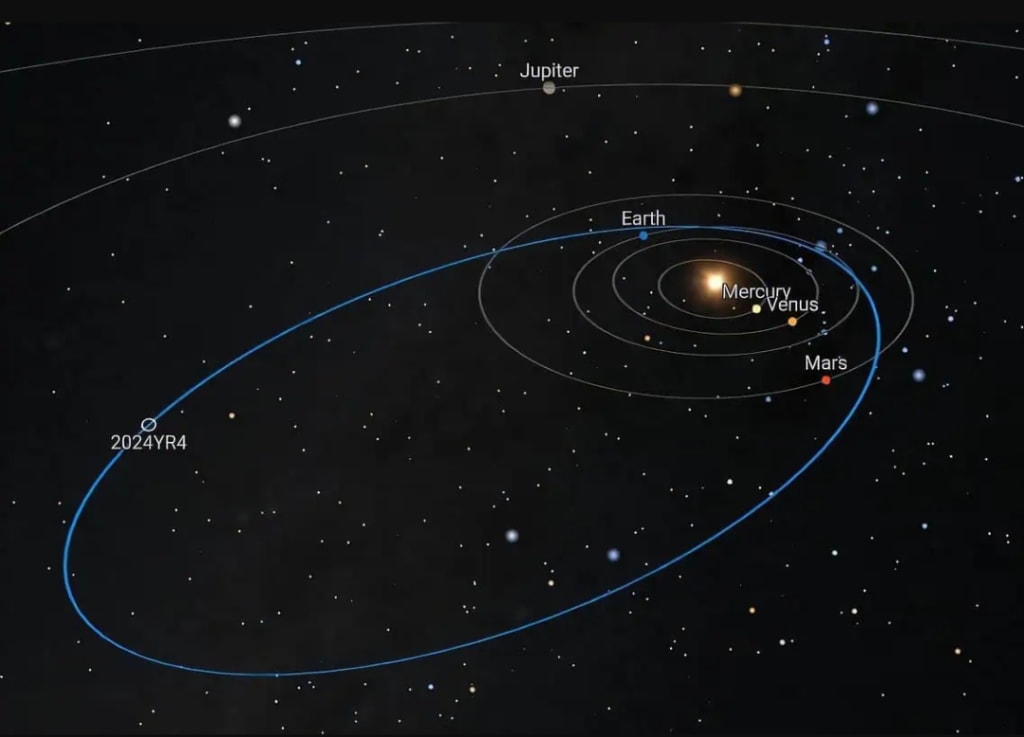
Scientists have announced that a massive asteroid could collide with the Moon in 2032, sparking excitement and curiosity among astronomers and space enthusiasts worldwide. While the prospect of an asteroid impact might sound alarming, experts say this event is a rare opportunity to study celestial mechanics, impact physics, and lunar geology in real time.
The Moon, Earth’s closest cosmic neighbor, has long served as a natural laboratory for understanding planetary science, and this upcoming event could provide a once-in-a-lifetime observational opportunity.
The Asteroid in Question
The asteroid, currently under observation by NASA and other international space agencies, is estimated to be hundreds of meters wide, making it large enough to create a noticeable crater on the Moon’s surface. Scientists are tracking its trajectory carefully, using data from ground-based telescopes and space monitoring systems.
While the asteroid poses no direct threat to Earth, its interaction with the Moon is expected to produce dramatic effects, including:
A visible impact flash
Ejecta thrown into space
Formation of a new lunar crater
The event will offer scientists a chance to observe impact processes in real time, something that is rarely possible on Earth due to erosion and tectonic activity.
Why Scientists Are Excited
1. Studying Lunar Impact Craters
Lunar craters are like time capsules of the solar system, preserving evidence of collisions that happened billions of years ago. Observing a new crater form will help researchers:
Measure the impact energy
Study the composition of the ejected material
Compare real-time results with computer models
2. Understanding Asteroid Behavior
Tracking the asteroid before, during, and after the impact will allow scientists to study:
Its trajectory and speed
How asteroids fragment or disintegrate
Potential risks for similar objects in Earth’s vicinity
3. Preparing for Future Planetary Defense
Although this asteroid targets the Moon, the research can inform strategies for defending Earth from hazardous space objects. By understanding how asteroids interact with planetary surfaces, scientists can develop better mitigation techniques for future threats.
What the Impact Might Look Like
Experts predict that the collision could produce:
A bright flash visible from Earth with telescopes
Debris thrown hundreds of meters into space
Temporary seismic waves on the Moon, measurable by instruments left by past lunar missions
Amateur astronomers and space agencies alike are expected to monitor the event closely, making it a global spectacle for the scientific community and space enthusiasts.
Why It’s Safe for Earth
Despite the asteroid’s size, the Moon acts as a natural shield for Earth, absorbing impacts without causing harm. There is no danger of fragments reaching Earth due to the asteroid’s trajectory and the Moon’s gravitational pull.
Scientists stress that events like these are routine in the life of celestial bodies and have happened countless times throughout the solar system’s history. In fact, studying them helps us understand the processes that shaped planets, moons, and other objects billions of years ago.
Opportunities for Research and Exploration
The 2032 impact could inspire several exciting scientific initiatives:
Lunar observation campaigns: Space agencies and observatories may coordinate to capture high-resolution images and video.
Sample studies: If debris from the impact reaches lunar orbit, it could be collected by future missions for chemical and mineralogical analysis.
Education and outreach: The event offers a unique chance to engage the public in astronomy and planetary science, showing how dynamic and active our solar system is.
FAQs
Will this asteroid hit Earth?
No. Scientists confirm that the asteroid will collide with the Moon only and poses no threat to our planet.
Can we see the impact with the naked eye?
Probably not. However, telescopes may capture the flash and debris, making it visible to amateur astronomers.
Why is this exciting instead of scary?
Because it’s a rare opportunity to observe a major asteroid impact in real time, which can teach us more about space, asteroids, and the Moon’s surface.
Conclusion
While a massive asteroid slamming into the Moon might sound dramatic, scientists are viewing it as a remarkable chance for discovery. From understanding impact physics to preparing for future planetary defense, the 2032 lunar collision offers a once-in-a-lifetime event for astronomers and space enthusiasts.
As the date approaches, telescopes will be trained, instruments calibrated, and the world will watch closely as our closest celestial neighbor experiences an event that has shaped moons and planets for billions of years.
It’s a reminder that our solar system is active, dynamic, and full of surprises, and sometimes, cosmic collisions are not just scary—they’re incredibly exciting.
About the Creator
Asad Ali
I'm Asad Ali, a passionate blogger with 3 years of experience creating engaging and informative content across various niches. I specialize in crafting SEO-friendly articles that drive traffic and deliver value to readers.
What might an extraterrestrial invasion of Earth look like?
The author used artificial intelligence in the crafting of this article. Although Hollywood depicts visits by aliens as horrifying experiences where humans die or even are eaten alive, scientists and philosophers say that’s probably not what an invasion would like.
By David Heitz4 days ago in Earth
AQI Cigarette Calculator: Understanding Air Pollution
The air we breathe is a complex mixture of gases and particles, many of which are invisible to the naked eye. While we can feel the heat of a sunny day or the chill of the wind, the silent, creeping impact of air pollution is far less tangible. This lack of tangibility makes it a difficult public health threat to communicate and motivate action against. A powerful innovation in environmental health communication has emerged to bridge this gap: the concept of the AQI cigarette calculator.
By Walter Schiller-Anders5 days ago in Earth

Comments
There are no comments for this story
Be the first to respond and start the conversation.