
A hundred billion locusts gather
Do you understand the reasons for this?


The UN Food and Agriculture Organization warned on May 3 that if nothing is done, the current swarm of locusts in northern Saudi Arabia could spread to Iraq, Jordan, Israel, Lebanon, and Syria, with Turkey next on the list!
Where exactly are these locust swarms coming from, or is it the 2020 swarm?
The 2020 swarm of 100 billion locusts made the world nervous, although data later clarified that there may not be 100 billion locusts, the order of magnitude is not much worse, this locust army broke through the tight defenses of many countries in East Africa, Iran and Pakistan and India in the Middle East, directly leaving parts of these countries with no crops, its destructive power is chilling!
Where did the locust swarm of 2020 go?
After about the end of May last year, the locust swarms in these countries suddenly disappeared, as if they had never existed before - are the locusts dead, or are they dead?
Like all insects, locusts have a life cycle. This insect, which is not fully metamorphosed, goes through three stages: egg, worm (in five stages, one closer to maturity than the other), and adult.
Locusts generally live for 2-3 months and will start reproducing in the second half of the adult stage. After the end of mating, the abdomen of the female will grow and lay eggs in the soil, and the eggs are wrapped in a foam-like substance secreted by the female to protect them from seasonal changes and dry conditions, and generally, locust eggs can be preserved for several years or more in dry conditions.

The locust outbreak of 2020 comes mainly from the monsoon rains of 2018-2019, breeding up first near Saudi Arabia and Yemen and thereafter migrating around, breeding to East Africa, the Middle East, and South Asia now, all the way to eggs laid after the locusts died in season, which will hatch sometime in the future as soon as conditions are right.
Where are the locusts coming from for the 2021 outbreak?
Looking at the May 2021 desert locust posture map released by the UN OAF, it appears that the locust swarms in Syria, as well as Jordan and Saudi Arabia, developed independently, or possibly from previous locust egg hatching, and have little to do with the 2020 swarm.
But the locust swarms in Kenya and Somalia and Ethiopia in East Africa are supposed to be hatching from eggs left behind after the 2020 swarm has laid eggs several times, and has now started their migration, and on the map, OAF (Food and Agriculture Organization) has marked the destinations of the upcoming migration and the approximate time of arrival.
The map above shows the breeding situation of locusts in Ethiopia and Somalia in East Africa. The dense markings indicate the seriousness of the situation, and the potential breeding areas in red are alarming.
OAF senior desert locust forecaster Keith Pressman says the swarm will be smaller in East Africa in 2021 compared to 2020, and that swarms in Ethiopia, Kenya, and Somalia are still immature, depending on the rains of the worm season, which could expand rapidly if there is plenty of rain.
The locusts breeding in Saudi Arabia are in a much more serious state of affairs, with Professor Ali Saar, head of the Department of Zoology at Dice University in Diyarbakır, southeastern Turkey, saying that if nothing is done, it will seriously affect Turkey in the future. OAF officials say a strong southwest monsoon in April sent locusts breeding in north-central Saudi Arabia downwind toward Jordan, Israel, Lebanon, and Syria.
The locusts were originally supposed to move to Iran and Pakistan and India, but this time, thanks to the southwest monsoon, the swarm is likely to reach Turkey if it continues.
The OAF also does not rule out the possibility that the monsoon will weaken and the locust swarms will return to their traditional routes to Yemen and east to the Persian Gulf, which, if they take this route, will lead to future locust disasters on their traditional routes, while India is being hit by an unprecedented epidemic this year.
The Earth's new normal: a crisis that will intensify under global warming
It's hard to argue that locust plagues are not linked to global warming because they always follow major droughts, which seem to be occurring much more frequently in the twenty-first century than in the twentieth century, even though human water facilities ensure irrigation of crops but do not help.
The more terrible is the secondary effect of global warming, these hidden under the global temperature rise of the devil, any one of them may catch the human race to the cliff of extinction, and the future of mankind will need to learn to get along with these "devils"!
On January 18, 2021, a paper published in Nature Climate Change said that warming may change the location of the tropical rain bands, and the message behind it is very scary, because the movement of the rain bands will change the traditional food production areas, which have been formed over the centuries, can not follow the rain bands to move together, which is the most terrible problem.
On April 8, 2021, a paper published in Geophysical Research Letters said that at the current rate of warming, one-third of the Antarctic ice shelf may collapse, which will first cause the sea level to rise by more than ten meters, and in addition, the reflection effect will disappear after the glacier disappears, while heat absorption will increase, which will intensify global warming.
On April 20, 2021, a paper published in Communications Earth and Environment said that the warm Gulf Stream is weakening after global warming, which has weakened by 15% since the 1950s and may reach 30% in the future by 2100, and the AMOK may lose the opportunity to provide heat to the Arctic Ocean, which will cause a large number of changes in traditional fishing grounds, as well as changes in global circulation, and it will affect global climate.
About the Creator
Stajila
The progress of scientific research and its increasingly expanding fields will arouse our hope。
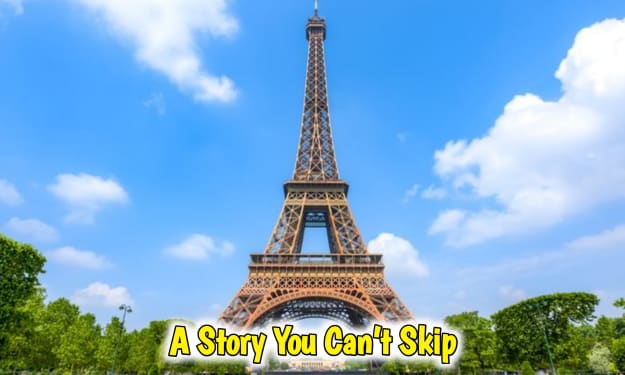
The Eiffel Tower: Paris’s Iron Soul and the Story Behind Its Global Magic
The Eiffel Tower is more than a landmark rising above the Paris skyline. It is a symbol of human imagination, engineering courage, and the timeless romance of France. Millions visit it every year, yet few know the deeper story—how a controversial iron structure built for a temporary event became one of the most beloved monuments on Earth. Standing tall since 1889, the Eiffel Tower has witnessed revolutions, world wars, artistic movements, and generations of travelers who came to Paris searching for beauty, inspiration, or simply a moment they would never forget. 🌍 A Monument Born From a Global Celebration The Eiffel Tower was created for the 1889 Exposition Universelle, a world fair celebrating the 100th anniversary of the French Revolution. The French government held a competition for a monument that would represent modern engineering and national pride. Over 100 designs were submitted, but the winning proposal came from Gustave Eiffel, a renowned engineer whose company specialized in metal frameworks. Construction began on January 28, 1887, and was completed on March 31, 1889—an astonishing achievement in just over two years. When it opened, the tower served as the grand entrance to the exposition, welcoming millions of visitors from around the world. 🛠️ Engineering Genius: How the Tower Was Built The Eiffel Tower was a radical idea for its time. Paris was a city of stone, sculptures, and classical architecture. A 300‑meter iron tower seemed outrageous to many. Yet Gustave Eiffel and his team believed in the power of innovation. Key engineering facts - Height at completion: 300 meters (984 ft), making it the tallest structure in the world until 1930. - Current height: 330 meters (1,083 ft) including antennas. - Weight: About 10,100 tons. - Iron pieces: 18,038 individual components. - Stairs: 1,665 steps to the top. - Construction time: 2 years, 2 months, 5 days. The tower’s lattice design wasn’t just artistic—it was functional. The open iron framework allowed wind to pass through, giving the structure remarkable stability. Gustave Eiffel famously said the tower was “not only the art of the engineer, but also the art of the architect.” 🎨 From Controversy to Cultural Icon When the Eiffel Tower was unveiled, not everyone loved it. In fact, many Parisians hated it. Writers, artists, and intellectuals signed petitions calling it an eyesore. They said it looked like a “giant smokestack” and would ruin the beauty of Paris. But as time passed, the tower won hearts. - It became a symbol of modernity. - It became a symbol of Parisian pride. - It became a symbol of France itself. By the early 20th century, the Eiffel Tower had transformed from a temporary exhibition piece into a permanent global icon. 📡 A Tower That Saved Itself The Eiffel Tower was originally meant to stand for only 20 years. After the exposition, it was supposed to be dismantled. What saved it? Science. Gustave Eiffel allowed the tower to be used for radio experiments. Its height made it ideal for broadcasting signals. During World War I, the tower intercepted enemy communications, helping France in critical moments. Its usefulness ensured its survival. 💑 The Human Side: Why the Eiffel Tower Feels Magical People don’t fall in love with the Eiffel Tower because of its measurements or engineering. They fall in love with how it makes them feel. Standing beneath it, you feel small—but in a good way. Climbing it, you feel connected to history. Seeing Paris from the top, you feel like the world is bigger and more beautiful than you realized. The tower has become: - A symbol of love - A backdrop for proposals - A dream destination for travelers - A muse for artists and filmmakers It is the beating heart of Paris. 🌆 Visiting the Eiffel Tower: What to Expect A visit to the Eiffel Tower is a journey through levels of history, architecture, and breathtaking views. The Esplanade The ground level offers a close-up look at the tower’s massive iron legs and the engineering that holds it together. The First Floor - Transparent floors - Exhibits on the tower’s history - Restaurants and shops The Second Floor This level offers one of the best panoramic views of Paris—close enough to see details, high enough to feel the city’s scale. The Summit At 276 meters, the top floor gives a sweeping view of the entire Paris region. Gustave Eiffel’s private office has been recreated here. 🌙 The Eiffel Tower at Night Every evening, the Eiffel Tower lights up with a warm golden glow. And for five minutes at the start of each hour, it sparkles with 20,000 twinkling lights. This nightly ritual has become one of the most magical sights in the world. 📚 Fun and Surprising Facts - The Eiffel Tower was the tallest structure in the world until the Chrysler Building surpassed it in 1930. - It was originally painted red‑brown, then yellow, and now “Eiffel Tower Brown.” - Gustave Eiffel’s company also built the metal framework for the Statue of Liberty. - The tower sways slightly in strong winds—up to 9 cm. - It is the most visited paid monument in the world. 💬 Why the Eiffel Tower Still Matters The Eiffel Tower endures because it represents something universal: the human desire to create, to innovate, and to leave something beautiful behind. It is a reminder that even the most controversial ideas can become beloved. It is proof that art and engineering can coexist. It is a symbol of Paris, of France, and of the world’s shared cultural heritage. If this story brought the Eiffel Tower to life for you, share it with someone who dreams of visiting Paris. Leave a comment with your favorite Eiffel Tower moment—or the moment you hope to experience someday. And if you’d like to support more human‑centered, deeply researched stories like this, feel free to leave a tip. It helps bring more inspiring content to life.
By Haroon Pasha3 days ago in Earth

Comments
There are no comments for this story
Be the first to respond and start the conversation.