
A Guide to Stone Crusher Applications in Gold Mining Operations
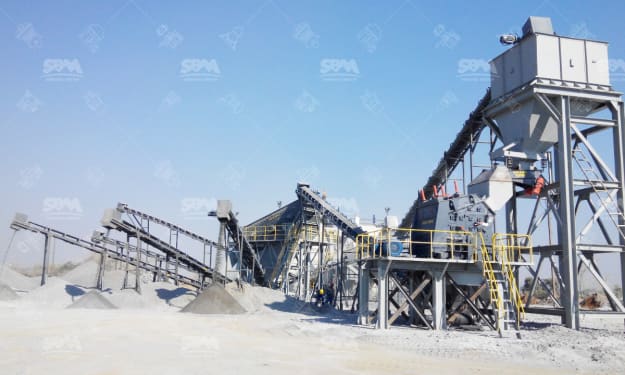
This article examines the common applications of various stone crusher types in gold mining operations. Factors such as ore characteristics, plant throughput, energy efficiency and product specs are considered.

Introduction
Gold mining requires efficient comminution equipment to liberate valuable gold particles from host ore bodies. Stone crushers play a key role in the primary grinding circuit, breaking down run-of-mine rock into manageable sizes for further processing. With many mines containing gold-bearing ore intermixed with barren rocks, selective crushing helps maximize gold recovery rates.
This article examines the common applications of various stone crusher types in gold mining operations. Factors such as ore characteristics, plant throughput, energy efficiency and product specs are considered. Technical discussions include equipment selection guidelines, process flowsheet design tips and operational best practices. The objective is to help mining professionals optimize crusher circuits for maximum gold liberation at lowest cost-per-ton.
Jaw Crushers
Jaw crushers are widely used as primary crushers in gold mining due to their high throughput rates and inexpensive maintenance. Comprising a fixed and swing jaw, materials are crushed by compressive and shear forces.
Hard, abrasive gold-bearing conglomerate ores requiring large feed openings suit jaw crushers. Their coarse reduction capacity ranges from 50-1,000mm to below 200mm.
While energy-intensive, jaw crushers provide a shaping effect, producing cubical outputs. Proper lubrication, alignment and adjustment extend crusher life. Retrofitting hydraulic jaws improves safety, control and operation in cold climates.
Mobile and semi-mobile jaw crushers equipped with grizzlies are well-suited for alluvial and hard rock mining. Their compact footprint and accessibility to remote deposits benefit operations. Wire mesh in the grizzly aids metal recovery from both classified and oversized products.
Cone Crushers
Cone crushers simulate a gyratory motion but within a smaller footprint to crush rock with a crushing action that squeezes or compresses material between a moving piece of steeply inclined cone and the fixed crushers mantle.
Gold mines favoring medium to fine size reduction use hydraulic cone crushers. They produce cubical particles from 175-5mm down to sand range using compressive forces. Multi-cylinder models maintain higher, steadier workload throughput.
Compared to energy-intensive jaw crushers, cone crushers are more suitable when processing clay-bearing, wet or sticky gold ores. Self-cleaning by material rubbing mitigates excess buildup.
Cone crushers provide consistent gradation control while limiting mineral decomposition, an advantage for optimizing downstream recoveries. Their parallel arrangement improves capacity and reliability. Automating settings enhances process optimization.
Impact Crushers
Commonly applied in placer gold operations, vertical shaft impactors utilize high-speedhammers or blow bars accelerating under gravity’s force to break materials. Rocks are fragmented by impact and interparticle collisions in the crushing chamber.
Impact crushers are ideal in placer mining involving soft, unconsolidated gravels with low abrasiveness. Models range from 6-75 tons per hour. Lower maintenance costs and ability to crush materials that are difficult for jaw and cone crushers further their benefits. However, the wear parts require frequent replacement even in low abrasion applications.
In secondary stage parallel vertical impact crushers rapidly reduce alluvial materials ranging from 150mm down to 6-10mm. This paves way for efficient classification based on specific gravity for gold recovery. Durable, high-capacity machines minimize overall owning and operating expenditures per ounce of gold produced.
Process Flowsheet Implementation
Effective crusher applications depend on flowsheet layouts. In a conventional hard rock circuit, a jaw crusher handles primary duties, reducing feed from 900mm to below 150mm. Cone crushers then finish-grind the output down to 6-10mm prior to grinding and classification.
For wet or sticky ores containing clay/moisture, a cone or impact crusher substitutes for the initial jaw due to their self-cleaning capability. The remaining stages apply screening and re-crushing as deemed appropriate for the ore properties.
In large placer mines, a scalping screen separates oversized materials (>75mm) prior to the impact crusher's primary reduction stage down to 25-38mm. Secondary cones or impacts further grind the material before concentration.
In portable modules supporting hard rock surface miners, a mobile jaw handles run-of-mine rock concurrent to mining. Cone crushers follow for secondary sizing linked to an integrated gold recovery plant. Flexible design aids deployment in remote areas.
Operational Practices
Proper crusher operations sustain productivity over the long-run. Ensuring balanced feed rates prevents overloads while fully utilizing rated capacities. Regularly clearing choke points removes size grading issues.
Implementing process automation streamlines settings optimized per ore type analyzed. Hydraulic automation maintains steady throughput with consistent product quality regardless of varying feed conditions.
Common failure modes like unplanned stoppages, excessive vibrations and energy inefficiencies signify wear parts needing replacement. Proactively scheduled services sustain optimal component condition for extended equipment lifetime.
Routine cleaning removes any material buildups affecting crusher operation. Monitoring performance parameters via computers aids in data-based maintenance optimization and ensuring specified products are attained economically.
Crusher Optimization
Quarry operators benefit most through close collaborations with experienced OEM specialists applying advanced engineering tools. Finite element modeling precisely replicates internal load distributions to improve designs.
Process mineralogical studies categorize gold-bearing minerals, their associations and the most suitable crushing conditions. Automated data feedback systems integrated with crusher controls further enhance process understanding.
Comminution simulation software optimizes circuit sizing, equipment selection and layout configurations. Strategies evaluating factors like energy consumption, gold recovery gains and maintenance schedules help determine lowest overall operating costs and maximize plant profitability over extended lifecycles.
Conclusion
The mining industry's increasing focus on productivity and lowering per-unit costs emphasizes optimal equipment selection and operation. As primary grinders, crushers play a pivotal role in gold liberation and recovery performance throughout the processing circuit. Their appropriate sizing, layout design and operational efficiency directly impact project profitability. A data-driven, collaborative approach between mine operators and specialized solution providers ensures crushing circuits maximize gold production profitably and sustainably.
About the Creator
Industrial Deployment of Biochar in Modern Metal Smelting Systems
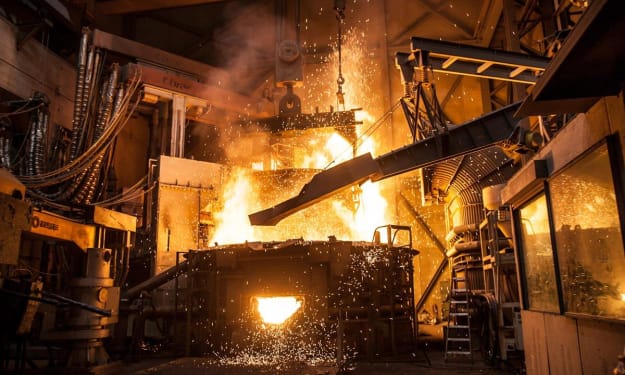
Biochar is increasingly examined as a functional carbonaceous material in high-temperature metallurgical operations. Traditionally dominated by fossil-derived coke and coal, metal smelting processes are under pressure to decarbonize while maintaining reductive efficiency and structural reliability. Biochar, when properly engineered, presents a technically viable supplementary reductant in the production of steel, silicon, and ferroalloy. Its application, however, requires stringent control of physicochemical properties and integration within existing furnace infrastructure.
By Wayne Shena day ago in Earth
I wanted to title this something different, but worried that my chosen title might cause problems entering the United States in the future so this is the new title. It's the greatest title. No one has ever written a title better than this. (All titles unrelated to content).
Let me be honest. I am finding this difficult. Now, I like a challenge, a stretch, a bit of an obstacle course. “Write about the decline of the British Empire in the form of a narrative poem in which your protagonist is an artichoke” I read, and flex my fingers. “Write a haiku to evoke the sensation of sibilance using only the first half of the alphabet.” “Well”, I think to myself, “this should be fun.” But “write about a system that isn’t working”? A system that isn’t working? Now? In 2026? ONE system? My favourite system that isn’t working? The sexiest system that isn’t working? The one giving me the most angst day to day? The one giving me the most existential dread? I am, as I say, finding this difficult. I will own that I have contemplated writing a thousand words on why the steady “all on” setting on my fairy lights is the EIGHTH of seven options which must be sequentially activated to get there, because that is a system that some fool came up with and it definitely doesn’t work, and now who is paying the price, eh? But how can I write about my fairy lights when…. When…. When….
By Hannah Moore7 days ago in Humans


Comments
There are no comments for this story
Be the first to respond and start the conversation.